Home Rheumatology Antiphospholipid Syndrome

Antiphospholipid Syndrome

Introduction

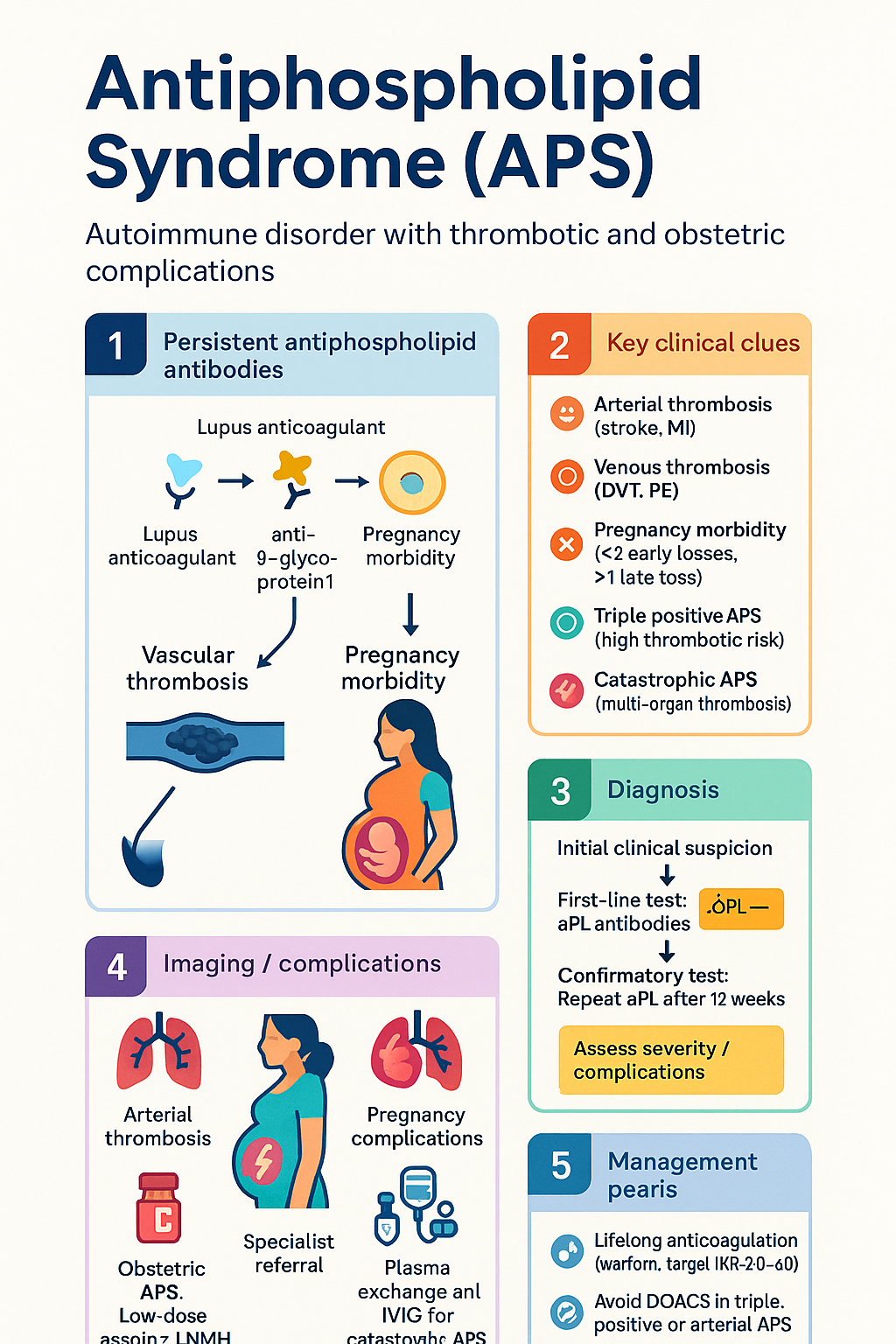
Antiphospholipid syndrome (APS) is an acquired autoimmune thrombophilia characterised by recurrent arterial and/or venous thrombosis and pregnancy morbidity in the presence of persistently positive antiphospholipid antibodies (aPL). It is the most common acquired cause of thrombophilia and represents a significant cause of preventable stroke, pulmonary embolism, and pregnancy loss in Australia.

ℹ️
Classification: APS may be primary (no underlying autoimmune disease) or secondary (associated with systemic lupus erythematosus [SLE] in ~35% of cases, or other connective tissue diseases). Catastrophic APS (CAPS) is a rare, life-threatening variant with multi-organ thrombosis occurring over days.

The 2023 ACR/EULAR classification criteria for APS require at least one clinical domain (thrombotic or obstetric) and at least one laboratory domain criterion, with a minimum cumulative score. This replaces the 2006 Sapporo (Sydney) criteria in research settings, though the Sydney criteria remain widely used in clinical practice in Australia.

Low Risk
Single aPL Positive
Low-titre, isolated positivity, no prior thrombosis or pregnancy loss
Outpatient β€” watchful waiting with risk factor modification
Moderate Risk
Multiple aPL Positive
Double or triple positive aPL with prior thrombosis or obstetric APS
Rheumatology/haematology β€” anticoagulation therapy
High Risk
Catastrophic APS
Rapid multi-organ thrombosis β‰₯3 organs within 7 days with aPL positivity
ICU admission β€” anticoagulation + immunosuppression + plasmapheresis

Pathophysiology

APS is driven by antiphospholipid antibodies β€” primarily lupus anticoagulant (LA), anticardiolipin antibodies (aCL), and anti-beta-2 glycoprotein I (anti-Ξ²2GPI) antibodies. These antibodies bind phospholipid-binding proteins (principally Ξ²2-glycoprotein I) on cell surfaces, activating endothelium, platelets, and monocytes to produce a pro-thrombotic state.

Key Pathogenic Mechanisms

  • Endothelial activation: aPL binding upregulates adhesion molecules (VCAM-1, E-selectin) and tissue factor expression, promoting thrombosis
  • Platelet activation: anti-Ξ²2GPI antibodies activate platelets via GPIbΞ± and apolipoprotein E receptor 2 (ApoER2), increasing aggregation
  • Complement activation: C3, C4 and terminal complement complex deposition drives placental injury and obstetric complications
  • Inhibition of natural anticoagulants: Interference with protein C pathway, annexin A5, and prothrombin binding impairs fibrinolysis
  • mTOR pathway activation: Promotes endothelial proliferation and vascular nephropathy in APS nephropathy

Obstetric Pathophysiology

Placental thrombosis was historically considered the primary mechanism of pregnancy loss, but complement-mediated placental inflammation (independent of thrombosis) is now recognised as equally important. This explains why anticoagulation alone may be insufficient for some obstetric APS cases.

Antiphospholipid Antibody Profiles and Thrombotic Risk

Antibody ProfileThrombotic RiskObstetric Risk
Triple positive (LA + aCL + anti-Ξ²2GPI)Very HighVery High
Double positive (any two)HighHigh
Lupus anticoagulant aloneHighModerate–High
Isolated aCL (high titre β‰₯40 MPL/GPL)ModerateModerate
Isolated anti-Ξ²2GPI (high titre)ModerateModerate
Isolated low-titre aCL or anti-Ξ²2GPILowLow

Clinical Presentation

APS presents with a heterogeneous range of clinical features. Thrombotic APS typically presents with deep vein thrombosis (DVT) or pulmonary embolism (PE), while obstetric APS presents with recurrent miscarriage, late pregnancy loss, or severe pre-eclampsia. Non-criteria manifestations are common and important.

Thrombotic Manifestations

  • Venous thromboembolism (most common): DVT (usually lower limb), PE, cerebral venous sinus thrombosis
  • Arterial thrombosis: Ischaemic stroke (most common arterial event), TIA, myocardial infarction, limb ischaemia
  • Microvascular: Livedo reticularis, digital ischaemia, APS nephropathy (thrombotic microangiopathy)
  • Unusual sites: Hepatic vein (Budd-Chiari syndrome), mesenteric, renal or adrenal vein thrombosis
  • Cardiac: Libman-Sacks endocarditis (non-infective verrucous valve lesions), valvular thickening

Obstetric Manifestations

  • Early pregnancy loss: β‰₯3 unexplained consecutive miscarriages before 10 weeks gestation
  • Late pregnancy loss: β‰₯1 morphologically normal fetal death at or beyond 10 weeks
  • Preterm birth: ≀34 weeks due to severe pre-eclampsia, eclampsia, or placental insufficiency
  • Severe pre-eclampsia: Especially if early-onset or associated with fetal growth restriction
  • Placental abruption

Non-Criteria Manifestations

  • Thrombocytopaenia (immune-mediated, usually mild, 50–150 Γ— 10⁹/L)
  • Haemolytic anaemia (Coombs positive)
  • Cognitive impairment, headache, migraine, chorea
  • Livedo reticularis and livedo racemosa
  • APS nephropathy β€” glomerular microthrombosis leading to hypertension and proteinuria
  • Skin ulceration, pseudovasculitic lesions
⚠️
Catastrophic APS (CAPS): CAPS occurs in <1% of APS patients but carries >30% mortality. Characterised by thrombosis of β‰₯3 organs within 7 days, usually with histopathological evidence of small vessel occlusion. Common triggers include infection (most common), surgery, medication withdrawal, or underlying SLE flare. Consider CAPS in any patient with APS presenting with multi-organ dysfunction.

Investigations

Diagnosis requires persistent aPL positivity confirmed on two occasions at least 12 weeks apart. Single positive results may represent transient aPL (e.g. infection-related) and should not be used for diagnosis. Testing should be performed when the patient is clinically stable and not acutely thrombotic, as acute thrombosis may affect results.

  • Essential
    Lupus Anticoagulant (LA)
    Most strongly associated with thrombosis. Screen with APTT and dRVVT; confirm with mixing studies and phospholipid neutralisation. NOTE: Cannot be tested reliably in patients on anticoagulation (especially rivaroxaban/apixaban β€” both falsely prolong dRVVT).
  • Essential
    Anticardiolipin antibodies (aCL) IgG and IgM
    Clinically significant at β‰₯40 GPL or MPL units (medium-high titre). Low titres (<40) have limited diagnostic significance. Repeat in 12 weeks to confirm persistence.
  • Essential
    Anti-Ξ²2 glycoprotein I (anti-Ξ²2GPI) IgG and IgM
    Clinically significant at β‰₯40 units. Triple positivity (LA + aCL + anti-Ξ²2GPI) confers the highest thrombotic risk. Repeat in 12 weeks.
  • Essential
    Full blood count
    Assess for thrombocytopaenia (immune-mediated) and haemolytic anaemia. Thrombocytopaenia in APS is usually mild and rarely requires treatment.
  • Essential
    Coagulation studies (APTT, PT/INR)
    Baseline before anticoagulation; APTT prolonged in LA-positive patients. INR monitoring for warfarin if used.
  • Recommended
    ANA and anti-dsDNA, complement (C3, C4)
    Screen for co-existing SLE or other CTD β€” present in ~35% of APS patients. Hypocomplementaemia supports active SLE.
  • Recommended
    Renal function and urinalysis
    Proteinuria and haematuria suggest APS nephropathy; elevated creatinine warrants renal biopsy consideration.
  • Recommended
    Doppler ultrasound (limbs)
    Preferred first-line imaging for suspected DVT. Also assess for post-thrombotic changes in recurrent DVT.
  • Recommended
    CT pulmonary angiography (CTPA)
    Investigation of choice for suspected pulmonary embolism.
  • Recommended
    MRI brain / CT brain
    For ischaemic stroke, TIA, or cognitive impairment. White matter changes on MRI are common in APS.
  • Recommended
    Echocardiogram
    Assess for Libman-Sacks endocarditis (verrucous valve lesions) and valvular regurgitation, particularly in patients with cardiac symptoms or prior to anticoagulation decisions.
  • Specialist
    Renal biopsy
    Indicated for proteinuria >0.5 g/day or unexplained renal impairment β€” distinguishes APS nephropathy (thrombotic microangiopathy) from lupus nephritis.
  • Specialist
    Thrombophilia screen
    Consider factor V Leiden, prothrombin gene mutation, protein C/S deficiency, antithrombin deficiency if initial aPL negative. Concurrent thrombophilia significantly increases thrombotic risk.
⚠️
DOAC Interference: Direct oral anticoagulants (DOACs), especially rivaroxaban and apixaban, cause false-positive lupus anticoagulant results (both dRVVT and APTT-based LA tests). Testing should ideally be performed off DOACs or using LA-insensitive DOAC removal kits where available. Dabigatran also interferes with some assays. Warfarin at supratherapeutic INR may cause false-positive results. Laboratory should be informed of current anticoagulation before LA testing.

Severity and Risk Stratification

Risk stratification in APS is essential for determining anticoagulation intensity and duration. The Global Anti-Phospholipid Syndrome Score (GAPSS) and the aPL score incorporate antibody profile, cardiovascular risk factors, and clinical history to estimate individual risk. The key determinant of management is the aPL antibody profile (single, double, or triple positive).

APS Risk Stratification Framework

Risk CategoryaPL ProfileClinical HistoryManagement Approach
Very HighTriple positive (LA + aCL + anti-Ξ²2GPI)Prior thrombosis or obstetric APSLong-term anticoagulation; warfarin preferred over DOAC
HighDouble positive or high-titre single positive LAPrior thrombosisLong-term anticoagulation; warfarin preferred
ModerateSingle aPL positive (any)Prior provoked VTE onlyConsider duration; discuss risks/benefits of indefinite anticoagulation
LowPersistently low-titre aCL or anti-Ξ²2GPI aloneNo thrombosisPrimary prophylaxis with aspirin if additional cardiovascular risk factors
Asymptomatic aPL carrierAny aPL profileNo thrombosis or pregnancy morbidityAspirin 100 mg daily; aggressive CV risk factor modification

Pregnancy Risk Assessment

  • High-risk obstetric APS: Triple positivity, prior thrombosis, or history of severe obstetric complications β€” requires LMWH + aspirin throughout pregnancy
  • Low-risk obstetric APS: Single/low-titre positivity, prior early pregnancy loss only β€” low-dose aspirin may suffice (debated)
  • Asymptomatic aPL in pregnancy: Low-dose aspirin from ≀12 weeks gestation if additional risk factors present
  • All pregnant women with aPL should be co-managed by obstetric medicine/maternal-fetal medicine and rheumatology

Treatment Overview

Management of APS depends on the clinical presentation: thrombotic APS requires anticoagulation, obstetric APS requires aspirin and LMWH during pregnancy, and asymptomatic aPL carriers require risk factor modification with or without aspirin. Hydroxychloroquine (HCQ) has an emerging role across all APS subtypes due to its anti-thrombotic and anti-inflammatory properties.

1
Anticoagulation
Warfarin (target INR 2.0–3.0) remains preferred for high-risk thrombotic APS; LMWH for acute thrombosis and obstetric APS; DOACs controversial
2
Antiplatelet Therapy
Aspirin 100 mg daily for primary prevention in asymptomatic aPL carriers with risk factors; may be added to warfarin in high-risk arterial APS
3
Hydroxychloroquine
Recommended for all APS patients with co-existing SLE; increasingly used in primary APS for its anti-thrombotic, anti-aPL and immunomodulatory effects
4
Risk Factor Modification
Aggressive management of hypertension, dyslipidaemia, diabetes, smoking cessation, and thrombogenic medications (combined OCP)
5
Immunosuppression (CAPS)
High-dose corticosteroids + IVIG and/or plasmapheresis in addition to anticoagulation for catastrophic APS
🚨
DOAC Caution in APS: Rivaroxaban and apixaban are NOT recommended as first-line therapy for thrombotic APS, particularly in high-risk triple-positive patients. The TRAPS (rivaroxaban), RAPS, and ASTRO-APS trials demonstrated increased thrombotic recurrence with DOACs compared to warfarin in APS. If DOACs are used (e.g. patient refusal of INR monitoring), restrict to low-risk, single-positive aPL patients with VTE only, and document shared decision-making.

Directed Therapy

Thrombotic APS β€” Anticoagulation

πŸ’Š
Warfarin
Coumadin, Marevan β€” Vitamin K Antagonist
Indication First-line for high-risk thrombotic APS (arterial or venous)
Dose Titrated to target INR 2.0–3.0 (venous); INR 3.0–4.0 may be considered for recurrent arterial thrombosis on standard therapy
Monitoring INR fortnightly to monthly once stable; point-of-care testing available
Duration Indefinite for unprovoked thrombosis in confirmed APS
PBS Status PBS β€” Section 85
πŸ’Š
Enoxaparin
Clexane β€” Low Molecular Weight Heparin
Indication Acute VTE treatment; obstetric APS (throughout pregnancy); bridging therapy
Dose 1 mg/kg SC twice daily (treatment); 40 mg SC daily (prophylaxis); weight-adjusted in pregnancy
Monitoring Anti-Xa levels in renal impairment (eGFR <30), extremes of weight, or pregnancy
Duration Acute VTE: β‰₯3–6 months; Obstetric APS: throughout pregnancy until 6 weeks postpartum
PBS Status PBS β€” Section 85
πŸ’Š
Aspirin
Cartia, Astrix β€” Antiplatelet
Indication Primary prevention in asymptomatic aPL carriers with risk factors; adjunct in high-risk arterial APS; obstetric APS (from ≀12 weeks gestation)
Dose 100 mg orally once daily
Monitoring Clinical β€” no specific laboratory monitoring required
Duration Indefinite for asymptomatic aPL carriers; throughout pregnancy and 6 weeks postpartum for obstetric APS
PBS Status PBS β€” Section 85
πŸ’Š
Hydroxychloroquine
Plaquenil β€” Antimalarial / Immunomodulator
Indication All APS patients with co-existing SLE; consider for all primary APS; may reduce thrombotic recurrence and aPL titres
Dose 200–400 mg orally once daily (≀5 mg/kg/day actual body weight)
Monitoring Annual ophthalmology review for retinopathy (after 5 years or earlier if risk factors); G6PD before initiation
Duration Long-term β€” do not cease abruptly; reassess at minimum annually
PBS Status PBS β€” Rheumatoid Arthritis / SLE

Refractory / High-Risk APS

πŸ’Š
Rituximab
MabThera, Riximyo β€” Anti-CD20 Monoclonal Antibody
Indication Refractory thrombocytopaenia or haemolytic anaemia in APS; refractory obstetric APS (off-label); consideration for aPL reduction
Dose 375 mg/mΒ² IV weekly Γ— 4 doses, or 1000 mg IV Γ— 2 doses (2 weeks apart) β€” specialist decision
Monitoring Infusion reactions; immunoglobulin levels; hepatitis B reactivation screening before initiation
PBS Status Authority Required β€” specialist initiation
πŸ’Š
Belimumab
Benlysta β€” Anti-BLyS Monoclonal Antibody
Indication Active SLE-associated APS; reduces aPL antibody production in some patients (off-label for APS per se)
Dose 10 mg/kg IV monthly or 200 mg SC weekly
PBS Status Authority β€” SLE with high disease activity

Catastrophic APS (CAPS) β€” Emergency Management

🚨
CAPS Triple Therapy: Simultaneous treatment with: (1) Anticoagulation (IV heparin infusion initially), (2) High-dose corticosteroids (methylprednisolone 500–1000 mg IV daily Γ— 3 days), and (3) IVIG (2 g/kg over 5 days) and/or therapeutic plasma exchange (5–7 sessions). Identify and treat precipitating triggers (infection β€” empirical antibiotics; SLE flare β€” appropriate immunosuppression). Eculizumab has been used in refractory CAPS.

Acute Management

Acute thrombotic events in APS require immediate anticoagulation. Unfractionated heparin (UFH) infusion is preferred for haemodynamically significant PE or large arterial thrombosis where thrombolysis may be considered. LMWH is appropriate for DVT and stable PE. Transition to warfarin (not DOAC in high-risk APS) is standard.

Immediate
IV heparin (UFH) or SC LMWH β€” begin anticoagulation. Urgent imaging (CTPA for suspected PE, CT/MRI brain for stroke). For stroke: thrombolysis per stroke guidelines if within window (note bleeding risk with anticoagulation).
24–72 hours
Confirm aPL antibody results if not previously tested. Commence warfarin overlapping with heparin (therapeutic bridge β‰₯5 days and INR β‰₯2.0 for 24 hours). Rheumatology/haematology review. Echocardiogram if cardiac event.
1–2 weeks
INR monitoring (daily until stable). Target INR 2.0–3.0 for first event. Arrange follow-up for repeat aPL testing at 12 weeks to confirm persistence.
12 weeks
Repeat aPL panel (LA, aCL IgG/M, anti-Ξ²2GPI IgG/M) off anticoagulation if feasible, or using DOAC removal techniques. Confirmed persistence required for APS diagnosis. Risk stratification and long-term management planning.
Long-term
Indefinite anticoagulation for unprovoked thrombosis in confirmed APS. Annual review: INR stability, thrombotic events, bleeding, organ involvement, repeat aPL profile (not routinely, but if management decisions required).
⚠️
Perioperative Management: Patients with APS on warfarin requiring surgery present significant risk. Low-risk procedures: continue warfarin. High-risk surgery with high APS risk: bridging with therapeutic LMWH (stop 24 hours pre-op; restart 24–48 hours post-op when haemostasis achieved). Minimise interruption time. Avoid DOACs as bridging agents in high-risk APS. Joint haematology/rheumatology/surgical decision-making recommended.

Monitoring and Follow-up

Long-term monitoring focuses on anticoagulation safety (bleeding, INR stability), thrombotic recurrence, organ complications (APS nephropathy, Libman-Sacks endocarditis, cognitive impairment), and management of underlying SLE or co-morbidities. Hydroxychloroquine requires specific ocular monitoring.

Monitoring Schedule for APS Patients on Long-term Anticoagulation

ParameterFrequencyRationale
INRWeekly until stable Γ— 2; then fortnightly; then monthlyWarfarin dose adjustment β€” target INR 2.0–3.0
Full blood count3–6 monthlyMonitor thrombocytopaenia, haemolytic anaemia
Renal function + urinalysis6 monthly or annuallyAPS nephropathy detection; haematuria/proteinuria
Liver function testsAnnually (warfarin)Hepatic metabolism of warfarin
Ophthalmology reviewAnnually (if on hydroxychloroquine >5 years)HCQ retinopathy surveillance
Blood pressureEach visitHypertension β€” major CV risk factor and APS nephropathy
Lipid profileAnnuallyCardiovascular risk factor modification
aPL antibody panelNot routinely; repeat if diagnosis in question or management decisionTitres may fluctuate; persistence defines APS
EchocardiogramIf new cardiac symptoms or unexplained murmurLibman-Sacks endocarditis surveillance

Anticoagulation Quality Indicators

  • Time in therapeutic range (TTR) target β‰₯65–70% for warfarin in APS β€” below this, reconsider dosing strategy or self-testing
  • Point-of-care INR self-testing improves TTR in motivated patients β€” consider referral to anticoagulation clinic
  • Record all bleeding events (major vs minor) and thrombotic events
  • Educate patient on signs of supratherapeutic INR (unusual bruising, prolonged bleeding from cuts, blood in urine/stool) and subtherapeutic INR (leg swelling, pleuritic chest pain, neurological symptoms)

Special Populations

Pregnancy and Obstetric APS

Obstetric APS requires a multidisciplinary approach with rheumatology, maternal-fetal medicine, haematology, and neonatology. Antenatal aspirin (100 mg daily from ≀12 weeks) and LMWH are the standard of care for high-risk obstetric APS. Warfarin is contraindicated in the first trimester (weeks 6–12) due to warfarin embryopathy. LMWH must be substituted from 36 weeks or earlier if delivery anticipated.

  • Contraception: Combined oestrogen-progestogen OCP is contraindicated in aPL-positive women β€” increases VTE risk. Progestogen-only pill, Mirena (levonorgestrel IUD), or barrier methods preferred
  • Breastfeeding: Warfarin is safe during breastfeeding. LMWH is safe. Hydroxychloroquine: limited data, generally continued in SLE-APS given risks of SLE flare with cessation
  • Postpartum: Highest risk period for thrombotic APS β€” continue therapeutic anticoagulation for at least 6 weeks postpartum; indefinite if prior thrombosis

Elderly Patients

  • Warfarin in elderly patients with APS requires careful management β€” increased fall risk, polypharmacy interactions, and renal impairment affecting INR stability
  • Consider HAS-BLED score to assess bleeding risk; do not withhold anticoagulation on fall risk alone without specialist input
  • Cognitive impairment is more common in elderly APS β€” may be related to small vessel disease; baseline cognitive assessment valuable

Paediatric APS

  • Less common than adult APS; secondary APS (associated with SLE or infection) more common in children than primary APS
  • Stroke is the most common thrombotic presentation in children
  • Warfarin target INR 2.0–3.0; LMWH preferred in younger children where INR monitoring difficult
  • Refer to specialist paediatric rheumatology/haematology

APS with Concurrent SLE

  • Present in ~35% of SLE patients; aPL positivity associated with increased risk of damage accrual
  • Hydroxychloroquine is strongly recommended for all SLE-APS patients β€” reduces thrombotic risk and aPL titres
  • Active SLE (especially nephritis flares) increases thrombotic risk β€” optimise disease control
  • Belimumab and other biologics used for SLE may also benefit concurrent APS manifestations

Aboriginal and Torres Strait Islander Health Considerations

Aboriginal and Torres Strait Islander Health

Aboriginal and Torres Strait Islander peoples have a higher prevalence of autoimmune conditions and cardiovascular risk factors that increase the thrombotic risk in APS. Culturally responsive care and community health worker involvement are essential to support long-term anticoagulation adherence in remote settings.

Access to INR Monitoring
Remote or rural communities may have limited access to regular INR testing. Point-of-care (POC) INR monitors and telehealth support from anticoagulation clinics can improve monitoring access. Consider LMWH if reliable INR monitoring cannot be achieved.
Cardiovascular Co-morbidities
Higher rates of hypertension, diabetes, and renal disease amplify APS-related thrombotic risk. Optimising metabolic risk factors is particularly important. eGFR monitoring essential as renal impairment affects LMWH dosing.
Medication Adherence and Cultural Factors
Long-term anticoagulation requires culturally appropriate patient education. Involve community health workers and Aboriginal Health Practitioners in ongoing education and monitoring support. Address health literacy barriers around warfarin management.
Infection and CAPS Triggers
Higher burden of infectious diseases in some communities may increase risk of CAPS triggers. Maintain up-to-date vaccination status (influenza, pneumococcal, COVID-19) and ensure prompt infection management.

Anticoagulation Stewardship

Appropriate anticoagulation selection, duration, and monitoring are central to APS stewardship. Key areas include: avoiding DOACs in high-risk patients, ensuring aPL confirmation at 12 weeks before committing to lifelong anticoagulation, and minimising unnecessary anticoagulation in low-risk aPL carriers.

ℹ️
Key Stewardship Principles:
  • Confirm aPL persistence at 12 weeks before diagnosing APS β€” avoid committing to indefinite anticoagulation for transient aPL (e.g. post-infection)
  • Do not use DOACs (rivaroxaban, apixaban) in triple-positive or high-risk APS β€” higher recurrence risk confirmed in RCTs
  • Avoid routine repeat aPL testing without a specific management question β€” titre fluctuations do not reliably predict thrombotic events
  • Primary prophylaxis with aspirin in asymptomatic aPL carriers is supported for moderate-high-risk profiles; evidence base is limited for low-risk single-positive aPL
  • Identify and modify all additional thrombotic risk factors (OCP, immobility, obesity, smoking) β€” do not rely solely on anticoagulation

Thromboprophylaxis in Hospitalised APS Patients

  • Continue established anticoagulation where possible during hospitalisation; if interruption required, use appropriate bridging strategy
  • For APS patients not yet on anticoagulation admitted for non-thrombotic illness: pharmacological VTE prophylaxis recommended (LMWH preferred over UFH for efficiency)
  • Mechanical prophylaxis (graduated compression stockings, pneumatic compression devices) for all hospitalised APS patients unable to receive pharmacological prophylaxis
  • Early mobilisation; avoid prolonged bed rest

Follow-up and Referral Pathways

All patients with confirmed APS should be under long-term specialist follow-up. The frequency and setting depend on disease complexity, anticoagulation stability, and concurrent autoimmune conditions. Shared care between rheumatology, haematology, and the GP is appropriate for stable patients.

Follow-up and Referral Framework for APS

ScenarioReferral / Follow-upTimeframe
New APS diagnosis after thrombotic eventRheumatology + Haematology reviewWithin 4–6 weeks of discharge
Stable thrombotic APS on warfarinShared care: specialist 6–12 monthly; GP for INROngoing
Obstetric APS β€” planning pregnancyPre-conception counselling: Rheumatology + Obstetric MedicineAt least 3 months before planned conception
Obstetric APS β€” in pregnancyJoint Rheumatology + Maternal-Fetal MedicineMonthly or as clinically indicated
Suspected CAPSEmergency admission; ICU + Rheumatology + HaematologyImmediate
APS with concurrent SLERheumatology with multidisciplinary team3–6 monthly
Recurrent thrombosis on anticoagulationUrgent Haematology + Rheumatology reviewWithin 1–2 weeks
APS nephropathy (proteinuria/renal impairment)Nephrology review + renal biopsy considerationWithin 2–4 weeks of detection

Patient Education Key Points

  • Never stop warfarin or anticoagulation without medical advice β€” even brief lapses increase thrombosis risk
  • Carry an anticoagulation alert card and medical ID bracelet/wallet card
  • Inform all healthcare providers (including dentists, surgeons, pharmacists) of APS diagnosis and anticoagulation
  • Seek urgent medical attention for symptoms of DVT, PE (breathlessness, pleuritic chest pain), stroke (FAST), or unusual bleeding
  • Women of childbearing age: contraception choices critical β€” discuss with treating team before any change
  • Avoid NSAIDs (including ibuprofen, diclofenac) without medical advice β€” increase bleeding risk and affect platelet function

References

  • 01
    Tektonidou MG, et al. EULAR recommendations for the management of antiphospholipid syndrome in adults. Ann Rheum Dis. 2019;78(10):1296-1304.
  • 02
    Barbhaiya M, et al. The 2023 ACR/EULAR Antiphospholipid Syndrome Classification Criteria. Arthritis Rheumatol. 2023;75(10):1687-1702.
  • 03
    Pengo V, et al. Rivaroxaban vs Warfarin in High-Risk Patients with Antiphospholipid Syndrome (TRAPS). Blood. 2018;132(13):1365-1371.
  • 04
    Cohen H, et al. Rivaroxaban versus warfarin to treat patients with thrombotic antiphospholipid syndrome (RAPS). Lancet Haematol. 2016;3(9):e426-36.
  • 05
    Woller SC, et al. Apixaban compared with warfarin to prevent thrombosis in thrombotic antiphospholipid syndrome (ASTRO-APS). Blood Adv. 2022;6(6):1661-1670.
  • 06
    Miyakis S, et al. International consensus statement on an update of the classification criteria for definite antiphospholipid syndrome (Sydney Criteria). J Thromb Haemost. 2006;4(2):295-306.
  • 07
    Cervera R, et al. Morbidity and mortality in the antiphospholipid syndrome during a 10-year period (Euro-Phospholipid project). Ann Rheum Dis. 2015;74(6):1011-8.
  • 08
    Bates SM, et al. American Society of Hematology 2018 guidelines for management of venous thromboembolism: venous thromboembolism in the context of pregnancy. Blood Adv. 2018;2(22):3317-3359.
  • 09
    Knight CL, Nelson-Piercy C. Management of systemic lupus erythematosus during pregnancy: challenges and solutions. Open Access Rheumatol. 2017;9:37-53.
  • 10
    Cervera R, et al. Catastrophic antiphospholipid syndrome (CAPS) β€” descriptive analysis of a series of 280 patients from the "CAPS Registry". J Autoimmun. 2009;32(3-4):240-5.
  • 11
    Erkan D, et al. A Cross-Sectional Study of Clinical Thrombotic Risk Factors and Preventive Treatments in Antiphospholipid Syndrome. Rheumatology. 2002;41(8):924-929.
  • 12
    Sciascia S, et al. Diagnosing antiphospholipid syndrome: extra-criteria manifestations and technical advances. Nat Rev Rheumatol. 2017;13(9):548-560.
  • 13
    Schreiber K, et al. Antiphospholipid Syndrome. Nat Rev Dis Primers. 2018;4(1):17103.
  • 14
    Australian Commission on Safety and Quality in Health Care. Venous Thromboembolism Prevention Clinical Care Standard. Sydney: ACSQHC; 2020.