Home Rheumatology Behçet syndrome

Behçet syndrome

Introduction

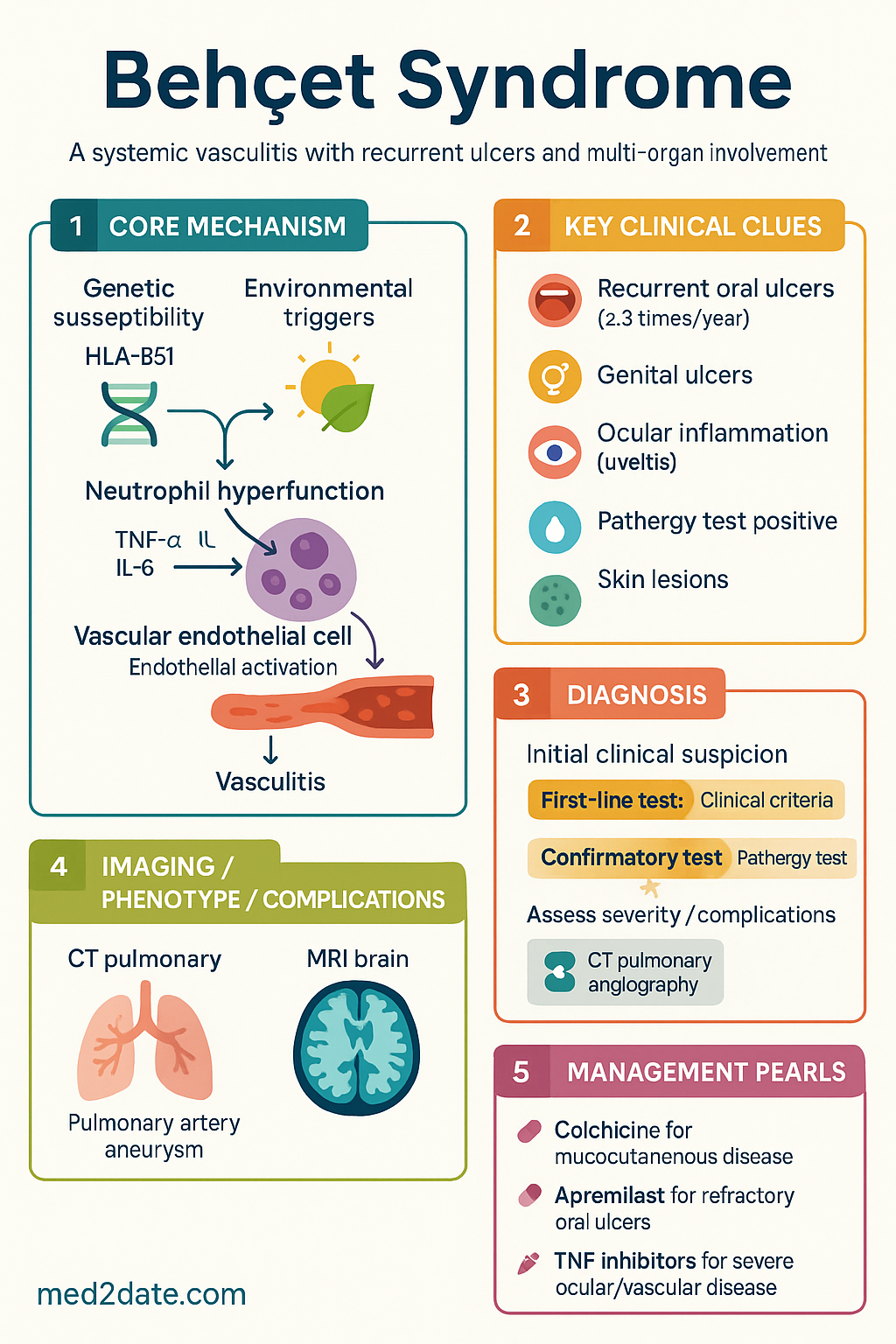
Behçet syndrome (Behçet disease) is a multisystem inflammatory disorder of unknown aetiology characterised by the triad of recurrent oral aphthous ulcers, genital ulcers, and uveitis. It is classified as a variable vessel vasculitis affecting vessels of all sizes. Though rare in Australia (prevalence <1 per 100,000), it is more common in patients from the Middle East, Central Asia, and East Asia — the historic 'Silk Road' distribution. Australian GPs encounter Behçet syndrome in immigrant populations and must recognise its protean manifestations, which span oral, genital, ocular, skin, joint, gastrointestinal, and neurological systems. Diagnosis remains clinical; there is no pathognomonic test. Early recognition prevents severe complications including blindness and neurological disability.

Key Facts

  • Rare in Australia but more common in Middle Eastern, Turkish, Japanese, Korean, and Chinese populations
  • Classic triad: recurrent oral aphthous ulcers + genital ulcers + uveitis
  • Variable vessel vasculitis — affects arteries and veins of all sizes
  • Peak onset: 20–40 years; rare before puberty or after 50 years
  • No pathognomonic test — diagnosis is clinical using International Study Group (ISG) criteria
  • HLA-B51 association: 50–70% of patients in high-prevalence regions
  • Major complications: ocular disease (blindness), neurological disease, vascular disease (thrombosis, aneurysm)
  • Treatment guided by organ involvement — colchicine for mucocutaneous disease; immunosuppression for major organ disease

International Study Group Diagnostic Criteria

ℹ️
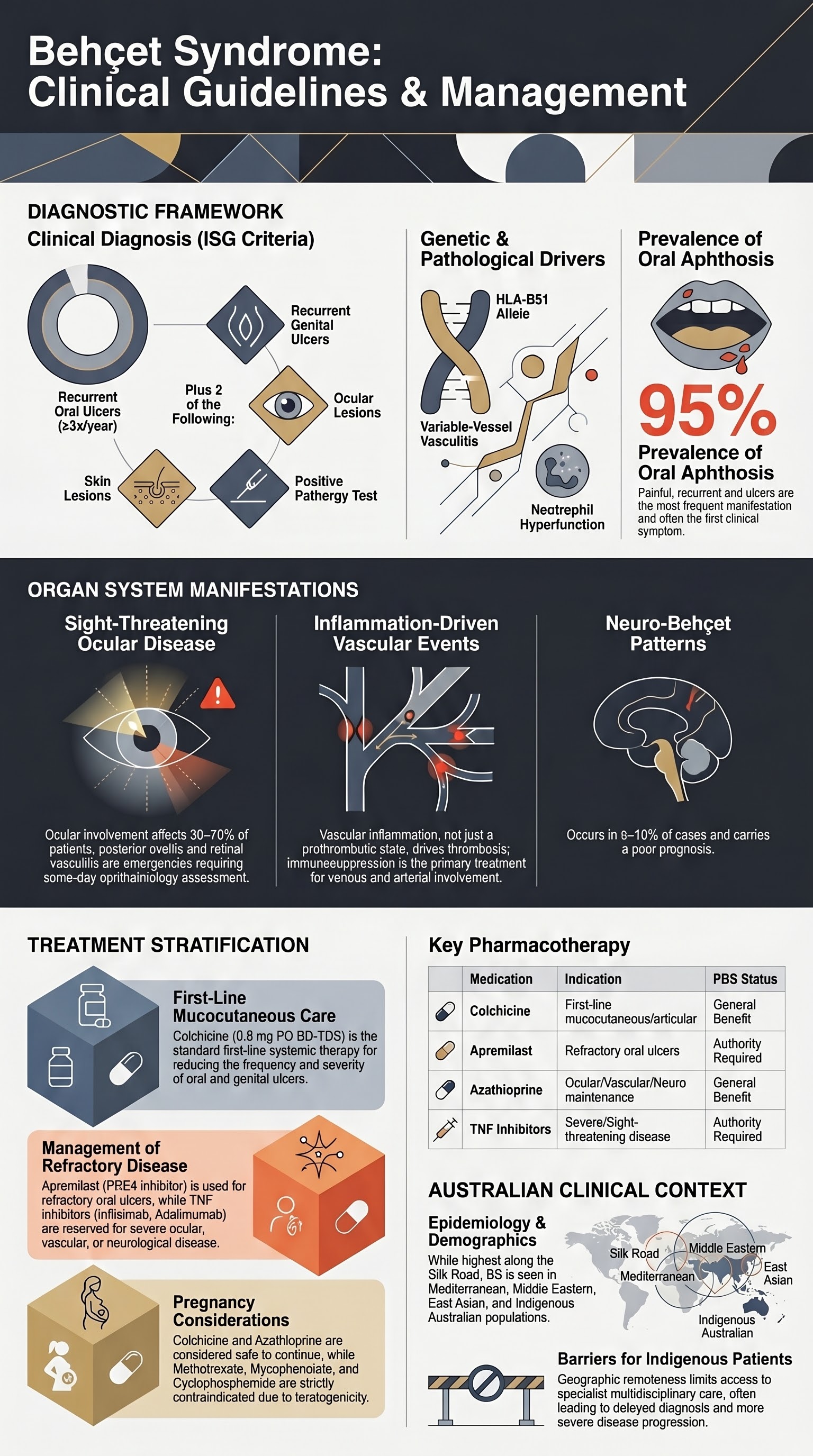
ISG Criteria (1990) — Diagnosis Requires Recurrent Oral Ulceration PLUS ≥2 of::
  • Recurrent genital ulceration
  • Eye lesions (anterior or posterior uveitis, retinal vasculitis)
  • Skin lesions (erythema nodosum, pseudofolliculitis, papulopustular lesions, acneiform nodules)
  • Positive pathergy test

Pathophysiology

The pathogenesis of Behçet syndrome involves dysregulated innate and adaptive immune responses, likely triggered by environmental factors (microbial, possibly streptococcal or HSV) in genetically predisposed individuals. The resulting inflammatory cascade causes vasculitis affecting vessels of all sizes and types, distinguishing Behçet from other vasculitides.

Immune Mechanisms

  • Innate immunity dysregulation: Excessive neutrophil activation, NK cell hyperactivity, and toll-like receptor (TLR) signalling drive the initial inflammatory response; neutrophil-rich infiltrates are characteristic of early lesions
  • T-cell abnormalities: Th1 and Th17 CD4+ T cell predominance; elevated IL-12, IL-17, IL-18, and TNF-α; imbalance between effector T cells and regulatory T cells (Tregs) perpetuates inflammation
  • IL-1 pathway: Dysregulated NLRP3 inflammasome activation generates excessive IL-1β — a key driver of the systemic inflammatory phenotype; basis for anakinra/canakinumab use
  • HLA-B51 association: HLA-B51 (subtype of HLA-B5) is the strongest genetic risk factor, present in 50–70% of patients in high-prevalence regions; mechanism not fully elucidated but may influence antigen presentation to cytotoxic T cells
  • Endothelial dysfunction: Cytokine-mediated endothelial activation leads to increased adhesion molecule expression, impaired fibrinolysis, and pro-thrombotic state — underlying mechanism of venous thrombosis

Vascular Pathology

  • Variable vessel vasculitis: affects veins and arteries of any size — small, medium, and large
  • Venous involvement: deep vein thrombosis, superficial thrombophlebitis, Budd-Chiari syndrome, dural sinus thrombosis
  • Arterial involvement: aneurysm formation (pulmonary, aortic, peripheral) — rare but potentially life-threatening; occlusive disease also described
  • Ocular vasculitis: retinal vasculitis, ischaemic optic neuropathy — leads to irreversible visual loss if untreated

Clinical Presentation

Behçet syndrome is characterised by episodic inflammatory flares affecting multiple organ systems. The clinical course is variable — ranging from mild mucocutaneous disease to severe, life-threatening involvement of the eye, nervous system, or vascular tree. Most patients present to GP with recurrent oral ulcers or genital ulcers before the full syndrome is recognised.

Oral Ulcers (>95% — Almost Universal)

  • Recurrent painful aphthous ulcers — present in virtually all patients; often the first and most persistent manifestation
  • Minor aphthae: <10 mm, heal in 1–2 weeks without scarring
  • Major aphthae: >10 mm, deeper, heal in weeks and may scar
  • Herpetiform: multiple small ulcers coalescing; less common
  • Frequency: typically ≥3 episodes per year; often monthly
  • Distribution: buccal mucosa, tongue, gingiva, soft palate, pharynx

Genital Ulcers (~75%)

  • Painful ulcers on scrotum (men), vulva/vagina (women) — often deeper than oral ulcers and frequently leave scars
  • Scrotal scarring is highly specific for Behçet syndrome
  • Less common on penis shaft, perianal region
  • May be confused with herpes simplex, syphilis, or Crohn disease

Ocular Disease (~30–70%)

  • Uveitis: Bilateral, recurrent — anterior, posterior, or panuveitis; posterior and pan-uveitis carry highest risk of vision loss
  • Retinal vasculitis: Occlusive or non-occlusive; can cause rapid irreversible visual impairment
  • Hypopyon uveitis: Characteristic but not pathognomonic — layer of pus in anterior chamber
  • Ocular disease is the leading cause of morbidity and blindness in Behçet syndrome; any visual symptoms require urgent ophthalmological assessment

Skin Manifestations (~75%)

  • Pseudofolliculitis: Papulopustular lesions resembling folliculitis but not necessarily follicle-based — most common skin finding
  • Erythema nodosum-like lesions: Tender red nodules on lower limbs; represent septal panniculitis with vasculitis
  • Acneiform nodules: Particularly on trunk; differentiate from acne by association with other features
  • Pathergy reaction: Exaggerated inflammatory response to minor skin trauma (e.g., needle prick) — positive in 40–70% of Middle Eastern patients; less common in Australian/European patients

Musculoskeletal (~50%)

  • Arthritis/arthralgia: typically oligoarticular, non-erosive, asymmetric — knees, ankles, wrists most commonly affected
  • Not deforming — distinguishes from rheumatoid arthritis
  • Joint aspiration: inflammatory fluid without crystals

Neurological — Neuro-Behçet (~5–10%)

  • Parenchymal disease: Brainstem involvement most common (hemiparesis, cerebellar ataxia, behavioural change); meningoencephalitis; spinal cord disease
  • Vascular neuro-Behçet: Cerebral venous sinus thrombosis; stroke (arterial rare)
  • CSF: elevated protein and pleocytosis in active disease; MRI: high signal lesions in brainstem, diencephalon, basal ganglia
  • Neurological involvement carries worst prognosis — associated with significant disability and mortality

Gastrointestinal (~10–30%)

  • Ileocaecal ulceration most common — may mimic Crohn disease or ulcerative colitis
  • Symptoms: abdominal pain, diarrhoea, GI bleeding; perforation is a rare but serious complication
  • GI involvement more common in East Asian (Japanese) patients

Vascular (~15–40%)

  • Venous thrombosis: DVT (often recurrent and resistant to anticoagulation alone), superficial thrombophlebitis, Budd-Chiari syndrome, dural sinus thrombosis
  • Arterial disease: Pulmonary artery aneurysm (risk of massive haemoptysis), peripheral artery aneurysm, aortic involvement — rare but life-threatening
🚨
Red Flags — Urgent Referral:
  • Any visual symptoms (blurred vision, floaters, photophobia, red eye) — same-day ophthalmology referral
  • Neurological symptoms (new headache, focal deficit, confusion) — emergency assessment
  • Haemoptysis in known Behçet — suspect pulmonary artery aneurysm; emergency chest imaging
  • DVT in young patient from high-prevalence background — consider Behçet

Investigations

Behçet syndrome has no pathognomonic laboratory test. Investigations serve to exclude mimics, confirm inflammation, assess organ involvement, and monitor treatment response. Diagnosis remains clinical using the ISG criteria.

  • Essential
    Full Blood Count
    Elevated WBC and neutrophilia during flares; anaemia of chronic disease in longstanding disease.
  • Essential
    ESR and CRP
    Elevated during active disease. ESR may lag; CRP rises acutely. Useful for monitoring disease activity and treatment response.
  • Essential
    Comprehensive Metabolic Panel (UEC, LFT, glucose)
    Baseline assessment before immunosuppressive therapy. Renal and hepatic function required before azathioprine, cyclosporin, and other agents.
  • Recommended
    HLA-B51 typing
    Positive in 50–70% of patients from high-prevalence populations (Middle Eastern, East Asian). Supports diagnosis but absence does not exclude it. Not diagnostic alone.
  • Recommended
    Pathergy test
    Intradermal needle prick — positive if erythematous papule or pustule forms within 24–48 hours. Sensitivity 40–70% in Middle Eastern patients, <20% in European/Australian patients. Specificity high when positive.
  • Recommended
    Ophthalmological assessment (slit lamp + fundoscopy)
    Mandatory if ocular symptoms or formal diagnosis suspected. Anterior uveitis, posterior uveitis, retinal vasculitis. Fluorescein angiography for posterior disease.
  • Recommended
    MRI brain and spine
    For any neurological symptoms. Characteristic pattern: brainstem, basal ganglia, diencephalon involvement. MR venography for cerebral venous sinus thrombosis.
  • Available
    Thrombophilia screen (APLS, Factor V Leiden, protein C/S, antithrombin)
    In patients with venous thrombosis — to exclude primary thrombophilia as contributing factor. Behçet can co-exist with thrombophilia.
  • Available
    CT/MR angiography
    For suspected vascular involvement — pulmonary artery aneurysm (CT chest), peripheral aneurysm, aortic disease. Perform before bronchoscopy if haemoptysis (risk of catastrophic bleeding from pulmonary artery aneurysm).
  • Available
    Upper/lower GI endoscopy
    For gastrointestinal symptoms — ileocaecal ulcers characteristic; biopsy shows non-specific inflammation. Required to distinguish from Crohn disease.

Key Differential Diagnoses

ConditionDistinguishing Features
Herpes simplexPositive HSV PCR/culture; vesicles precede ulcers; responds to aciclovir; no systemic features
Aphthous stomatitis (idiopathic)Oral ulcers only, no systemic involvement, no genital ulcers
Crohn diseaseGI predominant; granulomatous histology; perianal disease; no uveitis of Behçet type
Reactive arthritisUrethritis; conjunctivitis rather than uveitis; follows infection; HLA-B27 often positive
SLEANA/anti-dsDNA positive; butterfly rash; renal disease; complement low
Sweet syndromeSkin pustules; neutrophilic dermatosis; often secondary to haematological disease
MAGIC syndromeMouth and genital ulcers with inflamed cartilage — overlap of Behçet and relapsing polychondritis

Risk Stratification

Disease severity in Behçet syndrome is determined by the pattern and degree of organ involvement. Major organ disease (ocular, neurological, vascular, GI) carries the highest morbidity and mortality and requires aggressive immunosuppressive treatment. Mucocutaneous disease alone, while distressing, carries a more favourable prognosis.

SeverityFeaturesManagement
Mild (mucocutaneous only)Oral and/or genital ulcers, skin lesions, arthralgia without major organ involvementColchicine, topical therapy, NSAIDs; rheumatology review
ModerateArthritis, skin disease, recurrent uveitis (anterior only, responding to topical)Colchicine, azathioprine, rheumatology comanagement with ophthalmology
Severe — major organ diseasePosterior uveitis, panuveitis, retinal vasculitis; neuro-Behçet; vascular disease (DVT, aneurysm); GI disease with bleeding or perforationUrgent rheumatology referral; systemic corticosteroids + immunosuppression (azathioprine, cyclosporin, infliximab, IFN-α)
Life-threateningPulmonary artery aneurysm, intracranial hypertension, major GI perforation, severe vascular diseaseEmergency management; immunosuppressive therapy; surgical/interventional options

Prognostic Factors

  • Sex: Males have more severe disease overall, particularly ocular and vascular involvement
  • Age at onset: Younger onset associated with more severe and progressive disease
  • Ethnicity/origin: Patients from high-prevalence regions (Middle East, East Asia) tend to have more severe disease
  • Ocular disease: Posterior uveitis and retinal vasculitis without timely treatment leads to irreversible blindness
  • Neurological disease: Parenchymal neuro-Behçet has poor prognosis with disability in majority; vascular neuro-Behçet (CVT) has better prognosis with treatment
  • Natural history: Variable — some patients have decades of remission; others have relentless progressive disease

Pharmacological Management

Treatment in Behçet syndrome is organ-specific and titrated to disease severity. Colchicine is the foundation for mucocutaneous disease. Major organ involvement requires systemic corticosteroids and immunosuppressive agents. Biologics (anti-TNF, IFN-α, IL-1 inhibitors) are used for refractory disease. All patients with Behçet syndrome should be under rheumatology care.

💊
Colchicine
Colgout® | First-line for mucocutaneous disease and arthritis
Adult Dose 0.5–1 mg
Frequency Once or twice daily
Duration Long-term maintenance — continue while active disease
Route Oral
Renal Adj. Reduce dose if eGFR <30 mL/min; avoid if eGFR <10
PBS Status ✓ PBS — Behçet syndrome indication
Notes Reduces frequency of oral and genital ulcers and erythema nodosum. Less effective for posterior uveitis or major organ disease. GI side effects common (diarrhoea) — start low, titrate. Safe in long-term use.
💊
Azathioprine
Imuran® | Immunosuppressive — second-line and major organ disease
Adult Dose 2–2.5 mg/kg/day
Frequency Once daily
Duration Long-term maintenance under specialist supervision
Route Oral
PBS Status ⚠ PBS: Authority required
Notes TPMT genotyping recommended before initiation — TPMT-deficient patients at high risk of myelosuppression. Monitor FBC, LFT 4-weekly initially. Effective for ocular disease, mucocutaneous disease, and arthritis. Initiated and monitored by rheumatologist.
💊
Prednisolone
Panafcort® | Systemic corticosteroid — acute flares and major organ disease
Adult Dose 0.5–1 mg/kg/day (acute); taper to lowest effective dose
Frequency Once daily (morning)
Duration Short course for flares; long-term low-dose with immunosuppressive
Route Oral
PBS Status ✓ PBS General Benefit
Notes High-dose pulsed IV methylprednisolone (1 g/day × 3 days) for acute sight-threatening uveitis or neuro-Behçet. Long-term corticosteroid use requires bone protection (calcium, vitamin D, bisphosphonate), BP monitoring, and glycaemic surveillance.
💊
Apremilast
Otezla® | PDE4 inhibitor — oral ulcers
Adult Dose 30 mg
Frequency Twice daily (titrate over 5 days)
Duration Ongoing while effective
Route Oral
PBS Status ⚠ PBS: Authority required for Behçet oral ulcers
Notes TGA/PBS approved for oral ulcers in Behçet. Reduces frequency and pain of oral aphthous ulcers. Well tolerated; no immunosuppression. Side effects: nausea, diarrhoea, depression (monitor). Suitable when colchicine insufficient for oral ulcers.
💊
Infliximab
Remicade® | Anti-TNF biologic — refractory major organ disease
Adult Dose 5 mg/kg IV at 0, 2, 6 weeks then every 8 weeks
Frequency Every 8 weeks IV infusion
Duration Ongoing under specialist supervision
Route Intravenous
PBS Status ⚠ PBS: Specialist authority — refractory disease
Notes Effective for refractory uveitis, neuro-Behçet, vascular disease, and refractory mucocutaneous disease. Requires TB screening, hepatitis B/C serology before initiation. Initiated by rheumatologist or ophthalmologist.
ℹ️
Treatment Note — Anticoagulation in Vascular Behçet: Venous thrombosis in Behçet syndrome is driven by vasculitis, not primary coagulopathy. Anticoagulation alone is insufficient — immunosuppressive therapy to control underlying vasculitis is essential and often more important than anticoagulation. Anticoagulation may increase risk of bleeding from aneurysms. Management should be in conjunction with a rheumatologist.

Directed Therapy — Organ-Specific Treatment

Behçet syndrome requires organ-specific treatment escalation. The following summarises management by system, all requiring rheumatology and relevant specialist comanagement.

Ocular Disease

  • Anterior uveitis (mild): Topical corticosteroids (prednisolone acetate drops) + cycloplegics (atropine); refer ophthalmology
  • Posterior uveitis / panuveitis / retinal vasculitis: Urgent ophthalmology — systemic azathioprine + systemic corticosteroids; consider infliximab for refractory or rapidly progressive disease
  • Sight-threatening acute flare: IV methylprednisolone 1 g/day × 3 days; infliximab IV for rapid TNF blockade
  • Monitoring: Ophthalmology review every 3–6 months in established disease; fluorescein angiography to assess retinal vasculitis activity

Neurological Disease (Neuro-Behçet)

  • Parenchymal disease: High-dose IV methylprednisolone + oral prednisolone taper; add azathioprine or mycophenolate for maintenance; infliximab or IFN-α for refractory cases
  • Cerebral venous sinus thrombosis (CVST): Anticoagulation + immunosuppression; avoid long-term anticoagulation without immunosuppression
  • MRI monitoring: 6–12 monthly during treatment
  • Avoid: Cyclosporin — associated with neurotoxicity in neuro-Behçet

Vascular Disease

  • DVT: Anticoagulation + immunosuppression (azathioprine, corticosteroids); do not anticoagulate alone without treating the underlying vasculitis
  • Pulmonary artery aneurysm: Medical emergency — immunosuppression (cyclophosphamide + pulse steroids) as first-line; embolisation or surgery in haemodynamically unstable patients; do NOT perform bronchoscopy (risk of catastrophic haemorrhage)
  • Peripheral aneurysm: Surgical repair or endovascular treatment + immunosuppression

Mucocutaneous Disease

  • Oral ulcers: Topical triamcinolone paste or betamethasone mouthwash for symptomatic relief; colchicine for prevention; apremilast if colchicine insufficient
  • Genital ulcers: Topical corticosteroids; colchicine; systemic therapy if severe
  • Skin disease: Colchicine; dapsone for erythema nodosum-like lesions unresponsive to colchicine

Non-Pharmacological Management

Non-pharmacological management in Behçet syndrome focuses on patient education, trigger avoidance, quality-of-life support, and multidisciplinary team coordination. There is no curative treatment; optimal management requires long-term GP and specialist partnership.

Patient Education and Self-Management

  • Educate patients about the episodic nature of Behçet syndrome — flares and remissions are expected; recognising flare symptoms early allows prompt treatment
  • Oral hygiene: meticulous dental hygiene reduces oral ulcer frequency; regular dental review
  • Avoid known triggers for oral ulcers where possible: dental trauma, hard foods, emotional stress; toothbrush trauma is a common trigger
  • Sun protection: skin lesions may be triggered by UV exposure in some patients
  • Smoking: smoking cessation recommended — smoking is associated with worse vascular outcomes

Multidisciplinary Team

  • Rheumatologist: Coordinates overall disease management, initiates and monitors immunosuppression
  • Ophthalmologist: Essential for all patients with ocular symptoms; regular monitoring recommended even in asymptomatic patients with known posterior uveitis risk
  • Neurologist: For neuro-Behçet evaluation and management
  • Vascular surgeon / interventional radiologist: For vascular complications
  • Gastroenterologist: For GI Behçet evaluation and endoscopy
  • Dermatologist: Pathergy testing, skin biopsy, and management of refractory skin disease
  • Psychologist / counsellor: Chronic pain, genital ulcers, and cosmetic concerns significantly impact quality of life; psychological support important

Fertility and Pregnancy

  • Behçet syndrome itself does not impair fertility
  • Some immunosuppressive agents are teratogenic — azathioprine is generally considered safe in pregnancy; methotrexate and mycophenolate are contraindicated
  • Disease may improve, worsen, or remain stable during pregnancy — close monitoring required
  • Colchicine is category B3 in Australia; generally continued during pregnancy for mucocutaneous disease under specialist guidance
  • Consult rheumatologist and high-risk obstetrics before conception in patients on immunosuppression

Monitoring Parameters

Monitoring in Behçet syndrome targets disease activity, treatment toxicity, and organ-specific complications. The frequency of monitoring depends on disease severity and the immunosuppressive regimen in use.

Diagnosis / new patient
Full clinical assessment, ISG criteria confirmation, baseline bloods (FBC, UEC, LFT, ESR, CRP, HLA-B51), ophthalmology referral, rheumatology referral. Document affected organ systems.
Initiation of immunosuppression
FBC and LFT at 2 and 4 weeks, then monthly for 3 months. Blood pressure monitoring if on cyclosporin. Hepatitis B/C serology and TB screen before biologics.
Stable maintenance
FBC, UEC, LFT, ESR, CRP every 3 months. Annual ophthalmology review. Bone density (DEXA) if on long-term corticosteroids. Assess flare frequency.
Flare management
Assess affected organ system urgently. Adjust immunosuppressive therapy. Ophthalmology within 24 hours for any visual symptoms. Emergency assessment for neurological or vascular symptoms.
Annual review
Comprehensive disease activity assessment. Review medications, toxicity screen, and organ damage accumulation. Update vaccination status (avoid live vaccines on immunosuppression).

Disease Activity Tools

  • Behçet Disease Activity Score (BDAS) / Behçet Syndrome Activity Scale (BSAS): Validated tools for quantifying disease activity across organ systems — used in specialist practice
  • Oral ulcer count: Simple tracking of frequency and severity at each GP visit
  • Visual acuity and ophthalmology reports: Key outcome measure — track change from baseline
  • ESR/CRP: Non-specific but useful for monitoring systemic inflammation during flares and remission

Vaccination

  • Inactivated vaccines (influenza, pneumococcal, COVID-19 mRNA) are safe on immunosuppression and strongly recommended
  • Live vaccines (MMR, varicella, yellow fever) are contraindicated while on immunosuppression — vaccinate before initiating therapy if possible
  • Annual influenza vaccine recommended for all patients on immunosuppression

Special Populations

👶 Paediatric Behçet Syndrome

  • Rare — onset before 16 years accounts for approximately 6–18% of cases
  • Diagnosis challenging as recurrent oral ulcers are common in children generally
  • Paediatric Behçet may present with fever of unknown origin, arthritis, and skin disease before genital ulcers appear
  • Management under paediatric rheumatology; colchicine generally safe in children

🧬 Patients from High-Prevalence Backgrounds

  • Middle Eastern (Turkish, Iranian, Lebanese, Iraqi), Central Asian, East Asian (Japanese, Korean, Chinese) heritage: higher prevalence and often more severe disease phenotype
  • HLA-B51 testing is informative in these populations (50–70% positive)
  • Cultural sensitivity around genital ulcers — may be embarrassing to disclose; proactive questioning important
  • Language barriers: use professional interpreters for history taking, especially regarding genital symptoms

🤰 Pregnancy

  • Preconception counselling: review and adjust immunosuppressive therapy — discontinue teratogenic agents (methotrexate, mycophenolate) ≥3 months before conception
  • Colchicine: generally continued if needed; category B3 in Australia
  • Azathioprine: considered relatively safe; balance risk of flare vs teratogenicity on case-by-case basis under specialist supervision
  • Disease course during pregnancy: unpredictable; monitor closely
  • Neonatal Behçet: rare — transient lesions in neonates born to affected mothers, resolving spontaneously

💊 Patients on Biologics

  • Infliximab and adalimumab users require TB screening, hepatitis B/C serology, and regular infection monitoring
  • Avoid live vaccines while on biologics
  • Screen for malignancy (particularly lymphoma) — theoretical increased risk with long-term anti-TNF use
  • Surgical procedures and invasive investigations: hold biologics perioperatively (consult rheumatologist for timing)

Aboriginal and Torres Strait Islander Health Considerations

Aboriginal and Torres Strait Islander Health

Behçet syndrome is not specifically reported at increased prevalence in Aboriginal and Torres Strait Islander (ATSI) populations. The demographic predominantly affected in Australia is the migrant population from high-prevalence regions (Middle East, Central Asia, East Asia). If Behçet syndrome is identified in an ATSI patient, management follows the same principles with attention to access barriers, comorbidities, and culturally safe care.

Misdiagnosis Risk
Recurrent oral and genital ulcers in ATSI patients may be attributed to sexually transmitted infections (especially HSV) or nutritional deficiency. A thorough clinical history and appropriate testing (HSV PCR/culture, syphilis serology) is essential before and after considering Behçet. Persistent ulcers not responding to standard treatment should prompt referral.
Access to Subspecialty Care
Rheumatology, ophthalmology, and neurology services are limited or absent in remote communities. Telehealth rheumatology and ophthalmology consultation services are increasingly available in Australia and should be leveraged for initial assessment and monitoring. Organise timely transfer for urgent ocular or neurological evaluation.
Medication Access and Adherence
Colchicine and prednisolone are available on PBS and generally accessible. Biologics and specialist-administered therapies require metropolitan or regional centre access. Medication adherence support through community health workers and Aboriginal Medical Services is important for complex immunosuppressive regimens.
Comorbidity Management
Higher rates of diabetes, cardiovascular disease, and renal impairment in ATSI patients affect medication choices (NSAIDs, cyclosporin, and other nephrotoxic agents require caution). Coordinated chronic disease management integrating Behçet syndrome with existing chronic conditions through the patient's primary care team is important.

Appropriate Use of Medicine and Stewardship

Stewardship in Behçet syndrome involves judicious use of immunosuppressive and biologic agents, minimising corticosteroid exposure, ensuring appropriate monitoring, and avoiding diagnostic delays that lead to irreversible organ damage.

⚠️
Common Stewardship Issues:
  • Delayed diagnosis: Behçet is commonly underdiagnosed in Australia. Patients with recurrent oral and genital ulcers should be assessed for the full syndrome, not just treated symptomatically for 'aphthous stomatitis'.
  • Corticosteroid over-reliance: Long-term corticosteroids without steroid-sparing immunosuppression leads to Cushing syndrome, osteoporosis, and metabolic complications. Always add azathioprine or other steroid-sparing agent for major organ disease.
  • Anticoagulation without immunosuppression for DVT: Thrombosis in Behçet is vasculitis-driven; anticoagulation alone is insufficient and immunosuppression is essential.
  • Cyclosporin in neuro-Behçet: Cyclosporin is associated with neurotoxicity and should be avoided in patients with neurological involvement.
  • Live vaccines on immunosuppression: Contraindicated — ensure vaccination status updated before initiating immunosuppressive therapy.

GP Role in Stewardship

  • Coordinate shared care with rheumatologist — GP manages routine monitoring bloods, BP, weight, vaccination, and medication renewals
  • Ensure bone protection is prescribed when long-term corticosteroids are used (calcium 1200 mg/day, vitamin D, bisphosphonate if indicated)
  • Screen for metabolic complications of chronic corticosteroid use: diabetes, hypertension, dyslipidaemia, osteoporosis
  • Prompt referral for any new ocular, neurological, or vascular symptoms — do not delay for routine rheumatology appointment

Follow-up and Prevention

Behçet syndrome requires lifelong monitoring and is a chronic relapsing-remitting condition. The primary goal of long-term follow-up is preventing irreversible organ damage, especially blindness and neurological disability, while minimising treatment toxicity.

PhaseActionGoal
DiagnosisConfirm ISG criteria, baseline bloods, ophthalmology referral, rheumatology referralEstablish organ involvement, initiate appropriate treatment
Active treatment (first 6 months)FBC, LFT, UEC 4-weekly; ophthalmology as needed; BP if on cyclosporinDetect treatment toxicity early; optimise disease control
Stable maintenance3-monthly bloods; 6-monthly clinical review; annual ophthalmologyMaintain remission; detect flares early; minimise toxicity
FlareUrgent clinical assessment; organ-specific specialist referral as appropriatePrevent irreversible organ damage
Annual comprehensive reviewFull disease activity assessment; vaccination update; DEXA if on corticosteroids; skin cancer screening if on immunosuppressionLong-term damage prevention; quality of life optimisation

Prevention

  • No proven primary prevention — Behçet is idiopathic
  • Secondary prevention: prompt treatment of flares, particularly ocular disease, prevents irreversible organ damage
  • Opportunistic infection prevention: vaccination, prophylactic antibiotics for surgical procedures (consult rheumatologist), PCP prophylaxis on high-dose immunosuppression if indicated
  • Patient education: recognising early flare symptoms enables prompt seeking of care

References

  • 01
    Hatemi G, et al. 2018 update of the EULAR recommendations for the management of Behçet's syndrome. Ann Rheum Dis. 2018;77(6):808–818.
  • 02
    International Study Group for Behçet's Disease. Criteria for diagnosis of Behçet's disease. Lancet. 1990;335(8697):1078–1080.
  • 03
    Yazici H, Seyahi E, Hatemi G, Yazici Y. Behçet syndrome: a contemporary view. Nat Rev Rheumatol. 2018;14(2):107–119.
  • 04
    Kappen JH, van Dijk EHC, Baerveldt EM, et al. Behçet's disease, an old disease with new targets. Clin Exp Rheumatol. 2012;30(3 Suppl 72):S55–60.
  • 05
    Greco A, et al. Behçet's disease: new insights into pathophysiology, clinical features and treatment options. Autoimmun Rev. 2018;17(6):567–575.
  • 06
    Seyahi E, Fresko I, Talarico R, et al. The management of Behçet's syndrome: a systematic literature review for the EULAR update. Ann Rheum Dis. 2018;77(6):808.
  • 07
    Davatchi F, et al. Behçet's disease: epidemiology, clinical manifestations, and diagnosis. Expert Rev Clin Immunol. 2017;13(1):57–65.
  • 08
    Sfikakis PP. Behçet's disease: a new target for anti-tumour necrosis factor treatment. Ann Rheum Dis. 2002;61(Suppl 2):ii51–53.
  • 09
    Alibaz-Oner F, et al. Management of vascular involvement in Behçet's syndrome. Curr Opin Rheumatol. 2016;28(1):15–20.
  • 10
    Akman-Demir G, Serdaroglu P, Tasci B. Clinical patterns of neurological involvement in Behçet's disease. Brain. 1999;122(11):2171–2181.
  • 11
    Therapeutic Guidelines. Rheumatology. Melbourne: Therapeutic Guidelines Ltd; 2024.
  • 12
    Royal Australian College of General Practitioners (RACGP). Guidelines for preventive activities in general practice (Red Book). 10th ed. Melbourne: RACGP; 2023.