Introduction and Overview
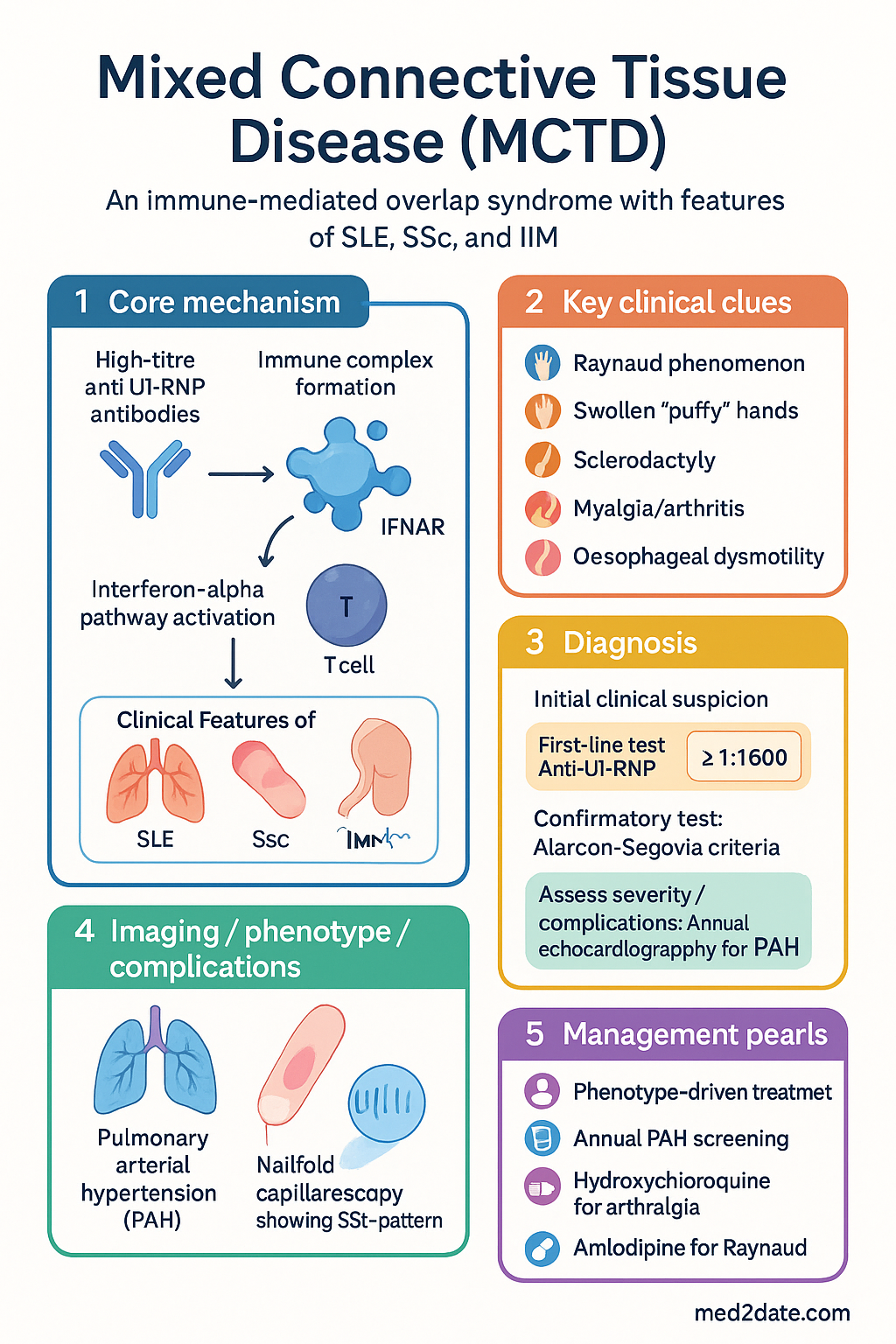
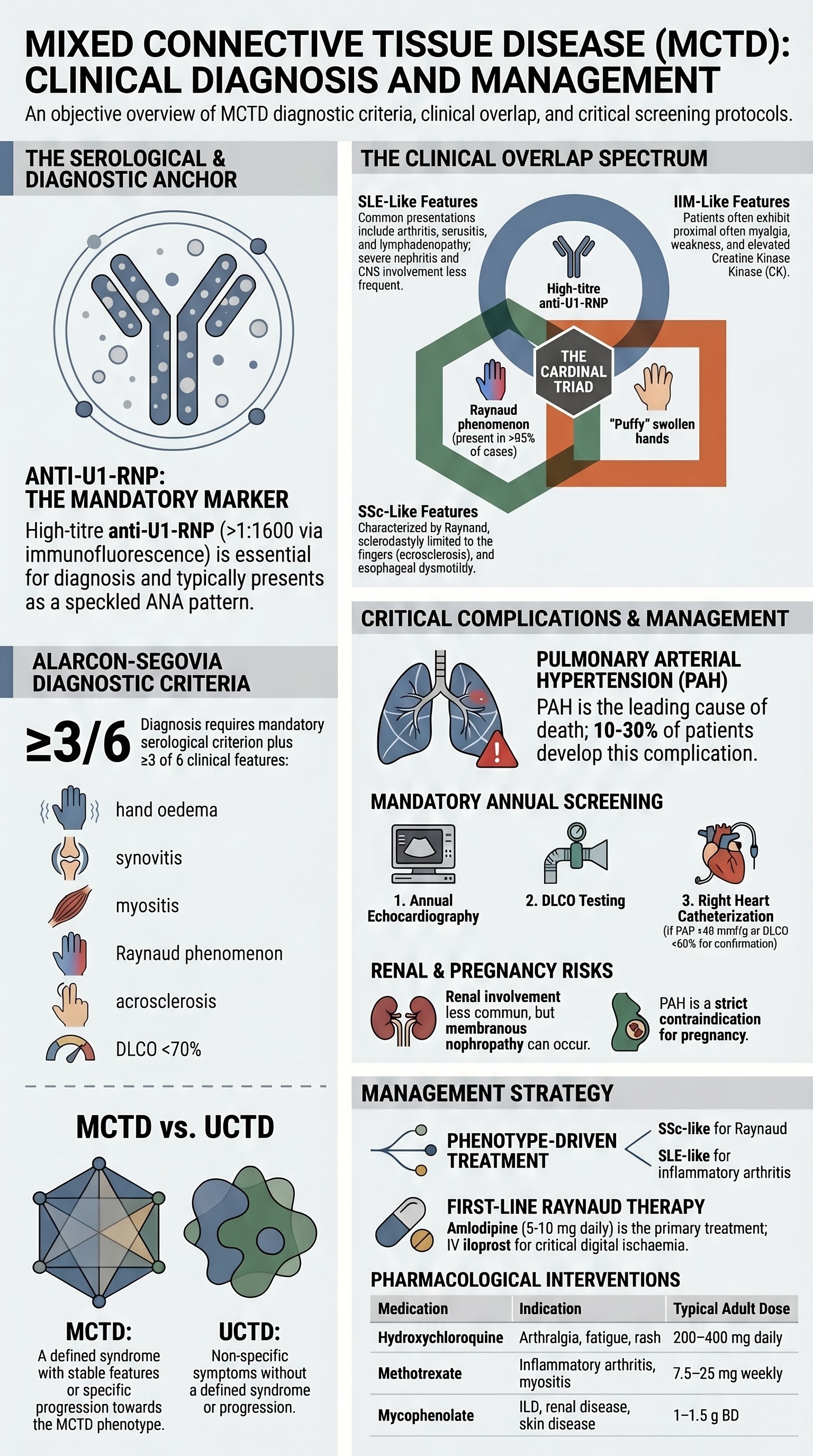
Mixed connective tissue disease (MCTD) is a systemic autoimmune overlap syndrome characterised by the combination of features from systemic lupus erythematosus (SLE), systemic sclerosis (SSc), polymyositis/dermatomyositis, and rheumatoid arthritis โ occurring in association with high-titre anti-U1 ribonucleoprotein (anti-U1 RNP) antibodies. First described by Sharp et al. in 1972, MCTD was initially considered a distinct entity with a favourable prognosis, but longitudinal studies show it has significant morbidity, particularly from pulmonary arterial hypertension (PAH), which is the leading cause of mortality. MCTD predominantly affects women in the second to fourth decade (female:male ~9:1). The hallmark clinical features are Raynaud phenomenon, swollen (puffy) fingers, inflammatory arthritis, inflammatory myopathy, and oesophageal dysmotility.
| Component Disease | Features Contributed to MCTD | Frequency in MCTD |
|---|---|---|
| SLE | Arthritis, serositis, oral ulcers, lymphopenia, renal disease (less common than pure SLE) | ~75โ90% |
| Systemic sclerosis | Raynaud phenomenon, puffy fingers, sclerodactyly, oesophageal dysmotility, PAH, ILD | ~80โ90% |
| Polymyositis/dermatomyositis | Proximal muscle weakness, elevated CK, myositis on EMG/MRI | ~50โ70% |
| Rheumatoid arthritis | Erosive or non-erosive polyarthritis; positive RF in ~50% | ~60โ80% |
Pathophysiology
The pathogenesis of MCTD centres on immune dysregulation driven by anti-U1 RNP antibodies and T cell-mediated autoimmunity, producing vasculopathy and end-organ inflammation across multiple systems.
Key Pathogenic Mechanisms
- Anti-U1 RNP antibodies โ directed against the U1 small nuclear ribonucleoprotein (snRNP) complex; pathogenic via immune complex deposition, complement activation, and TLR-mediated innate immune activation; anti-U1 70kD subunit correlates with myositis and PAH
- Vasculopathy โ intimal proliferation and medial hypertrophy in small vessels; PAH is the most severe vasculopathic manifestation; Raynaud phenomenon reflects vasospasm; endothelial apoptosis and growth factor dysregulation drive vascular remodelling
- T cell dysregulation โ Th1/Th2/Th17 imbalance; CD4+ T cell infiltration in muscle (myositis) and synovium (arthritis); cytokines (IL-6, TNF-ฮฑ, IFN-ฮณ, TGF-ฮฒ) drive organ-specific inflammation and fibrosis
- Fibrosis โ TGF-ฮฒ-driven; contributes to oesophageal dysmotility, ILD, and skin thickening (less severe than SSc)
- Genetic predisposition โ HLA-DR4 and HLA-DRw53 associations; shared genetic risk with SLE and SSc
Clinical Presentation
MCTD presents insidiously with Raynaud phenomenon as the most common initial feature, followed by progressive development of overlap features. The classic triad of Raynaud phenomenon, swollen fingers, and high-titre anti-U1 RNP should prompt consideration of MCTD.
| System | Manifestation | Clinical Notes |
|---|---|---|
| Vascular | Raynaud phenomenon (95%); digital ulcers; telangiectasias | Often the presenting feature; nailfold capillaroscopy may show SSc-like pattern |
| Hands/skin | Puffy/sausage fingers (dactylitis); sclerodactyly (less severe than SSc); calcinosis rare | Puffy fingers are a characteristic early feature; hand swelling may precede formal diagnosis |
| Musculoskeletal | Inflammatory polyarthritis (often RA-like); erosive arthritis in ~25%; proximal myopathy | Arthritis may be the most disabling feature; elevated CK indicates myositis |
| Pulmonary | PAH (15โ25%); ILD (~30โ50%); pleuritis | PAH is the leading cause of death; annual echo mandatory; ILD is NSIP pattern predominantly |
| Gastrointestinal | Oesophageal dysmotility (80%); GERD; gastroparesis | Similar to SSc GI disease; PPI and prokinetics; Barrett oesophagus surveillance |
| Cardiac | Pericarditis; pericardial effusion; myocarditis (rare) | Pericarditis more common than in SSc; pericardial effusion may be large |
| Renal | Membranous or mesangial nephropathy; less severe than SLE nephritis | Renal crisis (as in SSc) is rare in MCTD; urinalysis and UEC at baseline and monitoring |
| Neurological | Trigeminal neuropathy (characteristic); aseptic meningitis; peripheral neuropathy; CNS vasculitis (rare) | Trigeminal neuropathy is an important distinguishing feature of MCTD |
| Haematological | Leucopenia; lymphopenia; thrombocytopenia; haemolytic anaemia (rare) | Cytopenias are common; positive Coombs test in some patients |
Investigations
The diagnostic cornerstone of MCTD is a high-titre anti-U1 RNP antibody. Comprehensive baseline organ assessment is required given the multi-system nature of the disease, with particular attention to PAH and ILD screening.
- EssentialAnti-U1 RNP antibody (high titre)Defining antibody of MCTD โ typically very high titre (>1:1600 by immunofluorescence or strongly positive by ELISA/line blot). Anti-U1 RNP is part of the anti-ENA panel. Positive ANA (speckled pattern) almost universal. Anti-Sm, anti-dsDNA, anti-Ro/SSA and anti-La/SSB may coexist but at lower titres.
- EssentialFull ANA panel (anti-Sm, anti-dsDNA, anti-Ro, anti-La, anti-Scl-70, anti-centromere)To characterise overlap features and exclude predominant SLE or SSc. Anti-Sm suggests SLE component; anti-Scl-70 or anti-centromere suggest SSc-dominant disease. Anti-dsDNA is typically low or absent in pure MCTD.
- EssentialFBC, UEC, LFTs, ESR, CRP, CK, aldolaseLymphopenia common; leucopenia; elevated CK indicates myositis (may be markedly elevated); LDH and aldolase are sensitive myositis markers. ESR elevated; CRP less so unless serositis present.
- EssentialEchocardiogram โ baseline and annual PAH screeningPAH affects 15โ25% of MCTD patients and is the leading cause of mortality. Estimated RVSP >40 mmHg requires formal right heart catheterisation. Annual echo is mandatory for all MCTD patients. NT-proBNP as adjunct PAH screening marker.
- EssentialPFTs (FVC + DLCO) โ baseline and annualILD surveillance and PAH screening. Declining DLCO with preserved FVC pattern suggests PAH; declining FVC and DLCO suggests ILD. 6-monthly if ILD present or declining.
- RecommendedHRCT chestBaseline in all patients; NSIP most common ILD pattern in MCTD. Repeat if FVC declines or respiratory symptoms develop. Pulmonology co-management if ILD present.
- RecommendedUrinalysis, urine protein:creatinine ratioRenal involvement is less severe than in SLE but monitoring is required. Proteinuria and haematuria prompt renal biopsy to guide therapy.
- RecommendedComplement C3, C4 and urinalysisLow complement may indicate SLE overlap with active nephritis; low C4 with cryoglobulinaemia indicates vasculitis. Monitor when SLE-like features present.
- RecommendedMRI muscles / muscle biopsyIndicated when myositis is clinically suspected (weakness, elevated CK) โ MRI identifies active muscle inflammation for biopsy targeting. Biopsy confirms myositis subtype. EMG and nerve conduction studies for neuropathy assessment.
Risk Stratification
MCTD risk stratification focuses on identifying organ-threatening disease, particularly PAH and significant ILD, which drive mortality. Disease activity is monitored across multiple organ domains.
| Risk Category | Features | Management Priority |
|---|---|---|
| Low / early disease | Raynaud phenomenon only; puffy fingers; fatigue; positive anti-U1 RNP; no organ involvement | HCQ; annual PAH and ILD screening; Raynaud management; NSAID for arthralgia; patient education |
| Moderate | Active arthritis; mild myositis (CK mildly elevated); GERD; mild ILD (FVC >70%); serositis | HCQ + low-dose prednisolone; MTX or azathioprine for arthritis/mild myositis; PPI; rheumatology 3-monthly |
| High โ myositis/ILD | Active myositis (CK markedly elevated, weakness); progressive ILD (FVC <70% or declining); interstitial pneumonitis | Prednisolone + immunosuppression (MTX, azathioprine, MMF); IVIg for refractory myositis; pulmonology co-management |
| High โ PAH | Echo RVSP >40 mmHg; confirmed mPAP >20 mmHg + PVR >2 Wood units on RHC; NT-proBNP elevated | PAH-targeted therapy (ERA, PDE5 inhibitor); cardiology + pulmonology co-management; consider lung transplant evaluation |
Pharmacological Management
Treatment in MCTD is organ-based and driven by the predominant component disease at any given time. Hydroxychloroquine is the anchor therapy. Corticosteroids and immunosuppression are used for inflammatory flares; PAH and ILD require targeted intervention.
Directed Therapy
Directed therapy in MCTD addresses specific dominant manifestations requiring targeted management.
Pulmonary Arterial Hypertension
- Confirm PAH by right heart catheterisation โ mPAP >20 mmHg with PVR >2 Wood units at rest; do not treat based on echo RVSP estimate alone
- WHO functional class II: ERA monotherapy (bosentan PBS-listed for PAH) or sildenafil (PBS-listed for PAH)
- WHO functional class IIIโIV: combination therapy ERA + PDE5 inhibitor; consider riociguat (not with PDE5 inhibitor); iloprost or epoprostenol IV for refractory disease
- Referral to specialist PAH centre โ combined immunosuppression and PAH therapy may be beneficial in MCTD-PAH given inflammatory aetiology; rituximab or cyclophosphamide in refractory MCTD-PAH
Inflammatory Myositis
- Prednisolone 1 mg/kg/day โ first-line for active myositis; taper guided by CK normalisation and clinical response
- Steroid-sparing: methotrexate 15โ25 mg/week, azathioprine 2โ3 mg/kg/day, or MMF 2โ3 g/day
- Refractory myositis โ IVIg 2 g/kg over 2โ5 days; rituximab (anti-CD20) for refractory inflammatory myopathy; tacrolimus for refractory cases with ILD
- Physiotherapy and exercise rehabilitation โ graded exercise programme once disease is controlled; avoid exercise during active myositis (may worsen)
Raynaud Phenomenon and Digital Ischaemia
- Nifedipine modified release 20โ40 mg twice daily โ first-line (PBS-listed for Raynaud in CTD)
- Sildenafil for refractory Raynaud or digital ulcers not responding to CCB
- Bosentan for prevention of new digital ulcers (PBS-listed for SSc digital ulcer prevention โ may apply in MCTD)
- Avoid beta-blockers, vasoconstrictors, and smoking โ all worsen Raynaud vasospasm
Arthritis
- NSAIDs โ for mild arthralgia; short-term use; avoid in renal impairment
- HCQ + low-dose prednisolone for mild-moderate inflammatory arthritis
- Methotrexate โ first-line DMARD for persistent or erosive arthritis
- Biologics โ TNF inhibitors (e.g., etanercept, adalimumab) for methotrexate-refractory arthritis; use with caution given SLE-like features (may worsen SLE component)
Non-Pharmacological Management
Non-pharmacological management is integral to MCTD care, addressing functional limitations, Raynaud protection, fatigue, and nutritional support.
Raynaud and Vascular Protection
- Thermal protection โ heated gloves, hand warmers, layered clothing; avoid cold environments and cold water immersion
- Smoking cessation โ mandatory; tobacco dramatically worsens vasospasm and digital ischaemia
- Avoid vasoconstrictors โ beta-blockers, sympathomimetics, nasal decongestants; review all medications
Physiotherapy and Rehabilitation
- Myositis rehabilitation โ graded aerobic exercise when myositis controlled; resistance training to rebuild muscle mass; supervised programme initially
- Hand exercises โ range-of-motion for puffy or sclerodactylous fingers; occupational therapy for adaptive devices
- Respiratory physiotherapy โ breathing exercises for ILD; pulmonary rehabilitation programme
Nutritional and GI Support
- High-dose PPI โ omeprazole 40 mg twice daily for GERD; prokinetics for dysmotility
- Hand exercises โ range-of-motion for puffy or sclerodactylous fingers; occupational therapy for adaptive devices
- Respiratory physiotherapy โ breathing exercises for ILD; pulmonary rehabilitation programme
Nutritional and GI Support
- High-dose PPI โ omeprazole 40 mg twice daily for GERD; prokinetics for dysmotility
- Dietitian referral โ for dysphagia-related malnutrition or myositis-related nutritional deficits
Psychological Support
- Fatigue, pain, and functional limitation have significant psychological burden โ psychology referral for depression and adjustment difficulties
- Arthritis Australia and Scleroderma Australia โ patient support resources
Monitoring Parameters
MCTD requires structured lifelong monitoring across multiple organ domains, with PAH surveillance being the highest priority.
| Parameter | Frequency | Indication |
|---|---|---|
| Echocardiogram | Annually | PAH screening โ highest priority in MCTD monitoring |
| PFTs (FVC + DLCO) | Annually (stable); 6-monthly (ILD or declining) | ILD and PAH surveillance |
| NT-proBNP | Annually (PAH screening) | Rising NT-proBNP triggers formal PAH workup including RHC |
| FBC, UEC, LFTs, ESR, CK | 3โ6 monthly | Disease activity; myositis; immunosuppression toxicity |
| Urinalysis + urine protein:creatinine | 6-monthly | Renal disease surveillance; SLE nephritis component |
| Anti-U1 RNP titre | Annually or at flare | Titre correlates loosely with disease activity; persistently high titres with worsening symptoms |
| Complement C3, C4 | Annually or at clinical concern | Low complement indicates SLE component activity |
When to Refer Urgently
- Cardiology/Pulmonology: Echo RVSP >40 mmHg, progressive dyspnoea, elevated NT-proBNP โ urgent RHC for PAH diagnosis
- Neurology: Progressive trigeminal neuropathy, mononeuritis multiplex, CNS manifestations
- Nephrology: Proteinuria >1 g/day, rising creatinine, active urinary sediment
Special Populations
MCTD requires specific considerations in certain patient groups.
MCTD in Pregnancy
- Anti-U1 RNP โ transplacental passage; neonatal lupus and congenital heart block risk (lower than anti-Ro/SSA but present); fetal echocardiography surveillance 16โ26 weeks
- Hydroxychloroquine โ continue throughout pregnancy; reduces neonatal lupus risk; safe in breastfeeding
- PAH in MCTD is a contraindication to pregnancy โ maternal mortality risk >25%
- Teratogenic drugs โ MMF, MTX, bosentan must be stopped โฅ3 months pre-conception; azathioprine is preferred steroid-sparing agent in pregnancy
- SLE component flares โ increased risk in second/third trimester; monitor complement, anti-dsDNA, urinalysis
MCTD vs Undifferentiated CTD (UCTD)
- UCTD โ ANA-positive CTD with features not meeting criteria for any specific diagnosis; may evolve into MCTD, SLE, SSc, or remain undifferentiated
- Key differentiator โ high-titre anti-U1 RNP is the defining serological feature of MCTD; absence of this antibody despite overlap features = UCTD or other overlap
- Annual monitoring for evolution โ repeat ANA panel annually in UCTD; organ screening for PAH and ILD
Disease Evolution Over Time
- MCTD may evolve towards one dominant component disease (SSc, SLE, or PM/DM) over 10โ15 years in some patients
- Anti-U1 RNP titres may decline with disease duration; persistent high titres correlate with ongoing PAH risk
- Long-term follow-up required โ regular reassessment of antibody profile and organ involvement
Aboriginal and Torres Strait Islander Health Considerations
Mixed connective tissue disease in Aboriginal and Torres Strait Islander (ATSI) Australians is underdiagnosed due to limited access to specialist rheumatology services and laboratory testing in regional and remote settings. The multi-system nature of MCTD requires coordination across rheumatology, pulmonology, and cardiology โ all of which are predominantly metropolitan services. PAH mortality risk is compounded by delayed diagnosis and limited access to specialist PAH centres.
Appropriate Use of Medicine and Stewardship
Stewardship in MCTD focuses on appropriate PAH diagnosis before treatment, avoiding teratogenic drugs without contraception, and vigilant monitoring for treatment toxicity.
- Treating PAH without RHC confirmation: Echo RVSP alone is insufficient for PAH diagnosis. Right heart catheterisation is mandatory before initiating bosentan or sildenafil for PAH. Misdiagnosis leads to inappropriate treatment and delays correct diagnosis.
- High-dose corticosteroids without ACE inhibitor cover: MCTD with prominent SSc features (puffy fingers, anti-U1 RNP with sclerodactyly) carries scleroderma renal crisis risk with high-dose steroids. Ensure ACE inhibitor cover and home BP monitoring when prednisolone โฅ15 mg/day is prescribed.
- TNF inhibitors in SLE-dominant MCTD: TNF inhibitors may worsen SLE-like features and trigger drug-induced lupus. Use with extreme caution when SLE features predominate; prefer non-TNF biologics or conventional DMARDs.
- MMF or MTX without contraception: Both are teratogenic. Document contraception counselling for women of childbearing age before prescribing. Recommend LARC (IUD, implant) as most reliable contraception.
GP Role in MCTD Management
- Annual PAH screening coordination โ ensure echocardiogram is arranged annually and results communicated to rheumatologist
- Raynaud management โ prescribe nifedipine modified release; educate on thermal protection; avoid vasoconstrictors
- Immunosuppression monitoring โ FBC, LFTs, UEC 3-monthly; ensure TPMT checked before azathioprine
- Vaccination โ annual influenza; pneumococcal; ensure live vaccines given before immunosuppression; review schedule before rituximab or high-dose steroids
Follow-up and Prevention
MCTD requires lifelong multidisciplinary follow-up. Annual PAH and ILD screening are the non-negotiable monitoring priorities. Disease evolution should be reassessed regularly with updated antibody panels and organ assessments.