Home Oncology Oesophageal Carcinoma

Oesophageal Carcinoma

📋 Key Information Summary

📋
  • Oesophageal carcinoma comprises two main histological subtypes: squamous cell carcinoma (SCC), arising predominantly in the upper two-thirds, and adenocarcinoma (AC), arising at the gastro-oesophageal junction (GOJ) and distal oesophagus.
  • Australia has approximately 1,800 new oesophageal cancer diagnoses annually; 5-year survival remains below 25%, largely because most patients present with advanced disease.
  • Key modifiable risk factors include tobacco smoking, heavy alcohol use (SCC), chronic gastro-oesophageal reflux disease and Barrett's oesophagus (AC), and obesity.
  • Non-modifiable risk factors include male sex, increasing age (>60 years), and inherited predisposition (tylosis palmaris, Fanconi anaemia).
  • Presenting features include progressive dysphagia, unintentional weight loss, odynophagia, and iron-deficiency anaemia; alarm symptoms warrant urgent endoscopy within 2 weeks.
  • Diagnosis requires upper GI endoscopy with tissue biopsy; staging includes CT chest/abdomen/pelvis, PET-CT, and endoscopic ultrasound (EUS) ± laparoscopy.
  • The AJCC/UICC TNM 8th edition staging system is standard; staging is clinical (cTNM) followed by pathological (pTNM) post-surgery.
  • For locally advanced resectable disease (cT2–T4a, N+), neoadjuvant chemoradiotherapy (CROSS regimen) or peri-operative chemotherapy (FLOT) followed by oesophagectomy is standard of care.
  • Surgical resection (transhiatal or transthoracic oesophagectomy) should be performed at high-volume centres (>20 resections/year) to optimise outcomes.
  • Definitive concurrent chemoradiotherapy (dCRT) is offered for unresectable disease or medically inoperable patients.
  • Metastatic disease is managed with palliative systemic therapy (platinum/fluoropyrimidine backbone ± immunotherapy with nivolumab or pembrolizumab) and supportive care.
  • Aboriginal and Torres Strait Islander peoples have higher incidence and poorer outcomes; culturally safe, multidisciplinary care pathways are essential.
  • All patients should be discussed at a multidisciplinary team (MDT) meeting involving upper GI surgery, medical oncology, radiation oncology, gastroenterology, radiology, pathology, dietetics, and palliative care.

Introduction & Australian Epidemiology

Oesophageal carcinoma is an aggressive malignancy of the oesophageal epithelium or submucosal glands. It encompasses two principal histological subtypes: squamous cell carcinoma (SCC), which arises from the squamous mucosa of the upper and middle oesophagus, and adenocarcinoma (AC), which arises from metaplastic columnar epithelium (Barrett's oesophagus) at the gastro-oesophageal junction (GOJ) and distal oesophagus. Both subtypes carry a poor overall prognosis, with a combined 5-year survival rate of approximately 20–25% in Australia.

According to the Australian Institute of Health and Welfare (AIHW), there were an estimated 1,831 new cases of oesophageal cancer in Australia in 2023, with a male predominance (male-to-female ratio approximately 3:1). The age-standardised incidence rate is around 6.5 per 100,000 for males and 2.1 per 100,000 for females. Adenocarcinoma now accounts for approximately 60–65% of all oesophageal cancers in Australia, reflecting the rising prevalence of obesity and gastro-oesophageal reflux disease (GORD).

Oesophageal cancer is the seventh most common cause of cancer-related death in Australian men and the twelfth in women. Mortality remains high because the majority of patients present with locally advanced or metastatic disease, as the oesophagus lacks a serosal barrier, facilitating early local invasion, and symptoms such as dysphagia typically develop only once the luminal diameter is significantly narrowed.
⚠️
Late presentation: Over 50% of Australian patients present with stage III or IV disease. Rapid-access endoscopy pathways (within 2 weeks of alarm symptoms) are recommended by RACGP guidelines to facilitate earlier diagnosis.
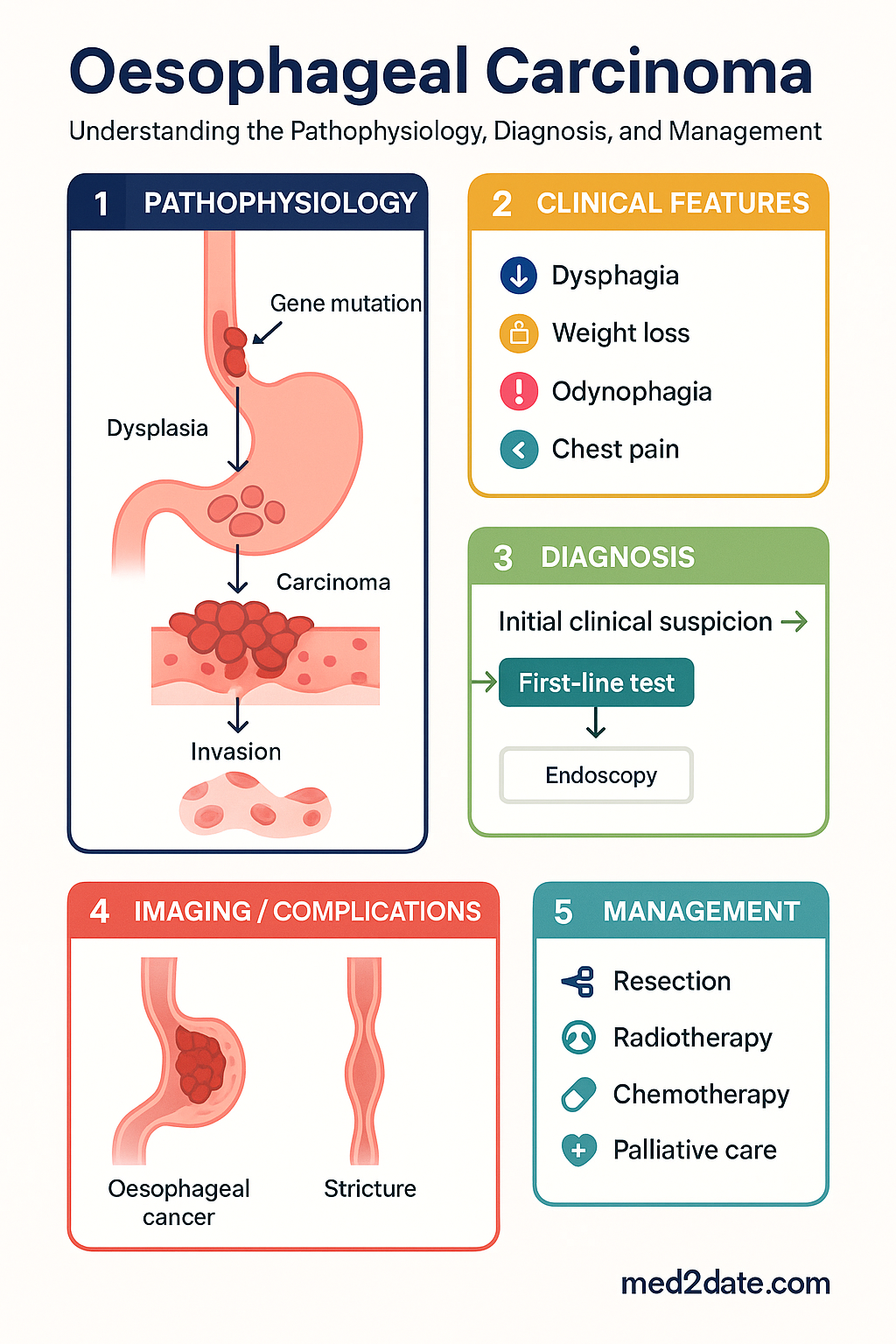
Oesophageal Carcinoma clinical infographic — pathophysiology, clinical clues, diagnosis, imaging, and management
Tap or click image to enlarge — Oesophageal Carcinoma: pathophysiology, clinical clues, diagnosis, imaging, and management.
Oesophageal Carcinoma infographic, full size

Epidemiology & Risk Factors

Squamous Cell Carcinoma (SCC)

SCC of the oesophagus predominates in the upper and middle thirds. It remains the most common histological subtype globally but has declined in incidence in Australia. Key risk factors include:

  • Tobacco smoking: Dose-dependent relationship; risk increases 5-fold in heavy smokers (>20 pack-years).
  • Heavy alcohol consumption: Synergistic effect with smoking; combined risk multiplication of 30–50-fold.
  • Nutritional deficiency: Diets low in fresh fruit and vegetables (folate, vitamin C, carotenoids).
  • Caustic injury: Prior lye ingestion (lye strictures carry a 1,000-fold risk).
  • Human papillomavirus (HPV): Especially HPV-16 and HPV-18; stronger association in East Asian populations.
  • Achalasia: Chronic stasis and inflammation; risk rises after 15–20 years of disease.

Adenocarcinoma (AC)

AC typically arises at the GOJ (Siewert types I, II, III) and distal oesophagus. Its incidence has risen dramatically in Australia over the past four decades. Key risk factors include:

  • Barrett's oesophagus: The single strongest risk factor; annual progression rate to AC is approximately 0.5% per year. Risk correlates with segment length (long-segment >3 cm carries higher risk).
  • Chronic GORD: Frequent reflux symptoms (>3 times/week) increase risk 5–7-fold.
  • Obesity: BMI >30 kg/m² increases risk 2–3-fold, particularly central (abdominal) obesity; promotes reflux and adipokine-driven inflammation.
  • Tobacco smoking: Doubles the risk of AC; however, the association is weaker than for SCC.
  • Male sex: Male-to-female ratio of approximately 6:1 for AC, likely related to oestrogen's protective effects and differences in fat distribution.
  • Medications: Prior oesophageal sclerotherapy, H. pylori (paradoxically protective via reducing gastric acid), and NSAIDs (inconsistent data).
Surveillance: Patients with Barrett's oesophagus should undergo endoscopic surveillance every 3 years (non-dysplastic), annually (low-grade dysplasia), or more frequently (high-grade dysplasia) per AGA/RACP guidelines.

Pathology & Staging

Histological Classification

Feature Squamous Cell Carcinoma Adenocarcinoma
Location Upper and middle thirds Distal oesophagus / GOJ
Precursor lesion Squamous dysplasia Barrett's oesophagus (intestinal metaplasia)
Molecular features TP53, CDKN2A, NFE2L2 mutations; high PD-L1 expression in some TP53, CDKN2A, SMAD4, ARID1A; ERBB2 (HER2) amplification in ~20%
Differentiation Well, moderate, or poorly differentiated Intestinal-type or diffuse-type (signet ring)
Australian proportion ~35–40% ~60–65%

AJCC/UICC TNM Staging (8th Edition)

T Stage Description
Tis High-grade dysplasia / carcinoma in situ
T1 Tumour invades lamina propria (T1a) or submucosa (T1b)
T2 Tumour invades muscularis propria
T3 Tumour invades adventitia
T4a Tumour invades pleura, pericardium, diaphragm, or peritoneum (resectable)
T4b Tumour invades aorta, vertebra, trachea, or other unresectable structures
N Stage Description
N0 No regional lymph node metastases
N1 1–2 regional lymph node metastases
N2 3–6 regional lymph node metastases
N3 ≥7 regional lymph node metastases
M Stage Description
M0 No distant metastasis
M1 Distant metastasis present (liver, lungs, bones, peritoneum, non-regional nodes)

Siewert Classification (Gastro-Oesophageal Junction)

  • Type I: Tumour centre 1–5 cm above the GOJ (distal oesophageal AC). Managed as oesophageal cancer.
  • Type II: Tumour centre 1 cm above to 2 cm below the GOJ (true cardia AC). Managed variably — often as oesophageal cancer in Australia.
  • Type III: Tumour centre 2–5 cm below the GOJ (subcardial). Managed as gastric cancer.

Clinical Features & Investigations

Clinical Presentation

Symptoms of oesophageal carcinoma typically develop insidiously and are often present only when the disease is locally advanced or metastatic. The most common presenting features in Australian practice include:

  • Progressive dysphagia: Initially to solids, then to semi-solids and liquids — the hallmark symptom (present in 70–90% at diagnosis).
  • Odynophagia: Painful swallowing, particularly with hot or acidic foods.
  • Unintentional weight loss: Often >5% body weight over 3 months; associated with cachexia and poorer prognosis.
  • Iron-deficiency anaemia: Chronic occult blood loss, particularly in AC.
  • Retrosternal chest pain or discomfort: May mimic cardiac chest pain.
  • Hoarseness: Suggestive of recurrent laryngeal nerve involvement (T4a disease).
  • Chronic cough or aspiration pneumonia: Due to tracheo-oesophageal fistula (rare, advanced).
🚨
Alarm features requiring urgent endoscopy (within 2 weeks): Dysphagia at any age; unintentional weight loss >5%; persistent vomiting; iron-deficiency anaemia; palpable abdominal mass; new-onset dyspepsia in patients >55 years. Per RACGP and Cancer Council Australia guidelines.

Investigations

Essential
Upper GI Endoscopy with Biopsy
Gold standard for diagnosis. Includes inspection of the entire oesophagus, GOJ, and stomach. Multiple biopsies (≥6) from suspicious lesions. Barrett's segment should be biopsied per Seattle protocol (4-quadrant every 2 cm). MBS item 30473.
Essential
CT Chest/Abdomen/Pelvis with IV Contrast
Initial staging for distant metastases. Assesses liver, lungs, and non-regional lymphadenopathy. MBS item 56800.
Essential
PET-CT (¹⁸F-FDG)
Superior sensitivity for distant nodal and occult metastatic disease. Recommended for all patients being considered for curative therapy. Nodal upstaging occurs in 15–20% of cases. MBS item 61490.
Available
Endoscopic Ultrasound (EUS) ± Fine Needle Aspiration (FNA)
Most accurate modality for T and N staging (accuracy 80–90% for T stage, 70–80% for N stage). Indicated when EUS will alter management (e.g., T1–2 vs T3, suspicious nodes). Available at tertiary centres. MBS item 30488.
Available
Diagnostic Laparoscopy
Recommended for Siewert Type II/III GOJ tumours and T4a disease to exclude peritoneal carcinomatosis not visible on CT. MBS item 30667.
Available
HER2 Testing (IHC ± FISH)
Mandatory for all AC of the oesophagus/GOJ. HER2-positive (IHC 3+ or IHC 2+/FISH+) tumours are eligible for trastuzumab-based therapy. Available at all pathology laboratories.
Available
PD-L1 Testing (CPS Score)
Combined Positive Score (CPS) by validated IHC assay (22C3 pharmDx). CPS ≥5 indicates potential benefit from pembrolizumab in first-line and second-line settings. CPS ≥1 for second-line nivolumab. Requested via MDT discussion.
Available
MSI/MMR Testing
Microsatellite instability (MSI-H) or deficient mismatch repair (dMMR) status predicts response to immune checkpoint inhibitors. Tested by IHC (MLH1, MSH2, MSH6, PMS2) ± PCR.
Available
Baseline Bloods
FBC, EUC, LFTs, LDH, albumin, coagulation, tumour markers (CEA, CA 19-9 — limited prognostic value), and nutritional assessment (prealbumin, zinc).

Treatment

All patients with oesophageal carcinoma should be discussed at a specialist multidisciplinary team (MDT) meeting prior to treatment commencement. The MDT should include upper GI surgical oncology, medical oncology, radiation oncology, gastroenterology, diagnostic and interventional radiology, anatomical pathology, dietetics, speech pathology, palliative care, and clinical nurse coordination.

Early Stage Disease (cTis, T1a — Endoscopic Resection)

For mucosal (Tis/T1a) disease without lymphovascular invasion, endoscopic resection is the preferred curative approach:

1
Endoscopic Mucosal Resection (EMR) or Endoscopic Submucosal Dissection (ESD)
EMR is standard; ESD provides superior en-bloc resection rates for lesions >15 mm. ESD available at selected Australian tertiary centres (Royal Adelaide, Westmead, Peter MacCallum).
2
Radiofrequency Ablation (RFA)
For residual flat Barrett's dysplasia after focal EMR of visible nodularity. Multiple sessions required.

Locally Advanced Resectable Disease (cT1b–T4a, N0/+)

For patients with locally advanced disease who are surgical candidates, multimodality treatment is standard of care.

Option A: Neoadjuvant Chemoradiotherapy (CROSS Regimen) — Preferred for SCC

💊
Carboplatin + Paclitaxel + RT
CROSS Protocol · Concurrent Chemoradiotherapy
Regimen Carboplatin AUC 2 mg/mL/min IV weekly + Paclitaxel 50 mg/m² IV weekly × 5 weeks, concurrent with 41.4 Gy in 23 fractions (1.8 Gy/fraction) radiotherapy
Surgery timing Oesophagectomy 4–8 weeks post-completion of CRT
Efficacy Pathological complete response (pCR) rate 29% for SCC, 23% for AC; 5-year OS improvement from 33% to 47%
PBS status ✔ PBS General Benefit

Option B: Peri-operative Chemotherapy (FLOT Regimen) — Preferred for AC / GOJ

💊
FOLFOX + Docetaxel (FLOT)
FLOT Protocol · Peri-operative Chemotherapy
Regimen 5-FU 2,600 mg/m² IV 24-hour infusion + Leucovorin 200 mg/m² IV + Oxaliplatin 85 mg/m² IV + Docetaxel 50 mg/m² IV, Day 1, every 14 days × 4 cycles pre-op + 4 cycles post-op
Surgery timing Oesophagectomy 4–6 weeks post-completion of neoadjuvant cycles
Efficacy pCR rate 16%; median OS 50 months vs 27 months for ECF/ECX (FLOT4 trial); 3-year OS 57%
PBS status ✔ PBS General Benefit (5-FU, oxaliplatin, docetaxel)
⚠️
CROSS vs FLOT selection: CROSS (chemoradiotherapy) is preferred for SCC based on the high pCR rate and overall survival benefit. FLOT (chemotherapy) is preferred for AC and Siewert Type I–II GOJ tumours. The MDT should guide the decision for borderline cases.

Surgical Resection (Oesophagectomy)

Surgery remains the cornerstone of curative treatment for locally advanced oesophageal cancer. The procedure should be performed at high-volume centres (≥20 resections per year), as surgical volume is a strong predictor of peri-operative morbidity and mortality.

Approach Description Indications
Ivor Lewis (Two-stage) Laparotomy + right thoracotomy; gastric conduit with intrathoracic anastomosis Most common approach in Australia for mid/distal tumours
McKeown (Three-stage) Right thoracotomy + laparotomy + cervical incision; cervical anastomosis Upper oesophageal tumours; higher anastomotic leak but lower mediastinitis risk
Transhiatal Blunt dissection via abdomen and neck without thoracotomy; cervical anastomosis Selected distal tumours; less pulmonary morbidity
Minimally Invasive Oesophagectomy (MIO) Thoracoscopic + laparoscopic approach Increasingly adopted at Australian high-volume centres; reduced pulmonary complications (TIME trial)

Peri-operative outcomes at Australian centres: In-hospital mortality 2–4% at high-volume centres; anastomotic leak rate 5–10%; pulmonary complications 15–20%. Enhanced Recovery After Surgery (ERAS) protocols are recommended by ANZGOSA.

Definitive Chemoradiotherapy (dCRT)

For patients with unresectable disease (T4b) or who are medically inoperable, definitive concurrent chemoradiotherapy is the standard of care:

💊
Cisplatin + 5-FU + RT
Definitive CRT Protocol
Regimen Cisplatin 75 mg/m² IV Day 1 + 5-FU 1,000 mg/m²/day IV continuous infusion Days 1–4, every 28 days × 2 cycles, concurrent with 50–50.4 Gy in 25–28 fractions
Alternative Carboplatin/Paclitaxel (CROSS regimen) with higher RT dose (50.4 Gy)
PBS status ✔ PBS General Benefit

Metastatic Disease (Stage IV) — Systemic Therapy

Palliative systemic therapy aims to prolong survival, maintain quality of life, and manage symptoms such as dysphagia. Treatment is guided by HER2 status, PD-L1 CPS, and MSI status.

First-Line Therapy

💊
Nivolumab + Chemotherapy
Opdivo® · Anti-PD-1
Regimen Nivolumab 240 mg IV every 2 weeks + XELOX (Oxaliplatin 130 mg/m² IV Day 1 + Capecitabine 1,000 mg/m² PO BD Days 1–14, every 3 weeks) or FOLFOX
Indication HER2-negative, unresectable advanced or metastatic GOJ/oesophageal AC — CheckMate 649 trial
PBS status ⚠ PBS Authority Required
💊
Pembrolizumab + Chemotherapy
Keytruda® · Anti-PD-1
Regimen Pembrolizumab 200 mg IV every 3 weeks + Cisplatin 80 mg/m² IV Day 1 + 5-FU 800 mg/m²/day IV Days 1–5 every 3 weeks (or capecitabine equivalent)
Indication HER2-negative with PD-L1 CPS ≥10 — KEYNOTE-590 trial
PBS status ⚠ PBS Authority Required
💊
Trastuzumab + Chemotherapy
Herceptin® · Anti-HER2
Regimen Trastuzumab 8 mg/kg IV loading then 6 mg/kg IV every 3 weeks + Cisplatin 80 mg/m² IV Day 1 + Capecitabine 1,000 mg/m² PO BD Days 1–14 every 3 weeks
Indication HER2-positive (IHC 3+ or IHC 2+/FISH+) metastatic GOJ/oesophageal AC — ToGA trial
PBS status ⚠ PBS Authority Required (HER2+ gastric/GOJ)

Second-Line Therapy

💊
Nivolumab monotherapy
Opdivo® · Anti-PD-1
Dose Nivolumab 240 mg IV every 2 weeks
Indication Previously treated advanced oesophageal SCC — ATTRACTION-3 trial (CPS ≥1 not required)
PBS status ⚠ PBS Authority Required
💊
Paclitaxel ± Ramucirumab
Taxol® + Cyramza®
Regimen Paclitaxel 80 mg/m² IV Days 1, 8, 15 every 28 days + Ramucirumab 8 mg/kg IV Days 1 and 15
Indication Progressive disease after first-line platinum/fluoropyrimidine — RAINBOW trial
PBS status ✔ Paclitaxel PBS General Benefit ✘ Ramucirumab not PBS-listed for oesophageal cancer

Supportive & Palliative Interventions

  • Oesophageal stenting: Self-expanding metal stent (SEMS) placement for malignant dysphagia — provides rapid symptom relief. Covered stents preferred to reduce tumour ingrowth.
  • Enteral nutrition: Percutaneous endoscopic gastrostomy (PEG) or jejunostomy (PEJ) feeding tubes for patients unable to maintain oral intake. PEG placement should be deferred if surgery is planned (contamination risk).
  • Photodynamic therapy (PDT): For palliation of obstructive symptoms; less commonly used in Australia.
  • Palliative radiotherapy: External beam RT (30 Gy in 10 fractions) for bleeding or pain control.
  • Symptom management: Opioids for pain, antiemetics, anxiolytics, and early palliative care referral per ASCO guidelines.

Special Populations

👶 Paediatric
Oesophageal carcinoma is exceptionally rare in children and adolescents. Management should be at a paediatric oncology centre (e.g., Sydney Children's Hospital, Royal Children's Hospital Melbourne) with adult upper GI surgical support.
🤰 Pregnancy
Oesophageal cancer diagnosed in pregnancy is exceedingly rare. Management must be individualised with obstetric, neonatal, and oncology MDT input. Chemotherapy is contraindicated in the first trimester; platinum/fluoropyrimidine regimens may be considered in the second/third trimester with appropriate monitoring.
👴 Elderly (>75 years)
Consider geriatric assessment (comprehensive geriatric assessment — CGA) to guide treatment intensity. Dose attenuation of chemotherapy (e.g., 75% doses of FLOT) may be appropriate. Surgical resection remains viable for fit elderly patients at high-volume centres.
🫘 Renal Impairment
Cisplatin is nephrotoxic and contraindicated if eGFR <30 mL/min/1.73 m². Substitute carboplatin (AUC 5–6). Capecitabine dose reduction required if CrCl 30–50 mL/min. Oxaliplatin is safer in mild-moderate renal impairment.
🫁 Hepatic Impairment
Docetaxel requires dose reduction in moderate hepatic impairment (bilirubin >1.5× ULN). 5-FU may be used with caution. Avoid capecitabine if severe impairment. Hepatic metastases may limit surgical candidacy and worsen prognosis.
🛡️ Immunocompromised
Checkpoint inhibitors may be less effective and carry higher toxicity in immunosuppressed patients (e.g., solid organ transplant recipients). Risks vs benefits must be discussed at MDT. HIV-positive patients on ART should be treated similarly to immunocompetent patients, with dose adjustments based on CD4 count and organ function.

Aboriginal and Torres Strait Islander Health Considerations

Aboriginal and Torres Strait Islander Health
Incidence & Disparity
Aboriginal and Torres Strait Islander Australians have higher age-standardised incidence of oesophageal SCC compared to non-Indigenous Australians, largely driven by higher rates of tobacco smoking and heavy alcohol use. However, adenocarcinoma rates are lower, reflecting different risk factor profiles.
Outcomes Gap
Indigenous Australians with oesophageal cancer have significantly poorer 5-year survival (approximately 12% vs 22% for non-Indigenous), driven by later stage at diagnosis, reduced access to curative surgery, and higher comorbidity burden (diabetes, cardiovascular disease, CKD).
Access Barriers
Geographic remoteness limits access to tertiary centres offering oesophagectomy, EUS, PET-CT, and MDT discussion. Remote and very remote communities may require interstate or long-distance travel for definitive treatment. Patient-assisted travel schemes (PATS) vary by jurisdiction.
Cultural Safety
Health literacy, language barriers, cultural beliefs about cancer, and experiences of racism in healthcare can delay presentation and reduce treatment adherence. Aboriginal Health Workers and Liaison Officers should be involved in care from diagnosis onwards. Sorry Business and community obligations should be accommodated in treatment scheduling.
Screening & Prevention
Targeted smoking cessation programmes (Tackling Indigenous Smoking), alcohol harm reduction, and nutrition improvement programmes are essential. There is no organised screening programme for oesophageal cancer; however, prompt endoscopy for alarm symptoms should be facilitated through Aboriginal Community Controlled Health Services (ACCHS).
Recommended Actions
Ensure MDT processes include telehealth options for remote patients. Integrate palliative care early. Support through Cancer Australia's Optimal Care Pathway for Aboriginal and Torres Strait Islander people with oesophageal cancer. Partner with ACCHS for care coordination and follow-up.

📚 References

  1. 1. Cancer Australia. Oesophageal cancer in Australia statistics. Sydney: Cancer Australia; 2024. Available from: cancer.gov.au.
  2. 2. Australian Institute of Health and Welfare (AIHW). Cancer data in Australia. Canberra: AIHW; 2024. Cat. no. CAN 156.
  3. 3. van Hagen P, Hulshof MCCM, van Lanschot JJB, et al. Preoperative chemoradiotherapy for esophageal or junctional cancer. N Engl J Med. 2012;366(22):2074–2084.
  4. 4. Al-Batran SE, Homann N, Pauligk C, et al. Perioperative chemotherapy with fluorouracil plus leucovorin, oxaliplatin, and docetaxel versus fluorouracil or capecitabine plus cisplatin and epirubicin for locally advanced, resectable gastric or gastro-oesophageal junction adenocarcinoma (FLOT4): a randomised, phase 2/3 trial. Lancet. 2019;393(10184):1948–1957.
  5. 5. Janjigian YY, Shitara K, Moehler M, et al. First-line nivolumab plus chemotherapy versus chemotherapy alone for advanced gastric, gastro-oesophageal junction, and oesophageal adenocarcinoma (CheckMate 649): a randomised, open-label, phase 3 trial. Lancet. 2021;398(10294):27–40.
  6. 6. Sun JM, Shen L, Shah MA, et al. Pembrolizumab plus chemotherapy versus chemotherapy alone for first-line treatment of advanced oesophageal cancer (KEYNOTE-590): a randomised, placebo-controlled, phase 3 study. Lancet. 2021;398(10302):759–771.
  7. 7. Bang YJ, Van Cutsem E, Feyereislova A, et al. Trastuzumab in combination with chemotherapy versus chemotherapy alone for treatment of HER2-positive advanced gastric or gastro-oesophageal junction cancer (ToGA): a phase 3, open-label, randomised controlled trial. Lancet. 2010;376(9742):687–697.
  8. 8. Kato K, Cho BC, Takahashi M, et al. Nivolumab versus chemotherapy in patients with advanced oesophageal squamous cell carcinoma refractory or intolerant to previous chemotherapy (ATTRACTION-3): a multicentre, randomised, open-label, phase 3 trial. Lancet Oncol. 2019;20(11):1506–1517.
  9. 9. Wilke H, Muro K, Van Cutsem E, et al. Ramucirumab plus paclitaxel versus placebo plus paclitaxel in patients with previously treated advanced gastric or gastro-oesophageal junction adenocarcinoma (RAINBOW): a double-blind, randomised phase 3 trial. Lancet Oncol. 2014;15(11):1224–1235.
  10. 10. Society of American Gastrointestinal and Endoscopic Surgeons (SAGES). Guidelines for surgical treatment of esophageal cancer. Surg Endosc. 2023;37:1234–1256.
  11. 11. Cancer Australia. Optimal care pathway for Aboriginal and Torres Strait Islander people with oesophageal cancer. Sydney: Cancer Australia; 2023.
  12. 12. Australasian Gastro-Intestinal Trials Group (AGITG). Australian and New Zealand Gastric and Oesophageal Surgery Association (ANZGOSA) guidelines on oesophagectomy. ANZ J Surg. 2022;92(5):1012–1025.
for PBS-listed medicines at participating pharmacies.
Cultural safety
Engagement with Aboriginal Community Controlled Health Organisations (ACCHOs) is essential. Cultural safety training for non-Indigenous clinicians, use of Aboriginal Health Workers and Liaison Officers, and incorporation of traditional healing practices alongside Western medicine improve treatment adherence and outcomes. Avoidance of eye contact, respect for gender-sensitive examination practices, and understanding of sorry business protocols are critical elements of culturally safe care.
Medication adherence
Complex DMARD regimens with frequent monitoring requirements present adherence challenges. Long-acting depot injections (e.g., methotrexate SC) may improve adherence compared to oral regimens. Community pharmacy partnerships through the Indigenous Pharmacy Programmes improve medication management.
Specific conditions
Rheumatic heart disease (RHD) requires secondary prophylaxis with benzathine penicillin G (BPG) 1.2 MU IM every 3–4 weeks for a minimum of 10 years or until age 21 (whichever is longer). RHD registers (e.g., NT RHD Register) facilitate recall and follow-up. The Australian RHD Endgame Strategy targets elimination by 2031.
Referral pathways
Referral through ACCHOs and Aboriginal Hospital Liaison Officers (AHLOs) improves engagement. The Specialist Outreach Assistance Programme provides funded specialist visits to remote communities. NT, WA, and QLD have specific rheumatology outreach programmes targeting Indigenous communities.

📚 References

  1. 1. Australian Institute of Health and Welfare (AIHW). Autoimmune disease in Australia. Cat. no. PHE 312. Canberra: AIHW; 2023.
  2. 2. Fraenkel L, Bathon JM, England BR, et al. 2021 American College of Rheumatology guideline for the treatment of rheumatoid arthritis. Arthritis Care Res. 2021;73(7):924–939.
  3. 3. Fanouriakis A, Kostopoulou M, Alber K, et al. 2019 update of the EULAR recommendations for the management of systemic lupus erythematosus. Ann Rheum Dis. 2019;78(6):736–745.
  4. 4. Chung SA, Langford CA, Maz M, et al. 2021 American College of Rheumatology/Vasculitis Foundation guideline for the management of antineutrophil cytoplasmic antibody-associated vasculitis. Arthritis Care Res. 2021;73(11):1583–1599.
  5. 5. Smolen JS, Landewé RBM, Bijlsma JWJ, et al. EULAR recommendations for the management of rheumatoid arthritis with synthetic and biological disease-modifying antirheumatic drugs: 2022 update. Ann Rheum Dis. 2023;82(1):3–18.
  6. 6. Australian Technical Advisory Group on Immunisation (ATAGI). Australian Immunisation Handbook. Australian Government Department of Health; 2024. Available from: immunisationhandbook.health.gov.au.
  7. 7. Rheumatic Heart Disease Australia (RHDAustralia). The 2020 Australian guideline for prevention, diagnosis, and management of acute rheumatic fever and rheumatic heart disease. 3rd ed. Darwin: Menzies School of Health Research; 2020.
  8. 8. Pharmaceutical Benefits Scheme (PBS). PBS Schedule. Australian Government Department of Health. Available from: pbs.gov.au. Accessed 2024.
  9. 9. Agarwal S, Cunnington J, Nossent J. Autoimmune disease in Indigenous Australians: a systematic review. Int J Rheum Dis. 2021;24(12):1487–1498.
  10. 10. Pisetsky DS. Antinuclear antibody testing — misunderstood or misused? Clin Immunol. 2023;255:109717.
  11. 11. Bertsias GK, Tektonidou M, Amoura Z, et al. Joint European League Against Rheumatism and European Renal Association–European Dialysis and Transplant Association (EULAR/ERA-EDTA) recommendations for the management of adult and paediatric lupus nephritis. Ann Rheum Dis. 2012;71(11):1771–1782.
  12. 12. Ledingham J, Deighton C; British Society for Rheumatology Standards, Audit and Guidelines Working Group. Update on the British Society for Rheumatology guidelines for prescribing TNFα blockers in adults with rheumatoid arthritis. Rheumatology. 2005;44(2):155–158.
  13. 13. National Health and Medical Research Council (NHMRC). National statement on ethical conduct in human research. Canberra: NHMRC; 2023 (updated).
for PBS-listed medicines at participating pharmacies.
Cultural safety
Engagement with Aboriginal Community Controlled Health Organisations (ACCHOs) is essential. Cultural safety training for non-Indigenous clinicians, use of Aboriginal Health Workers and Liaison Officers, and incorporation of traditional healing practices alongside Western medicine improve treatment adherence and outcomes. Avoidance of eye contact, respect for gender-sensitive examination practices, and understanding of sorry business protocols are critical elements of culturally safe care.
Medication adherence
Complex DMARD regimens with frequent monitoring requirements present adherence challenges. Long-acting depot injections (e.g., methotrexate SC) may improve adherence compared to oral regimens. Community pharmacy partnerships through the Indigenous Pharmacy Programmes improve medication management.
Specific conditions
Rheumatic heart disease (RHD) requires secondary prophylaxis with benzathine penicillin G (BPG) 1.2 MU IM every 3–4 weeks for a minimum of 10 years or until age 21 (whichever is longer). RHD registers (e.g., NT RHD Register) facilitate recall and follow-up. The Australian RHD Endgame Strategy targets elimination by 2031.
Referral pathways
Referral through ACCHOs and Aboriginal Hospital Liaison Officers (AHLOs) improves engagement. The Specialist Outreach Assistance Programme provides funded specialist visits to remote communities. NT, WA, and QLD have specific rheumatology outreach programmes targeting Indigenous communities.

📚 References

  1. 1. Australian Institute of Health and Welfare (AIHW). Autoimmune disease in Australia. Cat. no. PHE 312. Canberra: AIHW; 2023.
  2. 2. Fraenkel L, Bathon JM, England BR, et al. 2021 American College of Rheumatology guideline for the treatment of rheumatoid arthritis. Arthritis Care Res. 2021;73(7):924–939.
  3. 3. Fanouriakis A, Kostopoulou M, Alber K, et al. 2019 update of the EULAR recommendations for the management of systemic lupus erythematosus. Ann Rheum Dis. 2019;78(6):736–745.
  4. 4. Chung SA, Langford CA, Maz M, et al. 2021 American College of Rheumatology/Vasculitis Foundation guideline for the management of antineutrophil cytoplasmic antibody-associated vasculitis. Arthritis Care Res. 2021;73(11):1583–1599.
  5. 5. Smolen JS, Landewé RBM, Bijlsma JWJ, et al. EULAR recommendations for the management of rheumatoid arthritis with synthetic and biological disease-modifying antirheumatic drugs: 2022 update. Ann Rheum Dis. 2023;82(1):3–18.
  6. 6. Australian Technical Advisory Group on Immunisation (ATAGI). Australian Immunisation Handbook. Australian Government Department of Health; 2024. Available from: immunisationhandbook.health.gov.au.
  7. 7. Rheumatic Heart Disease Australia (RHDAustralia). The 2020 Australian guideline for prevention, diagnosis, and management of acute rheumatic fever and rheumatic heart disease. 3rd ed. Darwin: Menzies School of Health Research; 2020.
  8. 8. Pharmaceutical Benefits Scheme (PBS). PBS Schedule. Australian Government Department of Health. Available from: pbs.gov.au. Accessed 2024.
  9. 9. Agarwal S, Cunnington J, Nossent J. Autoimmune disease in Indigenous Australians: a systematic review. Int J Rheum Dis. 2021;24(12):1487–1498.
  10. 10. Pisetsky DS. Antinuclear antibody testing — misunderstood or misused? Clin Immunol. 2023;255:109717.
  11. 11. Bertsias GK, Tektonidou M, Amoura Z, et al. Joint European League Against Rheumatism and European Renal Association–European Dialysis and Transplant Association (EULAR/ERA-EDTA) recommendations for the management of adult and paediatric lupus nephritis. Ann Rheum Dis. 2012;71(11):1771–1782.
  12. 12. Ledingham J, Deighton C; British Society for Rheumatology Standards, Audit and Guidelines Working Group. Update on the British Society for Rheumatology guidelines for prescribing TNFα blockers in adults with rheumatoid arthritis. Rheumatology. 2005;44(2):155–158.
  13. 13. National Health and Medical Research Council (NHMRC). National statement on ethical conduct in human research. Canberra: NHMRC; 2023 (updated).