Home Oncology Neuroendocrine Tumours (NETs)

Neuroendocrine Tumours (NETs)

📋 Key Information Summary

📋
  • Neuroendocrine tumours (NETs) arise from enterochromaffin and other neuroendocrine cells; incidence in Australia is approximately 8 per 100 000 per year, with rising prevalence due to improved imaging and surveillance endoscopy.
  • The WHO 2022 classification grades NETs as G1 (Ki-67 <3%), G2 (Ki-67 3–20%), G3 (Ki-67 20–55%) and neuroendocrine carcinoma (NEC, Ki-67 >55%). Ki-67 index and mitotic rate determine grade and guide therapy.
  • Functional NETs secrete hormones causing distinct clinical syndromes — carcinoid syndrome (serotonin), insulinoma (hypoglycaemia), gastrinoma (Zollinger–Ellison), VIPoma (watery diarrhoea), glucagonoma (necrolytic migratory erythema), and somatostatinoma.
  • Chromogranin A (CgA) is the principal circulating biomarker; 24-hour urinary 5-HIAA is specific for serotonin-secreting tumours. Both are available via most Australian pathology services.
  • 68Ga-DOTATATE PET/CT is the gold-standard functional imaging for somatostatin-receptor-positive NETs and is now MBS-listed (Item 61445) in Australia at specialist centres.
  • Octreotide LAR (Sandostatin LAR®) 20–30 mg IM monthly or lanreotide (Somatuline LA®) 120 mg SC every 28 days are first-line somatostatin analogues for both symptom control (functional tumours) and antiproliferative effect (PROMID, CLARINET trials).
  • Surgery is the only curative treatment for localised NETs; R0 resection should be pursued whenever feasible. For small (<1 cm) non-functioning pancreatic NETs, surveillance may be appropriate.
  • Peptide receptor radionuclide therapy (PRRT) with 177Lu-DOTATATE (Lutathera®) is PBS Authority Required and is indicated for progressive, somatostatin-receptor-positive midgut NETs (NETTER-1 trial).
  • Everolimus (Afinitor®) and sunitinib (Sutent®) are PBS-listed for progressive pancreatic NETs; everolimus is also PBS-listed for advanced, non-functional GI and lung NETs.
  • Aboriginal and Torres Strait Islander peoples experience later-stage diagnosis, reduced access to specialist nuclear medicine and PRRT, and higher rates of comorbid diabetes and CKD — requiring culturally safe, integrated care models.
  • Multidisciplinary team (MDT) review at a specialist NET centre is recommended for all patients; in Australia, ENETS-designated centres operate in major capital cities.

Introduction & Australian Epidemiology

Neuroendocrine tumours (NETs) are a heterogeneous group of neoplasms arising from enterochromaffin and other neuroendocrine cells distributed throughout the body. They exhibit widely variable malignant potential, ranging from indolent well-differentiated tumours to aggressive poorly differentiated neuroendocrine carcinomas (NECs). A defining feature of many NETs is their capacity to secrete biologically active hormones — peptides and amines — that give rise to distinct clinical syndromes collectively termed functional NETs. Tumours that do not produce symptomatic hormone excess are classified as non-functional.

The age-standardised incidence of NETs in Australia has increased markedly over the past two decades, rising from approximately 4 per 100 000 in 2000 to 8 per 100 000 by 2020 — a trend driven by incidental detection on cross-sectional imaging, expanded use of surveillance colonoscopy, and improved histopathological classification. Point prevalence now exceeds 50 per 100 000 owing to the often indolent natural history of well-differentiated NETs.

The small intestine (particularly the ileum) remains the most common site of origin for well-differentiated NETs in Australia, followed by the rectum (detected incidentally at colonoscopy) and pancreas. Lung NETs (typical and atypical carcinoids) account for approximately 20–25% of all NET diagnoses. Gastroenteropancreatic NETs (GEP-NETs) collectively represent the largest subgroup managed in Australian NET centres.

In Australia, the median age at diagnosis is 62 years, with a slight female predominance for small intestinal NETs and a male predominance for pancreatic NETs. Patients with hereditary syndromes — multiple endocrine neoplasia type 1 (MEN1), von Hippel–Lindau (VHL), neurofibromatosis type 1 (NF1), and tuberous sclerosis complex — present at younger ages and often with multifocal disease.

Survival varies substantially by grade, stage, and site. Five-year survival for localised well-differentiated NETs exceeds 95%, while distant metastatic disease (most commonly hepatic) carries five-year survival of 50–60% for well-differentiated G2 tumours but only 15–25% for poorly differentiated NECs. Timely referral to a multidisciplinary NET MDT at a specialist centre is the single most impactful modifiable factor in Australian practice.
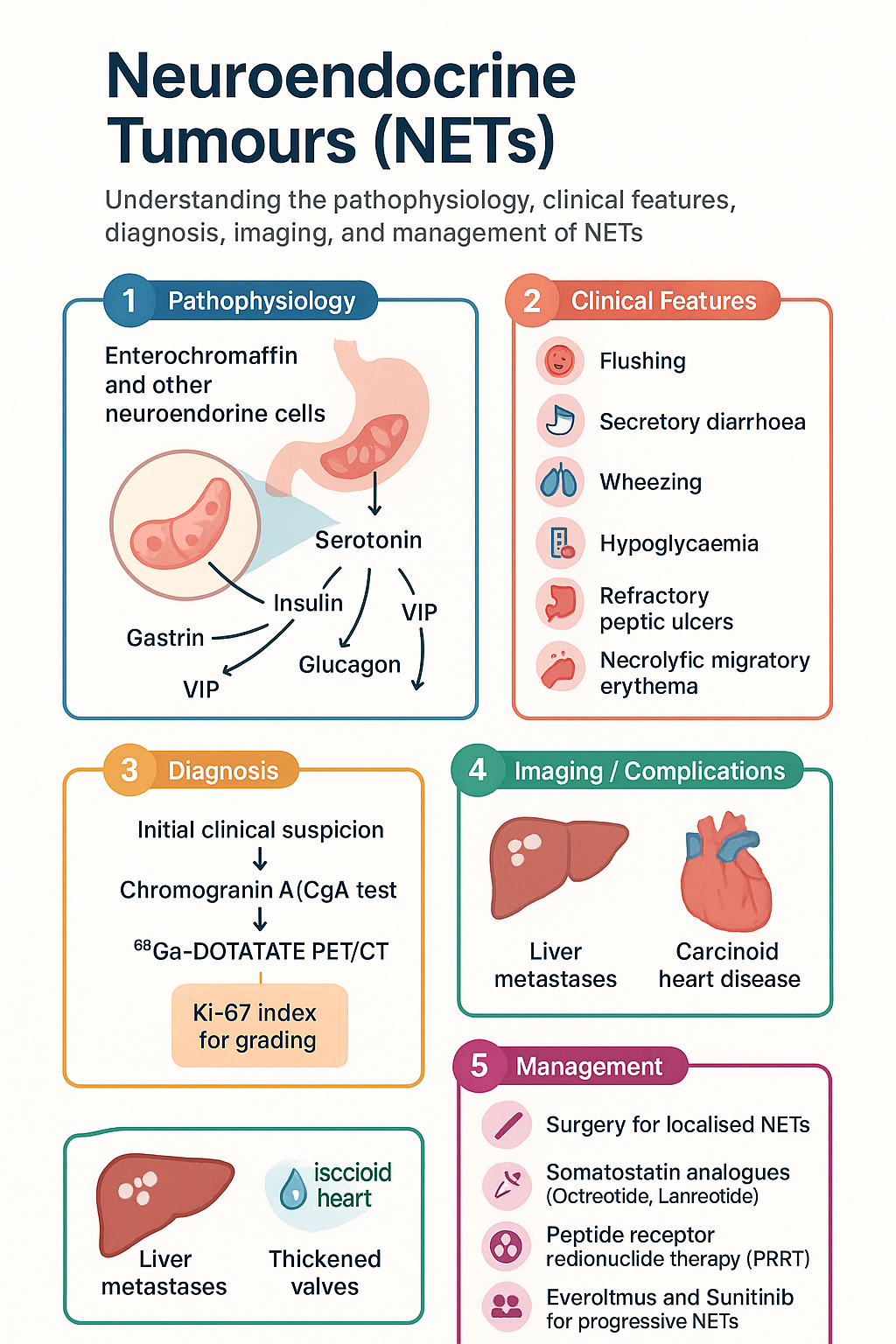
Neuroendocrine Tumours (NETs) clinical infographic — pathophysiology, clinical clues, diagnosis, imaging, and management
Tap or click image to enlarge — Neuroendocrine Tumours (NETs): pathophysiology, clinical clues, diagnosis, imaging, and management.
Neuroendocrine Tumours (NETs) infographic, full size

Classification & Grading

Accurate classification and grading of NETs is essential for prognostication and treatment selection. The WHO 2022 classification (5th edition) and the European Neuroendocrine Tumour Society (ENETS) grading system are adopted in Australian practice.

WHO 2022 / ENETS Grading System — Gastroenteropancreatic NETs

Grade Ki-67 Index (%) Mitotic Count (per 10 HPF) Designation
G1 <3% <2 Well-differentiated NET, low grade
G2 3–20% 2–20 Well-differentiated NET, intermediate grade
G3 20–55% >20 Well-differentiated NET, high grade
NEC >55% >20 Poorly differentiated neuroendocrine carcinoma (small cell or large cell)
⚠️
Grade 3 well-differentiated NET vs NEC: Distinguishing well-differentiated G3 NET (Ki-67 20–55%) from poorly differentiated NEC (Ki-67 >55%) is critical because treatment pathways diverge fundamentally. Well-differentiated G3 NETs respond to somatostatin analogues and PRRT; NECs require platinum-based chemotherapy (EP regimen). Histological differentiation and p53/Rb immunohistochemistry assist in this distinction.

Lung NETs — WHO Classification

Type Ki-67 (%) Mitoses (per 10 HPF) Necrosis
Typical carcinoid <5% <2 Absent
Atypical carcinoid 5–20% 2–10 Punctate foci
LCNEC >20% >10 Extensive
Small cell carcinoma >50% >60 Extensive

TNM Staging (ENETS/AJCC 8th Edition)

Staging is anatomically site-specific. AJCC 8th edition staging manuals exist for pancreatic NETs, small intestinal NETs, colorectal NETs, and lung carcinoids. Key staging principles:

  • T stage: Depth of invasion (confined to mucosa/submucosa vs muscularis vs serosa/peripancreatic tissue) and size thresholds (e.g., 2 cm and 4 cm for pancreatic NETs).
  • N stage: Regional lymph node involvement.
  • M stage: Distant metastases, most commonly to liver, bone, and peritoneum.
  • Well-differentiated G3 NETs are staged using the same TNM framework as G1/G2 (not the NEC staging system).

Histopathological Requirements

Adequate tissue sampling is essential. Core biopsy is preferred over fine-needle aspiration (FNA) for initial grading. Essential immunohistochemistry markers include:

  • Synaptophysin (positive in all NETs)
  • Chromogranin A (positive in well-differentiated; may be reduced/absent in G3/NEC)
  • Ki-67 (proliferation index — minimum 500 cells counted; hot-spot method)
  • p53 and Rb1 (to distinguish well-differentiated G3 NET from NEC: aberrant p53 and loss of Rb1 favour NEC)

Clinical Features & Syndromes

NETs present in two broad patterns: non-functional tumours detected incidentally or presenting with mass effect/metastatic symptoms, and functional tumours causing hormone-excess syndromes. Approximately 40–60% of GEP-NETs are functional, though many may be subclinical.

Functional NET Syndromes

Syndrome Hormone Primary Site Clinical Features Key Investigation
Carcinoid syndrome Serotonin, histamine, tachykinins Midgut (ileum), lung Flushing, secretory diarrhoea, wheezing, right-sided cardiac valvular fibrosis (carcinoid heart disease) 24-hr urinary 5-HIAA; echocardiography
Insulinoma Insulin, proinsulin, C-peptide Pancreas (>90%) Whipple triad: fasting hypoglycaemia, glucose <2.8 mmol/L, relief with glucose. Neuroglycopenic symptoms (confusion, seizures). 72-hr supervised fast (endocrine unit)
Gastrinoma (ZES) Gastrin Duodenum (60%), pancreas (30%) Refractory peptic ulcers (often multiple or distal), severe GORD, diarrhoea Fasting gastrin >1000 pg/mL + gastric pH <2; secretin stimulation test
VIPoma VIP (vasoactive intestinal peptide) Pancreas (tail/body) WDHA syndrome: watery diarrhoea (often >3 L/day), hypokalaemia, achlorhydria Serum VIP; stool volume & electrolytes
Glucagonoma Glucagon Pancreas (tail) Necrolytic migratory erythema (rash), diabetes mellitus, weight loss, glossitis, DVT Serum glucagon >500 pg/mL
Somatostatinoma Somatostatin Pancreas or duodenum Diabetes mellitus, gallstones, steatorrhoea Fasting somatostatin level
Cushing syndrome (ectopic ACTH) ACTH Lung (typical/atypical carcinoid), thymus Rapid-onset hypercortisolism, hypokalaemic alkalosis, hyperglycaemia 24-hr UFC, late-night salivary cortisol, high-dose DST
🚨
Carcinoid crisis: Life-threatening serotonin surge triggered by anaesthesia, surgery, or hepatic artery embolisation. Manifests as severe flushing, bronchospasm, haemodynamic instability, and cardiac arrhythmia. Prophylactic IV octreotide 250–500 µg bolus before induction is recommended. Have IV octreotide infusion (500 µg/hr) available for intraoperative rescue. Emergency anaesthetic guideline adherence is essential.

Non-Functional NET — Presentation Patterns

  • Incidental: Rectal NETs found at screening colonoscopy (most common presentation of rectal NETs in Australia). Small pancreatic NETs on CT/MRI performed for other indications.
  • Mass effect: Abdominal pain, bowel obstruction (small intestinal NETs), biliary obstruction (pancreatic head NETs), superior vena cava syndrome (thymic NETs).
  • Metastatic: Hepatomegaly, hepatomegaly-related pain, bone pain, pathological fracture. Many patients present with liver metastases from an occult primary.
  • Carcinoid syndrome without known primary: May occur with hepatic metastases that bypass first-pass hepatic metabolism even from previously silent primaries.

Carcinoid Heart Disease

Chronic serotonin exposure causes fibrosis of right-sided cardiac valves — predominantly tricuspid regurgitation and pulmonary stenosis. All patients with carcinoid syndrome should undergo baseline and annual transthoracic echocardiography. NT-proBNP can serve as a screening biomarker. Valve replacement may be required in severe cases.

Investigations & Imaging

Diagnostic workup of NETs integrates biochemical marker assessment, anatomical imaging, and functional somatostatin receptor imaging. All patients with suspected or confirmed NETs should be referred to a specialist NET centre for MDT discussion.

Biochemical Markers

Available
Chromogranin A (CgA)
Most widely used circulating NET marker. Elevated in 60–80% of well-differentiated NETs. False positives with PPIs, CKD, atrophic gastritis, heart failure. Ensure PPIs ceased ≥2 weeks before testing. MBS Item 66679.
Available
24-hour Urinary 5-HIAA
Specific for serotonin-secreting tumours. Collect in acidified container. Patient must avoid serotonin-rich foods (banana, avocado, tomato, walnut, pineapple) for 72 hours before collection. MBS Item 66732.
Available
Pancreatic Hormone Panel
Fasting insulin, C-peptide, proinsulin (insulinoma); fasting gastrin (gastrinoma); VIP, glucagon, somatostatin. Collect fasting samples at accredited endocrine laboratories. Coordinate with endocrinologist for supervised fast protocols.
Available
NT-proBNP
Screening biomarker for carcinoid heart disease. Echocardiography indicated if NT-proBNP elevated.
Available
Pancreastatin
Emerging marker; may be superior to CgA for monitoring treatment response in hepatic metastatic NETs. Available at specialist centres.

Anatomical Imaging

  • CT (chest/abdomen/pelvis with contrast): First-line anatomical imaging for staging. Triple-phase pancreatic protocol CT for pancreatic NETs. MBS-listed; widely available across Australia.
  • MRI abdomen (with hepatocyte-specific contrast — e.g., Primovist®/Eovist®): Superior sensitivity for small hepatic metastases compared to CT. Recommended for all patients with confirmed or suspected hepatic metastatic NETs. Primovist MRI available at tertiary centres.
  • Endoscopic ultrasound (EUS): Gold standard for detection and localisation of small pancreatic NETs (<2 cm) and duodenal gastrinomas. EUS-guided FNA/biopsy enables tissue diagnosis. Available at major endoscopy centres.
  • Small bowel imaging: CT enterography or MR enterography for suspected small intestinal primary. Capsule endoscopy may identify submucosal lesions missed on CT; however, risk of capsule retention with obstructive lesions.

Functional Imaging

Essential
68Ga-DOTATATE PET/CT (or 68Ga-DOTATOC)
Gold-standard functional imaging for somatostatin receptor (SSTR)-positive NETs. Superior sensitivity and specificity compared to 111In-octreotide (OctreoScan®). MBS Item 61445 — available at participating PET centres in all Australian capital cities. Essential for PRRT eligibility assessment. Concordance with SSTR expression on biopsy guides therapy selection.
Available
18F-FDG PET/CT
Most useful in high-grade NETs (G3) and NECs where SSTR expression may be low. Discordance between 68Ga-DOTATATE and 18F-FDG PET — high FDG uptake with low DOTATATE uptake indicates aggressive biology and poorer prognosis; avoid PRRT, consider chemotherapy.
Available
111In-octreotide scintigraphy (OctreoScan®)
Legacy modality largely superseded by 68Ga-DOTATATE PET/CT. May still be used where PET/CT access is limited. Lower spatial resolution.
Available
18F-DOPA PET/CT
Useful for insulinomas (high sensitivity) and medullary thyroid carcinoma. Limited availability in Australia — restricted to research and specialist centres.
ℹ️
Dual-tracer PET/CT: For G3 NETs and NECs, combining 68Ga-DOTATATE and 18F-FDG PET/CT provides a comprehensive biological profile — DOTATATE uptake indicates SSTR-directed therapy eligibility, while FDG uptake indicates aggressiveness and may guide chemotherapy selection. This dual-tracer approach is recommended by Australian NET MDTs.

Histopathology — Tissue Sampling

  • Core needle biopsy preferred over FNA for grading (Ki-67 and mitotic count require tissue architecture).
  • Liver biopsy for metastatic disease when primary unknown — immunohistochemistry can suggest site of origin (CDX2 for GI, Islet-1/PDX1 for pancreatic, TTF-1 for lung).
  • Biopsy not always required for small rectal NETs (well-circumscribed, <10 mm on EUS with typical features) — endoscopic resection provides both diagnosis and treatment.
  • Consider referral for hereditary syndrome genetic testing (MEN1, VHL, NF1, TSC) if age <40, multifocal tumours, or family history.

Management — Somatostatin Analogues & Surgery

Management of NETs is guided by tumour grade, stage, functional status, SSTR expression, and patient fitness. Surgery and somatostatin analogues form the cornerstone of therapy for well-differentiated NETs.

Somatostatin Analogues (SSAs)

SSAs bind somatostatin receptors (predominantly SSTR2 and SSTR5) on NET cells, suppressing hormone secretion (symptom control) and exerting direct antiproliferative effects via cell-cycle arrest and anti-angiogenesis. Landmark trials:

  • PROMID (2009): Octreotide LAR vs placebo in metastatic midgut NETs — median TTP 14.3 vs 6 months (HR 0.34).
  • CLARINET (2014): Lanreotide autogel vs placebo in GEP-NETs (Ki-67 <10%) — PFS not reached vs 18 months (HR 0.47).
  • CLARINET FORTE (2020): Higher-dose lanreotide 120 mg every 14 days showed activity in progressive GEP-NETs.
💊
Octreotide LAR
Sandostatin LAR® · Novartis · Somatostatin analogue
Adult dose 20 mg deep IM gluteal injection every 28 days; may increase to 30 mg every 21–28 days for refractory symptoms or tumour progression
Paediatric dose Not routinely used in paediatric NETs; specialist dosing 10–30 mg IM monthly under endocrinology guidance
Route Deep intramuscular (gluteal) — nurse-administered
Renal adjustment No dose adjustment required
Hepatic adjustment Use with caution; monitor liver function
Key adverse effects Diarrhoea, abdominal pain, gallstones (15–30%), injection-site pain, bradycardia, hyperglycaemia/hypoglycaemia
PBS status ✔ PBS General Benefit
💊
Lanreotide autogel
Somatuline LA® · Ipsen · Somatostatin analogue
Adult dose 120 mg deep SC injection every 28 days (patient self-administration after training); dose may be escalated to every 14 days for progressive disease
Paediatric dose Limited data; specialist use only
Route Deep subcutaneous — suitable for self-administration at home
Renal adjustment No dose adjustment required
Hepatic adjustment Use with caution in severe hepatic impairment
Key adverse effects Diarrhoea, abdominal pain, gallstones, injection-site reactions, hyperglycaemia
PBS status ✔ PBS General Benefit
💊
Pasireotide LAR
Signifor LAR® · Novartis · Pan-somatostatin analogue
Adult dose 60 mg IM every 28 days for acromegaly/CS; emerging role in SSA-refractory carcinoid syndrome (off-label)
Route Deep intramuscular (gluteal)
Renal adjustment No adjustment for mild–moderate impairment; limited data in severe CKD
Hepatic adjustment Contraindicated in severe hepatic impairment (Child–Pugh C)
Key adverse effects Hyperglycaemia (significant — monitor closely), diarrhoea, nausea, QTc prolongation
PBS status ✘ Not PBS for NETs

Telotristat Ethyl (Xermelo®)

Oral tryptophan hydroxylase inhibitor; reduces serotonin production at source. Indicated as add-on to SSA therapy for carcinoid syndrome diarrhoea inadequately controlled by SSAs alone (TELESTAR trial). Dose: 250 mg PO TDS with food. Not PBS-listed in Australia (private prescription; approx. AUD 000–15 000 per month). Monitor hepatic function; hepatotoxicity reported.

Surgical Management

Surgery remains the only potentially curative treatment for NETs and is the primary treatment for localised disease. Surgical approach depends on tumour site, size, grade, and extent.

Localised
Curative Resection
R0 surgical resection with lymphadenectomy. Five-year survival >95% for localised well-differentiated NETs. Consider endoscopic resection for small rectal NETs <10 mm (EMR/ESD).
Setting: Specialist hepatobiliary / endocrine surgery unit
Locally Advanced
Debulking / Cytoreduction
Cytoreductive surgery if ≥70–90% tumour burden can be safely resected. Improves symptom control and may improve survival. Neoadjuvant SSAs may downsize tumours.
Setting: MDT decision at specialist NET centre
Metastatic
Combined Modality
Liver-directed therapy (resection, ablation, embolisation) + systemic therapy. Transplantation rarely considered (highly selected cases — Milan NET criteria). PRRT, everolimus, temozolomide-based chemo for progressive disease.
Setting: Specialist NET centre with transplant/HPB MDT

Site-Specific Surgical Considerations

Site Surgical Approach Special Considerations
Small bowel NET Segmental resection with mesenteric lymphadenectomy; identify and resect all synchronous primaries (up to 40% multifocal) Desmoplastic mesenteric reaction may cause kinking/obstruction — may require resection even if metastatic. Anti-reflux anastomosis preferred.
Pancreatic NET Enucleation (small, superficial tumours) or formal pancreatectomy (Whipple, distal, central). Spleen-preserving distal pancreatectomy where possible. Surveillance acceptable for non-functioning pNETs <2 cm in patients >80 yrs or unfit for surgery. >2 cm or functioning — resect.
Rectal NET <10 mm: EMR or ESD. 10–20 mm (no muscularis invasion): ESD or transanal endoscopic microsurgery (TEM). >20 mm or muscularis invasion: anterior resection. Assess depth (EUS) and Ki-67. Most <10 mm rectal NETs are cured by endoscopic resection.
Gastric NET Type 1 (atrophic gastritis): endoscopic surveillance/resection. Type 2 (MEN1/ZES): local resection. Type 3 (sporadic): radical gastrectomy with lymphadenectomy. Type 1: excellent prognosis, recurrence common. Type 3: behave like adenocarcinoma — aggressive surgery.
Lung carcinoid Lobectomy with mediastinal lymphadenectomy for typical and atypical carcinoid. Sleeve resection preferred over pneumonectomy when feasible. Bronchial carcinoids: parenchyma-sparing bronchoplasty may be feasible. Adjuvant chemo not standard for typical carcinoid; consider for atypical carcinoid with N1/N2 disease.

Additional Systemic Therapies (Summary)

For progressive, metastatic NETs beyond SSA therapy, the following agents are available in Australia:

💊
Everolimus
Afinitor® · Novartis · mTOR inhibitor
Adult dose 10 mg PO daily; continue until progression or unacceptable toxicity
Key indication Progressive pancreatic NET (RADIANT-3); progressive GI/lung NET (RADIANT-4)
Adverse effects Stomatitis, pneumonitis, hyperglycaemia, hyperlipidaemia, myelosuppression, infection risk
PBS status ✔ PBS Authority Required
💊
Sunitinib
Sutent® · Pfizer · Multi-kinase inhibitor
Adult dose 37.5 mg PO daily continuous dosing (or 50 mg PO daily 4 weeks on / 2 weeks off)
Key indication Progressive, unresectable, locally advanced or metastatic pancreatic NET
Adverse effects Fatigue, diarrhoea, hand-foot syndrome, hypertension, hypothyroidism, mucositis
PBS status ✔ PBS Authority Required
💊
177Lu-DOTATATE (PRRT)
Lutathera® · Advanced Accelerator Applications · Radiolabelled SSA
Adult dose 7.4 GBq IV infusion over 20–30 min every 8 weeks × 4 cycles; co-administer amino acid infusion (arginine/lysine) for renal protection
Key indication SSTR-positive, progressive, unresectable, locally advanced or metastatic GEP-NET (NETTER-1: PFS HR 0.21 for midgut NETs)
Adverse effects Nausea, vomiting, myelosuppression (delayed — nadir 6–10 weeks), nephrotoxicity (cumulative dose limit), hepatotoxicity
Prerequisites 68Ga-DOTATATE PET/CT confirming high SSTR uptake (Krenning score ≥2); adequate renal function (GFR ≥50 mL/min); adequate bone marrow reserve
PBS status ✔ PBS Authority Required

Liver-Directed Therapies

For hepatic-predominant metastatic NETs, interventional radiology procedures may provide symptom palliation and tumour control:

  • Hepatic arterial embolisation (HAE) / bland embolisation: Induces ischaemic necrosis of liver metastases. Performed by interventional radiology.
  • Transarterial chemoembolisation (TACE): Delivers cytotoxic agent (doxorubicin or cisplatin) directly to hepatic metastases via hepatic artery.
  • Selective internal radiation therapy (SIRT / 90Y-microspheres): Yttrium-90-labelled resin or glass microspheres delivered via hepatic artery. Requires pre-treatment 99mTc-MAA scan to assess lung shunt fraction. Available at specialist centres.
  • Radiofrequency ablation (RFA) / microwave ablation (MWA): Suitable for small (<3–5 cm) hepatic metastases. Can be combined with surgical resection.
⚠️
Hepatic decompensation risk: Liver-directed therapies carry a risk of post-embolisation syndrome (fever, pain, nausea, transient transaminase elevation) and, rarely, hepatic failure — particularly with bilobar treatment or pre-existing cirrhosis. Pre-treatment liver function assessment (Child–Pugh, ALBI grade) is mandatory. Octreotide cover essential to prevent carcinoid crisis during embolisation.

Chemotherapy for NEC (Poorly Differentiated)

Poorly differentiated NECs (Ki-67 >55%) are treated with platinum-based chemotherapy irrespective of primary site:

💊
EP regimen (1st-line NEC)
Etoposide + Cisplatin (or Carboplatin) · Standard NEC regimen
Adult dose Etoposide 100 mg/m² IV Days 1–3 + Cisplatin 75 mg/m² IV Day 1 (or Carboplatin AUC 5 Day 1). Every 21 days × 4–6 cycles.
Renal adjustment Cisplatin: contraindicated if GFR <60 mL/min — use carboplatin. Etoposide: reduce dose for GFR 15–50 mL/min.
PBS status ✔ PBS General Benefit
💊
Temozolomide + Capecitabine (CAPTEM)
Temodal® + Xeloda® · Pancreatic NET 2nd-line
Adult dose Capecitabine 750 mg/m² PO BD Days 1–14 + Temozolomide 200 mg/m² PO Days 10–14. Every 28 days.
Key indication Well-differentiated pancreatic NETs (particularly insulinomas). MGMT methylation may predict response. Limited data in NEC.
PBS status ✔ PBS Authority Required

Monitoring

Long-term surveillance is essential given the chronic nature of well-differentiated NETs and the risk of late recurrence. Monitoring integrates clinical assessment, biochemical markers, and imaging.

Follow-Up Schedule — Well-Differentiated NETs

Baseline
Full staging (CT/MRI + 68Ga-DOTATATE PET/CT); CgA, 5-HIAA (if functional); ECG, echocardiography (if carcinoid syndrome); baseline liver/renal function, FBC; MDT discussion.
Every 3 months (Year 1)
Clinical review; CgA; symptom assessment; FBC, LFTs, eGFR if on systemic therapy. CT chest/abdomen/pelvis at 3 and 12 months (or sooner if symptomatic).
Every 6 months (Years 2–3)
Clinical review; CgA; CT imaging 6-monthly. MRI preferred for hepatic metastases (avoid cumulative radiation).
Annually (Years 4–10+)
Annual clinical review; CgA; CT or MRI. 68Ga-DOTATATE PET/CT if new symptoms or suspected progression. Extend imaging interval to 12–18 months if stable >3 years.

Monitoring on SSA Therapy

  • Gallbladder ultrasound annually (SSA-associated cholelithiasis 15–30%).
  • Fasting glucose / HbA1c every 3–6 months (SSA-induced hyperglycaemia or hypoglycaemia in insulinoma patients).
  • Vitamin B12 and fat-soluble vitamin levels annually (SSA-related malabsorption).
  • Injection-site rotation and monitoring for lipohypertrophy.

Monitoring on PRRT

  • FBC, LFTs, renal function before each cycle and at 6-week nadir.
  • eGFR monitoring — cumulative nephrotoxicity risk; amino acid infusion (arginine/lysine) for renal protection during each infusion.
  • 68Ga-DOTATATE PET/CT 3 months post-completion of 4 cycles to assess response.
  • Long-term: annual FBC for delayed myelodysplasia risk; renal function annually.

Biomarker Response Criteria

Interpret CgA trends cautiously:

  • Response: >30% decline in CgA from baseline (sustained over 2 measurements).
  • Progression: >25% rise in CgA (with confirmed repeat) — correlate with imaging.
  • CgA alone should never dictate treatment changes — always correlate with imaging and clinical status.

Special Populations

🤰 Pregnancy
Diagnosis
NETs diagnosed in pregnancy are rare. Avoid 68Ga-DOTATATE PET/CT (radiation). MRI without gadolinium is preferred in first trimester. CgA and 5-HIAA can be measured safely.
Somatostatin analogues
Category B3 (octreotide) — limited human data; use only if maternal benefit outweighs risk. Case reports of successful pregnancies on octreotide. Discontinue if symptoms allow. Lanreotide data even more limited.
Surgery
Surgery for localised NETs can be performed in the second trimester if needed. Delay non-urgent surgery to postpartum. Multidisciplinary obstetric–oncology MDT essential.
PRRT / Chemotherapy
Contraindicated in pregnancy. Defer until postpartum. If aggressive NEC diagnosed in pregnancy, platinum-based chemo may be considered in the second/third trimester after extensive MDT and patient counselling.
👶 Paediatrics
Epidemiology
Paediatric NETs are rare. Most common: appendiceal NETs (incident at appendicectomy), rectal NETs, and pancreatic NETs in MEN1 context. Bronchial carcinoids occasionally present in adolescents.
Surgery
Appendiceal NETs <1 cm with clear margins — appendicectomy sufficient. >2 cm or at base/mesoappendix — right hemicolectomy. Paediatric surgical oncology referral recommended.
Systemic therapy
SSAs: limited paediatric pharmacokinetic data. Dose-adjust based on body surface area where possible. PRRT: emerging paediatric data — refer to specialist paediatric oncology centre. Temozolomide/etoposide used for NEC by analogy with adult regimens.
Hereditary syndromes
MEN1 screening (calcium, PTH, gastrin, prolactin, pancreatic imaging) should commence by age 5 years in confirmed gene carriers. Genetic counselling for families.
👴 Elderly
Watch-and-wait
For small (<2 cm) non-functioning pancreatic NETs in patients >80 years or with limited life expectancy, active surveillance with 6–12 monthly imaging is reasonable and avoids surgical morbidity.
SSA tolerability
Generally well tolerated. Monitor for SSA-induced hyperglycaemia (may unmask/worsen type 2 diabetes). Bowel habit changes may be more troublesome in elderly; titrate dose.
PRRT / Chemotherapy
PRRT is well tolerated in elderly (NETTER-2 included patients up to age 82). EP chemotherapy for NEC: consider carboplatin substitution (less nephrotoxic) and dose attenuation per geriatric assessment.
🫘 Renal Impairment
CgA interpretation
CgA is renally cleared — elevated in CKD independent of NET. Use alternative markers or serial trend monitoring (relative change rather than absolute values).
SSAs
No dose adjustment for octreotide or lanreotide in renal impairment.
PRRT
Contraindicated if GFR <50 mL/min (nephrotoxicity risk). Amino acid infusion mandatory for renal protection. Monitor eGFR closely throughout treatment course.
Chemotherapy
Cisplatin: contraindicated if GFR <60 mL/min. Use carboplatin (Calvert formula for dose). Etoposide: dose reduction required for GFR 15–50 mL/min.
🫁 Hepatic Impairment
Tumour burden
Significant hepatic metastatic burden may itself cause hepatic synthetic dysfunction (hypoalbuminaemia, coagulopathy). Assess ALBI grade prior to any hepatic-directed therapy.
SSAs
Use with caution; no formal dose adjustment but monitor LFTs. Pasireotide contraindicated in Child–Pugh C.
Liver-directed therapy
TACE/SIRT: contraindicated in Child–Pugh B7 or greater. Bilobar treatment increases risk of hepatic failure — staged procedures preferred.
Everolimus / Sunitinib
Hepatic metabolism — dose reduce in moderate hepatic impairment (Child–Pugh B). Avoid in severe impairment.
🛡️ Immunocompromised
Everolimus and infection
mTOR inhibitors increase infection risk (pneumocystis, bacterial, fungal). Co-trimoxazole prophylaxis recommended. Monitor for non-infectious pneumonitis (cough, dyspnoea — CT chest if suspected).
Chemotherapy
Standard neutropenic precautions. G-CSF support may be needed for EP regimen in patients with prior myelosuppression or concurrent immunosuppression.
Transplant recipients
NETs developing post-transplant are rare. MDT involving transplant team essential — immunosuppression minimisation strategies while balancing graft rejection risk.

Aboriginal and Torres Strait Islander Health Considerations

Aboriginal and Torres Strait Islander Health

Aboriginal and Torres Strait Islander Australians experience a disproportionate burden from neuroendocrine tumours, with later-stage presentation, reduced access to specialist diagnostics and treatment, and higher rates of comorbid conditions that complicate management. The following considerations are essential for equitable, culturally safe care.

Diagnostic delay
ATSI Australians are more likely to present with metastatic NETs due to delayed diagnosis. Barriers include reduced access to screening colonoscopy (lower CRC screening participation), geographic remoteness from tertiary imaging, and diagnostic overshadowing of symptoms (e.g., diarrhoea attributed to infection rather than carcinoid syndrome). Culturally appropriate health education and proactive symptom enquiry by Aboriginal health workers are critical.
Imaging access
68Ga-DOTATATE PET/CT is available only in major capital city PET centres (Sydney, Melbourne, Brisbane, Adelaide, Perth). Remote and rural ATSI patients may need to travel >1000 km, requiring support for travel, accommodation, and family separation. The Patient Assisted Travel Scheme (PATS) in WA, QLD, NT, and SA assists but often covers only partial costs.
PRRT access
Peptide receptor radionuclide therapy is administered at a limited number of nuclear medicine centres. ATSI patients from remote communities face logistical barriers to multi-cycle treatment (4 cycles over 8 months). Telehealth coordination, allied health support for travel logistics, and culturally safe nuclear medicine environments are needed.
Comorbidities
Higher prevalence of type 2 diabetes, CKD, and cardiovascular disease in ATSI populations directly impacts NET management: SSA-induced glycaemic fluctuations require closer monitoring in pre-existing diabetes; renal impairment limits PRRT eligibility and necessitates chemotherapy dose adjustment; and cardiovascular comorbidity complicates anaesthesia for surgery.
Cultural safety
Engagement with Aboriginal health workers/Aboriginal liaison officers at every stage of care. Acknowledgment of Country, involvement of family in decision-making, consideration of Sorry Business and cultural obligations. Flexible scheduling. Plain-language communication avoiding medical jargon. Respect for traditional healing practices alongside evidence-based medical therapy.
Data and equity
The AIHW reports that ATSI Australians have lower cancer survival rates for most malignancies, with disparities driven by stage at diagnosis, treatment completion rates, and comorbidity burden. Targeted efforts to improve NET awareness in Aboriginal Community Controlled Health Organisations (ACCHOs) and integration of NET pathways into primary healthcare are recommended.

Hereditary Syndromes Associated with NETs

Approximately 5–10% of NETs arise in the context of inherited tumour predisposition syndromes. Recognition of these syndromes is essential for appropriate screening, family counselling, and surgical planning.

Syndrome Gene NET Types Screening Recommendations
MEN1 MEN1 (menin) Pancreatic NETs (gastrinoma, insulinoma, NF-pNET), pituitary adenomas, parathyroid adenomas, thymic/bronchial carcinoids Commence at age 5: annual serum calcium, PTH, prolactin, gastrin; pancreatic MRI or EUS from age 10; chest CT from age 15.
MEN2A RET Medullary thyroid carcinoma, phaeochromocytoma, parathyroid adenoma RET genetic testing; prophylactic thyroidectomy based on specific RET codon mutation. Not typically associated with GEP-NETs.
MEN4 CDKN1B (p27) MEN1-like phenotype (pancreatic NETs, pituitary adenomas) Consider CDKN1B testing in MEN1 phenocopies (MEN1 mutation-negative).
VHL VHL Pancreatic NETs (often non-functioning, multiple), haemangioblastomas, RCC, phaeochromocytoma Annual pancreatic MRI from age 10–15; abdominal ultrasound from age 8.
NF1 NF1 (neurofibromin) Duodenal somatostatinoma, phaeochromocytoma Clinical NF1 diagnosis; consider duodenal surveillance if GI symptoms.
TSC TSC1 / TSC2 Pancreatic NETs (rare), renal angiomyolipomas, SEGAs Abdominal MRI every 1–3 years.
ℹ️
Genetic referral criteria: Refer for genetic counselling and testing if: age <40 at NET diagnosis, multifocal NETs, concurrent MEN-associated tumours (pituitary, parathyroid, phaeochromocytoma), family history of NET or MEN-associated tumours, or syndromic features (e.g., mucosal neuromas in MEN2B). Testing is available through public genetics services in all Australian states.

📚 References

  1. 1. Rindi G, Mete O, Uccella S, et al. Overview of the 2022 WHO Classification of Neuroendocrine Neoplasms. Endocr Pathol. 2022;33(1):115–154.
  2. 2. Rinke A, Müller HH, Schade-Brittinger C, et al. Placebo-controlled, double-blind, prospective, randomized study on the effect of octreotide LAR in the control of tumor growth in patients with metastatic neuroendocrine midgut tumors: a report from the PROMID Study Group. J Clin Oncol. 2009;27(28):4656–4663.
  3. 3. Caplin ME, Pavel M, Ćwikła JB, et al. Lanreotide in metastatic enteropancreatic neuroendocrine tumors. N Engl J Med. 2014;371(3):224–233.
  4. 4. Strosberg J, El-Haddad G, Wolin E, et al. Phase 3 trial of 177Lu-DOTATATE for midgut neuroendocrine tumors. N Engl J Med. 2017;376(2):125–135.
  5. 5. Yao JC, Fazio N, Singh S, et al. Everolimus for the treatment of advanced, non-functional neuroendocrine tumours of the lung or gastrointestinal tract (RADIANT-4): a randomised, placebo-controlled, phase 3 study. Lancet. 2016;387(10022):968–977.
  6. 6. Raymond E, Dahan L, Raoul JL, et al. Sunitinib malate for the treatment of pancreatic neuroendocrine tumors. N Engl J Med. 2011;364(6):501–513.
  7. 7. Kulke MH, Ruszniewski P, Van Cutsem E, et al. A randomized, open-label, phase 2 study of everolimus in combination with pasireotide LAR or everolimus alone in advanced, well-differentiated, progressive pancreatic neuroendocrine tumors: COOPERATE-2 trial. Ann Oncol. 2017;28(6):1309–1315.
  8. 8. Australian Institute of Health and Welfare (AIHW). Cancer data in Australia: Neuroendocrine tumours. Canberra: AIHW; 2023. Cat. no. CAN 143.
  9. 9. Hicks RJ, Kwekkeboom DJ, Krenning E, et al. ENETS Consensus Guidelines for the standards of care in neuroendocrine neoplasms: PRRT with radiolabelled somatostatin analogues. Neuroendocrinology. 2021;112(3):216–227.
  10. 10. Singh S, Bergsland EK, Card CM, et al. Commonwealth Neuroendocrine Tumour Research Group (CommNETs) consensus guidelines for the diagnosis and management of neuroendocrine tumours. Neuroendocrinology. 2024;114(3):189–214.
  11. 11. National Health and Medical Research Council (NHMRC). Optimal care pathway for people with neuroendocrine tumours. Melbourne: Cancer Council Victoria; 2021.
  12. 12. Crona J, Norlén O, Antonodimitrakis P, et al. Management of liver metastases of gastroenteropancreatic neuroendocrine tumors. World J Gastroenterol. 2021;27(37):6224–6239.
  13. 13. Delle Fave G, O'Toole D, Sundin A, et al. ENETS Consensus Guidelines update for gastroduodenal neuroendocrine neoplasms. Neuroendocrinology. 2016;103(2):119–124.
  14. 14. Australian Government Department of Health. PBS Schedule — Neuroendocrine tumour agents. Available at: pbs.gov.au. Accessed 2024.
  15. 15. Thirlwell C, Howarth KM, Segditsas S, et al. Investigation of pathogenic mechanisms in multiple endocrine neoplasia type 1. Cancer Res. 2007;67(4):1511–1517.
for PBS-listed medicines at participating pharmacies.
Cultural safety
Engagement with Aboriginal Community Controlled Health Organisations (ACCHOs) is essential. Cultural safety training for non-Indigenous clinicians, use of Aboriginal Health Workers and Liaison Officers, and incorporation of traditional healing practices alongside Western medicine improve treatment adherence and outcomes. Avoidance of eye contact, respect for gender-sensitive examination practices, and understanding of sorry business protocols are critical elements of culturally safe care.
Medication adherence
Complex DMARD regimens with frequent monitoring requirements present adherence challenges. Long-acting depot injections (e.g., methotrexate SC) may improve adherence compared to oral regimens. Community pharmacy partnerships through the Indigenous Pharmacy Programmes improve medication management.
Specific conditions
Rheumatic heart disease (RHD) requires secondary prophylaxis with benzathine penicillin G (BPG) 1.2 MU IM every 3–4 weeks for a minimum of 10 years or until age 21 (whichever is longer). RHD registers (e.g., NT RHD Register) facilitate recall and follow-up. The Australian RHD Endgame Strategy targets elimination by 2031.
Referral pathways
Referral through ACCHOs and Aboriginal Hospital Liaison Officers (AHLOs) improves engagement. The Specialist Outreach Assistance Programme provides funded specialist visits to remote communities. NT, WA, and QLD have specific rheumatology outreach programmes targeting Indigenous communities.

📚 References

  1. 1. Australian Institute of Health and Welfare (AIHW). Autoimmune disease in Australia. Cat. no. PHE 312. Canberra: AIHW; 2023.
  2. 2. Fraenkel L, Bathon JM, England BR, et al. 2021 American College of Rheumatology guideline for the treatment of rheumatoid arthritis. Arthritis Care Res. 2021;73(7):924–939.
  3. 3. Fanouriakis A, Kostopoulou M, Alber K, et al. 2019 update of the EULAR recommendations for the management of systemic lupus erythematosus. Ann Rheum Dis. 2019;78(6):736–745.
  4. 4. Chung SA, Langford CA, Maz M, et al. 2021 American College of Rheumatology/Vasculitis Foundation guideline for the management of antineutrophil cytoplasmic antibody-associated vasculitis. Arthritis Care Res. 2021;73(11):1583–1599.
  5. 5. Smolen JS, Landewé RBM, Bijlsma JWJ, et al. EULAR recommendations for the management of rheumatoid arthritis with synthetic and biological disease-modifying antirheumatic drugs: 2022 update. Ann Rheum Dis. 2023;82(1):3–18.
  6. 6. Australian Technical Advisory Group on Immunisation (ATAGI). Australian Immunisation Handbook. Australian Government Department of Health; 2024. Available from: immunisationhandbook.health.gov.au.
  7. 7. Rheumatic Heart Disease Australia (RHDAustralia). The 2020 Australian guideline for prevention, diagnosis, and management of acute rheumatic fever and rheumatic heart disease. 3rd ed. Darwin: Menzies School of Health Research; 2020.
  8. 8. Pharmaceutical Benefits Scheme (PBS). PBS Schedule. Australian Government Department of Health. Available from: pbs.gov.au. Accessed 2024.
  9. 9. Agarwal S, Cunnington J, Nossent J. Autoimmune disease in Indigenous Australians: a systematic review. Int J Rheum Dis. 2021;24(12):1487–1498.
  10. 10. Pisetsky DS. Antinuclear antibody testing — misunderstood or misused? Clin Immunol. 2023;255:109717.
  11. 11. Bertsias GK, Tektonidou M, Amoura Z, et al. Joint European League Against Rheumatism and European Renal Association–European Dialysis and Transplant Association (EULAR/ERA-EDTA) recommendations for the management of adult and paediatric lupus nephritis. Ann Rheum Dis. 2012;71(11):1771–1782.
  12. 12. Ledingham J, Deighton C; British Society for Rheumatology Standards, Audit and Guidelines Working Group. Update on the British Society for Rheumatology guidelines for prescribing TNFα blockers in adults with rheumatoid arthritis. Rheumatology. 2005;44(2):155–158.
  13. 13. National Health and Medical Research Council (NHMRC). National statement on ethical conduct in human research. Canberra: NHMRC; 2023 (updated).
for PBS-listed medicines at participating pharmacies.
Cultural safety
Engagement with Aboriginal Community Controlled Health Organisations (ACCHOs) is essential. Cultural safety training for non-Indigenous clinicians, use of Aboriginal Health Workers and Liaison Officers, and incorporation of traditional healing practices alongside Western medicine improve treatment adherence and outcomes. Avoidance of eye contact, respect for gender-sensitive examination practices, and understanding of sorry business protocols are critical elements of culturally safe care.
Medication adherence
Complex DMARD regimens with frequent monitoring requirements present adherence challenges. Long-acting depot injections (e.g., methotrexate SC) may improve adherence compared to oral regimens. Community pharmacy partnerships through the Indigenous Pharmacy Programmes improve medication management.
Specific conditions
Rheumatic heart disease (RHD) requires secondary prophylaxis with benzathine penicillin G (BPG) 1.2 MU IM every 3–4 weeks for a minimum of 10 years or until age 21 (whichever is longer). RHD registers (e.g., NT RHD Register) facilitate recall and follow-up. The Australian RHD Endgame Strategy targets elimination by 2031.
Referral pathways
Referral through ACCHOs and Aboriginal Hospital Liaison Officers (AHLOs) improves engagement. The Specialist Outreach Assistance Programme provides funded specialist visits to remote communities. NT, WA, and QLD have specific rheumatology outreach programmes targeting Indigenous communities.

📚 References

  1. 1. Australian Institute of Health and Welfare (AIHW). Autoimmune disease in Australia. Cat. no. PHE 312. Canberra: AIHW; 2023.
  2. 2. Fraenkel L, Bathon JM, England BR, et al. 2021 American College of Rheumatology guideline for the treatment of rheumatoid arthritis. Arthritis Care Res. 2021;73(7):924–939.
  3. 3. Fanouriakis A, Kostopoulou M, Alber K, et al. 2019 update of the EULAR recommendations for the management of systemic lupus erythematosus. Ann Rheum Dis. 2019;78(6):736–745.
  4. 4. Chung SA, Langford CA, Maz M, et al. 2021 American College of Rheumatology/Vasculitis Foundation guideline for the management of antineutrophil cytoplasmic antibody-associated vasculitis. Arthritis Care Res. 2021;73(11):1583–1599.
  5. 5. Smolen JS, Landewé RBM, Bijlsma JWJ, et al. EULAR recommendations for the management of rheumatoid arthritis with synthetic and biological disease-modifying antirheumatic drugs: 2022 update. Ann Rheum Dis. 2023;82(1):3–18.
  6. 6. Australian Technical Advisory Group on Immunisation (ATAGI). Australian Immunisation Handbook. Australian Government Department of Health; 2024. Available from: immunisationhandbook.health.gov.au.
  7. 7. Rheumatic Heart Disease Australia (RHDAustralia). The 2020 Australian guideline for prevention, diagnosis, and management of acute rheumatic fever and rheumatic heart disease. 3rd ed. Darwin: Menzies School of Health Research; 2020.
  8. 8. Pharmaceutical Benefits Scheme (PBS). PBS Schedule. Australian Government Department of Health. Available from: pbs.gov.au. Accessed 2024.
  9. 9. Agarwal S, Cunnington J, Nossent J. Autoimmune disease in Indigenous Australians: a systematic review. Int J Rheum Dis. 2021;24(12):1487–1498.
  10. 10. Pisetsky DS. Antinuclear antibody testing — misunderstood or misused? Clin Immunol. 2023;255:109717.
  11. 11. Bertsias GK, Tektonidou M, Amoura Z, et al. Joint European League Against Rheumatism and European Renal Association–European Dialysis and Transplant Association (EULAR/ERA-EDTA) recommendations for the management of adult and paediatric lupus nephritis. Ann Rheum Dis. 2012;71(11):1771–1782.
  12. 12. Ledingham J, Deighton C; British Society for Rheumatology Standards, Audit and Guidelines Working Group. Update on the British Society for Rheumatology guidelines for prescribing TNFα blockers in adults with rheumatoid arthritis. Rheumatology. 2005;44(2):155–158.
  13. 13. National Health and Medical Research Council (NHMRC). National statement on ethical conduct in human research. Canberra: NHMRC; 2023 (updated).