Home Immunology IgG Subclass Deficiency

IgG Subclass Deficiency

📋 Key Information Summary

📋
  • IgG subclass deficiency (IgGSD) is a selective reduction in one or more IgG subclasses (IgG1–4) with normal total IgG, distinguishing it from common variable immunodeficiency (CVID).
  • IgG2 deficiency is the most frequently identified subclass defect, particularly in paediatric populations, and is strongly associated with encapsulated organism infections.
  • IgG3 deficiency is the second most common subclass deficiency in adults and often presents with recurrent upper and lower respiratory tract infections.
  • IgG1 deficiency may occur in isolation but more commonly signals evolving CVID or other primary immunodeficiency; longitudinal surveillance is essential.
  • IgG4 deficiency is rare and usually clinically insignificant; IgG4-related disease is a separate entity entirely.
  • Diagnosis requires: (1) recurrent serious infections, (2) low age-adjusted subclass levels on at least two occasions ≥4 weeks apart, and (3) exclusion of secondary causes (protein loss, immunosuppression).
  • Immunoglobulin replacement therapy (IgRT) with IVIg or SCIg is the primary treatment for patients with confirmed deficiency and significant infectious burden — this is PBS Authority Required.
  • Vaccination response to polysaccharide and conjugate vaccines (especially Pneumovax® 23 and conjugate pneumococcal) is a functional assessment tool.
  • First-line prophylactic antibiotics (e.g., amoxicillin or azithromycin) may be trialled before commencing IgRT, particularly in mild disease.
  • Prognosis is generally favourable; some children — particularly those with IgG2 deficiency — may spontaneously resolve by adolescence.
  • Aboriginal and Torres Strait Islander patients face higher infectious burdens and barriers to specialist access; earlier referral and community-based IgRT delivery should be considered.
  • All patients require annual respiratory function testing, sputum culture surveillance, and HRCT chest if bronchiectasis is suspected.

Introduction & Australian Epidemiology

IgG subclass deficiency (IgGSD) is defined as a selective reduction in one or more of the four IgG subclasses (IgG1, IgG2, IgG3, or IgG4) below age- and laboratory-specific reference ranges, while total serum IgG remains within normal limits. It is classified among the predominantly antibody deficiencies in the International Union of Immunological Societies (IUIS) classification of inborn errors of immunity.

IgGSD sits on a spectrum of primary humoral immunodeficiency disorders. It must be distinguished from selective IgA deficiency, common variable immunodeficiency (CVID), and transient hypogammaglobulinaemia of infancy. The clinical significance of isolated subclass deficiency remains debated; many individuals with laboratory-defined IgGSD remain asymptomatic, while others develop serious recurrent infections, particularly of the respiratory tract.

In Australia, population-level prevalence data are limited, but IgG2 deficiency is estimated to affect 1 in 600–1,000 individuals, making it the most common subclass deficiency identified in both paediatric and adult immunology clinics. IgG3 deficiency is the most prevalent subclass deficiency in adult cohorts referred for recurrent infections. The Australian Paediatric Immunodeficiency Registry (APIR) captures cases in children, while adult data are largely extrapolated from tertiary centre series in Sydney, Melbourne, and Brisbane.

The economic and clinical burden is significant. Patients with IgGSD experience increased rates of community-acquired pneumonia, chronic sinusitis, otitis media, and — when undertreated — progressive bronchiectasis. Australian data from the Australasian Society of Clinical Immunology and Allergy (ASCIA) suggest that delays in diagnosis average 3–7 years from symptom onset, highlighting the need for increased awareness among general practitioners and respiratory physicians.
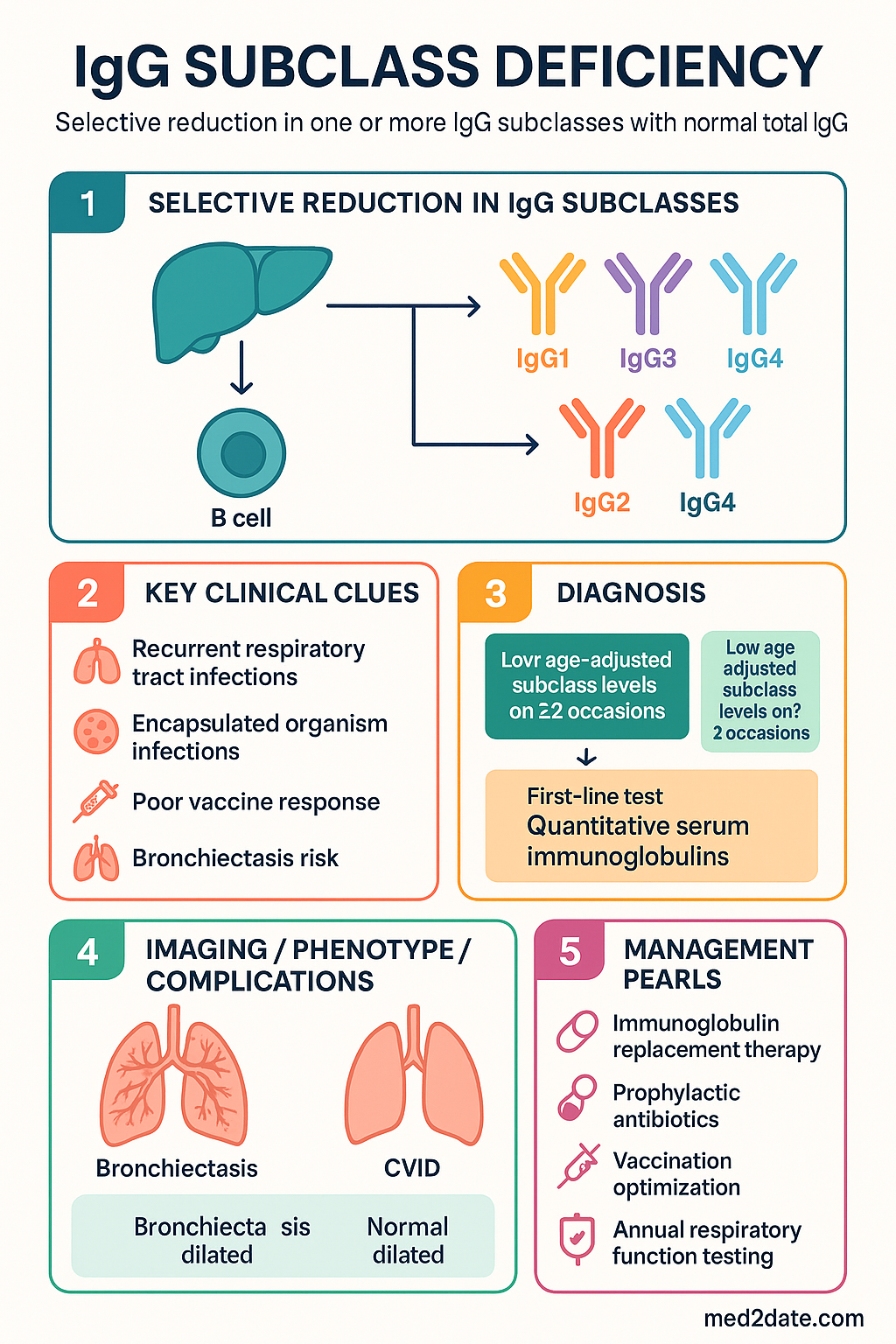
IgG Subclass Deficiency clinical infographic — pathophysiology, clinical clues, diagnosis, imaging, and management
Tap or click image to enlarge — IgG Subclass Deficiency: pathophysiology, clinical clues, diagnosis, imaging, and management.
IgG Subclass Deficiency infographic, full size

IgG Subclasses & Functions

IgG constitutes approximately 75% of total serum immunoglobulin and is divided into four subclasses based on heavy-chain constant-region structure. Each subclass has distinct effector functions, complement-activation capacity, and half-life.

Subclass % of Total IgG Half-life (days) Key Functions Deficiency Associations
IgG1 60–70% 21–23 Protein antigen responses; complement activation (classical pathway); FcγR-mediated phagocytosis and ADCC May signal evolving CVID; viral and bacterial infections
IgG2 15–25% 21–23 Polysaccharide antigen responses (encapsulated organisms); opsonisation; weak complement activator Most common deficiency; recurrent sinusitis, pneumonia with Streptococcus pneumoniae, Haemophilus influenzae
IgG3 4–8% 7–8 Potent complement activator; antiviral responses; mucosal immunity Second most common deficiency in adults; recurrent RTI, mucosal infections
IgG4 2–6% 21–23 Anti-inflammatory; blocks IgE-mediated reactions; does not activate complement Usually clinically insignificant in isolation; do not confuse with IgG4-related disease
⚠️
IgG2–IgG4 combination deficiency: Patients with concurrent IgG2 and IgG4 deficiency have a substantially higher risk of recurrent sinopulmonary infections and bronchiectasis compared to isolated single-subclass deficiency. These patients should be evaluated promptly for IgRT.

IgG subclass levels vary with age. IgG1 reaches adult levels by age 5–7 years, IgG2 by age 8–10 years, IgG3 by age 10–12 years, and IgG4 is more variable. This is clinically important because IgG2 deficiency diagnosed in early childhood may spontaneously resolve as the immune system matures.

Polysaccharide responses depend critically on IgG2. Individuals with IgG2 deficiency typically fail to mount adequate IgG anti-capsular antibody to S. pneumoniae serotypes, predisposing them to invasive pneumococcal disease. The introduction of conjugate pneumococcal vaccines (7vPCV, 13vPCV) has partially mitigated this risk, but gaps remain for non-vaccine serotypes.

Clinical Features

The clinical presentation of IgGSD is heterogeneous, ranging from asymptomatic laboratory findings to severe recurrent infections with end-organ damage. The predominant clinical manifestation is recurrent respiratory tract infection, though the spectrum varies by subclass deficiency and patient age.

Symptoms & Signs

Mild
Infrequent RTIs
≤4 upper RTIs per year; no lower tract involvement; no evidence of structural lung disease on imaging; normal growth in children; quality of life largely preserved.
Setting: GP monitoring with annual review
Moderate
Recurrent Sinopulmonary Infections
>4 RTIs per year including ≥2 episodes of sinusitis, otitis media, or bronchitis annually; recurrent courses of antibiotics; early bronchial wall thickening on CT; functional impairment (missed school/work days >10 per year).
Setting: Immunology outpatient referral; trial of prophylactic antibiotics
Severe
Bronchiectasis & Complications
Documented bronchiectasis on HRCT; ≥1 episode of pneumonia per year; hospitalisation for sepsis; failure to thrive or weight loss in children; secondary organ damage (hearing loss from chronic otitis, chronic sinusitis requiring surgery).
Setting: Specialist immunology & respiratory MDT; IgRT initiation

Subclass-Specific Presentations

  • IgG2 deficiency: Predominantly encapsulated organism infections — otitis media with S. pneumoniae or H. influenzae, recurrent pneumonia, sinusitis. Particularly common in children <8 years. Associated with poor responses to unconjugated polysaccharide vaccines.
  • IgG3 deficiency: Upper and lower RTIs in adults; may present with chronic cough, persistent sputum production, and recurrent bronchitis. Associated with atopic conditions in some studies.
  • IgG1 deficiency: Broad-spectrum infection susceptibility; may overlap with early CVID. Patients with isolated IgG1 deficiency and significant infections should be monitored for progression to hypogammaglobulinaemia.
  • IgG2 + IgG4 combined deficiency: Highest infectious burden; increased risk of bronchiectasis and invasive pneumococcal disease; often associated with poor vaccine responses.
🚨
Red flags requiring urgent investigation: Life-threatening infections (e.g., invasive pneumococcal disease, empyema, sepsis) in a child or adult should prompt immunological evaluation regardless of age. Recurrent infections requiring >2 courses of IV antibiotics per year warrant urgent immunology referral.

Diagnosis

Diagnosis of IgGSD requires a systematic approach combining clinical assessment, quantitative immunoglobulin measurement, functional antibody evaluation, and exclusion of secondary causes. The diagnosis should be made or confirmed by a clinical immunologist or immunology-trained physician.

Diagnostic Criteria

  1. Clinical: Recurrent serious infections (particularly sinopulmonary), requiring antibiotics, with documented infections (microbiological confirmation preferred).
  2. Laboratory: One or more IgG subclass levels below the age- and sex-adjusted laboratory reference range on at least two occasions separated by ≥4 weeks.
  3. Total IgG: Within normal limits (distinguishes IgGSD from CVID or hypogammaglobulinaemia).
  4. Exclusion of secondary causes: Protein-losing enteropathy, nephrotic syndrome, immunosuppressive therapy, malignancy, viral suppression (HIV, EBV, CMV), and medication effects (carbamazepine, phenytoin, gold, sulfasalazine).

Investigations

ESSENTIAL
Quantitative serum immunoglobulins (IgG, IgA, IgM, IgE)
MBS Item 65090 (Immunoglobulins, quantitation). Total IgG must be normal to diagnose IgGSD. Check IgA and IgM to exclude broader immunodeficiency.
ESSENTIAL
IgG subclass panel (IgG1, IgG2, IgG3, IgG4)
MBS Item 65090 (Immunoglobulin subclasses). Must be interpreted against age-specific reference ranges. Repeat at ≥4 weeks to confirm. Interpret in context — a "low" IgG4 in isolation is rarely clinically significant.
ESSENTIAL
Specific antibody responses
Anti-pneumococcal IgG titres pre- and 4–6 weeks post-Pneumovax® 23 (MBS Item 65090). A <4-fold rise or failure to achieve protective titres (≥1.3 mg/L for ≥70% serotypes tested) confirms functional antibody deficiency. Consider tetanus and Hib antibodies.
AVAILABLE
Full blood count with differential
MBS Item 65070. Lymphocyte subsets (CD3, CD4, CD8, CD19, CD16/56) if broader immunodeficiency suspected (MBS Item 65100).
AVAILABLE
Renal and liver function, urinalysis
Exclude protein loss (nephrotic syndrome, protein-losing enteropathy) as a secondary cause of low IgG subclasses.
AVAILABLE
Sputum culture and sensitivity
For patients with lower respiratory infections. Consider Pseudomonas aeruginosa surveillance in established bronchiectasis.
SPECIALIST
HRCT chest
Indicated if bronchiectasis suspected clinically or if recurrent lower RTIs (≥2/year). Assess for structural lung disease and guide respiratory co-management.
SPECIALIST
B-cell phenotyping and class-switch analysis
Consider if IgGSD is part of a broader immunodeficiency phenotype (e.g., CVID spectrum). Memory B-cell (CD27+) and switched-memory B-cell assessment may help prognosticate.
⚠️
Do not diagnose IgGSD from a single blood test. IgG subclass levels may fluctuate with intercurrent infection, inflammation, and assay variability. Confirm with repeat testing after a minimum 4-week interval, ideally when the patient is clinically well. Always interpret in the context of age-specific reference ranges.

Differential Diagnosis

Condition Distinguishing Features
Common Variable Immunodeficiency (CVID) Total IgG, IgA, and/or IgG reduced; often presents in 2nd–3rd decade; higher infection burden; may have autoimmune or granulomatous complications
Transient Hypogammaglobulinaemia of Infancy Low IgG for age (all subclasses may be proportionately reduced); self-resolving by age 2–4 years; normal antibody responses to vaccination
Selective IgA Deficiency IgA <0.07 g/L with normal IgG and IgM; may coexist with IgG2/IgG4 deficiency; check before transfusing blood products (anti-IgA antibodies)
Specific Antibody Deficiency (SAD) Normal IgG subclasses and total IgG but impaired polysaccharide antibody responses; clinical overlap with IgG2 deficiency
Secondary Immunodeficiency Immunosuppressants, nephrotic syndrome, protein-losing enteropathy, malignancy, HIV, medications
Sinusitis/bronchitis without immunodeficiency Anatomical factors, allergic rhinitis, gastro-oesophageal reflux, primary ciliary dyskinesia

Management

Management of IgGSD follows a stepwise approach: (1) vaccination optimisation and infection prevention, (2) prophylactic antibiotics for moderate disease, and (3) immunoglobulin replacement therapy (IgRT) for severe or refractory disease. All patients should be co-managed with a clinical immunologist.

1. Vaccination Optimisation

  • Pneumococcal vaccination: Administer 13-valent pneumococcal conjugate vaccine (13vPCV, Prevenar 13®) followed by Pneumovax® 23 at least 8 weeks later. Measure anti-pneumococcal IgG serotypes pre- and 4–6 weeks post-vaccination to assess functional response. Repeat Pneumovax® 23 every 5 years if antibody levels decline. Note: Pneumovax® 23 is funded under NIP for ATSI adults ≥50 years and all adults ≥70 years; other IgGSD patients require private prescription.
  • Influenza vaccination: Annual quadrivalent influenza vaccination (NIP-funded) — standard dose; consider high-dose formulation for elderly patients.
  • Other: Ensure up-to-date Hib (if incomplete), meningococcal ACWY and B, varicella (if non-immune and not on IgRT), and COVID-19 vaccination per ATAGI guidance.
  • Live vaccines: Generally safe in isolated IgGSD (unlike XLA or severe combined immunodeficiency); however, defer live vaccines if the patient is on IgRT or has concurrent IgA deficiency, as anti-IgA antibodies may be present.

2. Prophylactic Antibiotics

For patients with moderate disease (frequent but non-severe infections) who do not yet meet criteria for IgRT, a trial of prophylactic antibiotics is appropriate:

💊
Amoxicillin
Amoxil® · Generic · Penicillin antibiotic
Adult dose 500 mg PO BD (low-dose prophylaxis)
Paediatric dose 15–25 mg/kg/day PO divided BD (max 500 mg/dose)
Route & frequency Oral, twice daily, continuous or seasonal (autumn–spring)
Duration 6–12 months trial; reassess infection frequency
Renal adjustment Reduce dose if eGFR <30 mL/min (consult pharmacist)
PBS status ✔ PBS General Benefit
💊
Azithromycin
Zithromax® · Generic · Macrolide antibiotic
Adult dose 500 mg PO once weekly (prophylaxis)
Paediatric dose 10 mg/kg PO once weekly (max 500 mg/dose)
Route & frequency Oral, once weekly; anti-inflammatory + antimicrobial effect
Duration 6–12 months trial; monitor QTc if combined with other QT-prolonging agents
Renal adjustment No adjustment required
PBS status ✔ PBS General Benefit
⚠️
Antimicrobial stewardship: Use prophylactic antibiotics judiciously. Monitor for breakthrough infections, adverse effects, and emerging resistance. Annual sputum culture surveillance is recommended in patients on long-term macrolide prophylaxis to detect non-tuberculous mycobacteria (NTM) and macrolide-resistant organisms.

3. Immunoglobulin Replacement Therapy (IgRT)

IgRT is indicated for patients with IgGSD who have:

  • Documented serious or recurrent infections despite prophylactic antibiotics
  • Evidence of bronchiectasis
  • Documented functional antibody deficiency (poor vaccine responses) with significant infectious burden
  • Hospitalisation for infection ≥1 in the preceding 12 months
💉
Intravenous Immunoglobulin (IVIg)
Intragam® P · Privigen® · Octagam® · IVIg
Adult dose 400–600 mg/kg IV every 3–4 weeks (typical starting dose 400 mg/kg)
Paediatric dose 400–600 mg/kg IV every 3–4 weeks
Route & frequency Intravenous infusion, every 21–28 days in hospital/day-stay setting
Duration Ongoing; reassess annually; target trough IgG ≥7 g/L (individualise)
Renal adjustment Use sucrose-free preparations (Intragam® P, Privigen®) in renal impairment; avoid rapid infusion rates
PBS status Authority Required — Specialist
💉
Subcutaneous Immunoglobulin (SCIg)
Hizentra® · Cuvitru® · HyQvia® · SCIg
Adult dose 100–200 mg/kg SC weekly (equivalent bioavailability to IVIg 400 mg/kg 3-weekly)
Paediatric dose 100–200 mg/kg SC weekly (adjust per trough IgG levels)
Route & frequency Subcutaneous infusion, weekly (or twice-weekly); self-administered at home after training
Duration Ongoing; home-based therapy preferred in stable patients
Renal adjustment No specific adjustment; SC route avoids osmotic renal risk
PBS status Authority Required — Specialist
SCIg advantages in Australia: SCIg enables home-based self-infusion, reducing travel burden for patients in rural and remote Australia. Funding is available under PBS Authority and state-based hospital programmes (e.g., NSW Health SCIg Programme, Victorian SCIg Model of Care). Training is provided by immunology nursing staff. SCIG is associated with fewer systemic adverse effects and more stable serum IgG trough levels compared to IVIg.

Monitoring

  • Trough IgG levels: Measure serum IgG trough (pre-infusion) at 3 months, 6 months, and then 6–12 monthly. Target trough ≥7 g/L or individualised to clinical response.
  • Infection frequency: Document infection episodes, antibiotic use, hospitalisations, and quality of life at each visit.
  • Spirometry: Annual FEV₁/FVC monitoring. Declining FEV₁ may indicate evolving bronchiectasis.
  • HRCT chest: At baseline if bronchiectasis suspected; repeat only if clinical deterioration.
  • Sputum surveillance: Annual sputum culture for patients with bronchiectasis or on macrolide prophylaxis.
  • Renal function: Monitor serum creatinine before each IVIg infusion if using sucrose-containing preparations.
  • Re-evaluation of subclass levels: Repeat IgG subclass panel annually, especially in paediatric patients, as spontaneous resolution may occur.

Management of IgRT Adverse Effects

Adverse Effect Management
Infusion-related reactions (headache, myalgia, chills) Reduce infusion rate; pre-medicate with paracetamol, antihistamine ± hydrocortisone; ensure adequate hydration
Anaphylaxis (rare) Stop infusion immediately; IM adrenaline; change brand or route (IVIg → SCIg); consider IgA-deficient preparations if concurrent IgA deficiency
Local site reactions (SCIg) Rotate infusion sites; use hyaluronidase-facilitated SCIg (HyQvia®) if persistent
Haemolysis (IVIg) Anti-A/anti-B haemolysin titre varies by brand; monitor FBC and haptoglobin; use low-titre preparations if recurrent
Thrombotic events (rare) Slow infusion rate; avoid in patients with high viscosity risk; adequate hydration; consider antithrombotic prophylaxis if multiple risk factors

Special Populations

👶 Paediatric Considerations
IgG2 levels normally rise to adult levels by age 8–10 years.
Many children with isolated IgG2 deficiency will spontaneously resolve; avoid unnecessary long-term IgRT. Monitor with annual subclass levels and clinical review.
Ensure completion of pneumococcal conjugate vaccine schedule (2+1 at 2, 4, 12 months) and add Pneumovax® 23 at age ≥2 years to assess functional response.
Prophylactic antibiotics are first-line in children with moderate disease. Amoxicillin (15–25 mg/kg/day PO BD) or azithromycin (10 mg/kg/week PO) are commonly used.
🤰 Pregnancy
IgRT is safe in pregnancy and should be continued; IVIg and SCIg are Pregnancy Category C (no evidence of harm).
Monitor trough IgG levels more frequently (monthly) as pregnancy advances, as volume of distribution changes.
Avoid tetracyclines, fluoroquinolones, and trimethoprim (in first trimester and near term) for prophylactic antibiotics. Amoxicillin is preferred.
👴 Elderly Patients
Distinguish IgGSD from immunosenescence (age-related decline in immune function). Total IgG and subclass levels may decline physiologically.
Higher risk of adverse effects from IVIg: thrombotic events, volume overload, renal impairment. Use slower infusion rates and non-sucrose-containing products.
Consider high-dose influenza vaccination and enhanced pneumococcal strategies (PCV13 then Pneumovax® 23).
🫘 Renal Impairment
Avoid sucrose-containing IVIg preparations (risk of osmotic nephropathy). Use Intragam® P or Privigen® (sucrose-free).
SCIg is preferred in patients with significant renal impairment as it avoids the osmotic load of IV infusion.
🫁 Hepatic Impairment
No specific dose adjustment for IgRT in hepatic impairment. Monitor liver function tests if on concurrent hepatotoxic medications (e.g., macrolides).
🛡️ Immunocompromised (Secondary)
Distinguish IgGSD from secondary immunodeficiency (e.g., rituximab, corticosteroids, chemotherapy). Treat the underlying cause first.
Patients on IgRT are excluded from live vaccine administration. Ensure close contacts are vaccinated appropriately.

Aboriginal and Torres Strait Islander Health

Aboriginal and Torres Strait Islander Health Considerations
Infectious burden
ATSI Australians experience significantly higher rates of invasive pneumococcal disease, chronic suppurative otitis media, and bronchiectasis compared to non-Indigenous Australians. IgGSD should be considered early in the differential of recurrent infections, particularly in remote communities where access to specialist immunology is limited.
Diagnostic delay
Geographic isolation, limited specialist availability, and systemic barriers contribute to delayed diagnosis of primary immunodeficiency in ATSI populations. Immunoglobulin subclass testing is available through major pathology providers (Sullivan Nicolaides, Douglass Hanly Moir, SA Pathology) and can be requested by GPs. Telehealth immunology consultations are available through state-funded programmes.
IgRT delivery
SCIg is the preferred modality for ATSI patients in remote settings, as it can be self-administered at home after initial training. Community Health Workers and Remote Area Nurses can provide support for ongoing infusions. State-based SCIg programmes (e.g., NT Remote SCIg Programme) facilitate training and supply.
Vaccination coverage
ATSI children receive additional NIP-funded vaccines (including 13vPCV at 2, 4, 6 months + booster at 12 months). Pneumovax® 23 is funded for ATSI adults ≥50 years. Despite this, vaccination coverage remains below targets in some remote communities. Functional antibody assessment post-vaccination is essential.
Bronchiectasis & chronic lung disease
ATSI Australians have among the highest rates of bronchiectasis globally. Untreated IgGSD may contribute to progressive bronchiectasis. Early immunological evaluation in ATSI patients with recurrent lower respiratory infections is critical to prevent irreversible lung damage. Pulmonary rehabilitation and airway clearance programmes should be integrated into care plans.
Cultural safety
Immunology services should incorporate culturally safe practices: Aboriginal Health Workers in clinic teams, use of interpreter services where English is not the first language, acknowledgement of traditional healing practices alongside Western medicine, and flexible appointment scheduling to accommodate travel and family obligations.

📚 References

  1. 1. Bousfiha A, Jeddane L, Picard C, et al. The 2022 update of IUIS phenotypical classification for human inborn errors of immunity. J Clin Immunol. 2022;42(7):1508–1520.
  2. 2. Orange JS, Ballow M, Stiehm ER, et al. Use and interpretation of diagnostic vaccination in primary immunodeficiency: a working group report of the Basic and Clinical Immunology Interest Section of the AAAAI. Clin Immunol. 2012;143(1):63–87.
  3. 3. Bonilla FA, Khan DA, Ballas ZK, et al. Practice parameter for the diagnosis and management of primary immunodeficiency. J Allergy Clin Immunol. 2015;136(5):1186–1205.
  4. 4. Australasian Society of Clinical Immunology and Allergy (ASCIA). Primary immunodeficiency diseases (PID) guide for clinicians. ASCIA; 2023. Available at: www.allergy.org.au.
  5. 5. Chapel H, Prevot J, Gaspar HB, et al. Primary immunodeficiency diseases: an update from the International Union of Immunological Societies Primary Immunodeficiency Diseases Classification Committee. Front Immunol. 2014;5:162.
  6. 6. Australian Technical Advisory Group on Immunisation (ATAGI). Australian Immunisation Handbook. Australian Government Department of Health; 2023. Available at: immunisationhandbook.health.gov.au.
  7. 7. Chang AC, Loh J, Tze WJ, et al. Immunodeficiency in Australia: a national audit of primary immunodeficiency diagnoses. Intern Med J. 2020;50(Suppl 4):28.
  8. 8. Jolliffe L, Chang AB, Boyd J, et al. Bronchiectasis in Indigenous Australian children: a narrative review. Med J Aust. 2021;215(9):425–430.
  9. 9. Cinetto F, Scarpa R, Rattazzi M, et al. The broad spectrum of inborn errors of immunity manifested with respiratory tract infections: an EAID survey. Front Immunol. 2021;12:653140.
  10. 10. PDfA (Poisons and Therapeutic Goods Administration). Australian Product Information — Intragam® P (human normal immunoglobulin). CSL Behring; 2023.
  11. 11. PDfA (Poisons and Therapeutic Goods Administration). Australian Product Information — Hizentra® (human normal immunoglobulin for subcutaneous use). CSL Behring; 2023.
  12. 12. Australian Institute of Health and Welfare (AIHW). Aboriginal and Torres Strait Islander health performance framework 2020 summary report. Canberra: AIHW; 2020.
  13. 13. Yong PF, Thaventhiran JE, Grimbacher B. "A rose is a rose is a rose," but CVID is not CVID: common variable immune deficiency (CVID), what do we know in 2011? Adv Immunol. 2011;111:47–107.
  14. 14. Primary Immunodeficiency Foundation of Australia. Primary immunodeficiency in Australia: clinical guidelines. PIFA; 2022.
for PBS-listed medicines at participating pharmacies.
Cultural safety
Engagement with Aboriginal Community Controlled Health Organisations (ACCHOs) is essential. Cultural safety training for non-Indigenous clinicians, use of Aboriginal Health Workers and Liaison Officers, and incorporation of traditional healing practices alongside Western medicine improve treatment adherence and outcomes. Avoidance of eye contact, respect for gender-sensitive examination practices, and understanding of sorry business protocols are critical elements of culturally safe care.
Medication adherence
Complex DMARD regimens with frequent monitoring requirements present adherence challenges. Long-acting depot injections (e.g., methotrexate SC) may improve adherence compared to oral regimens. Community pharmacy partnerships through the Indigenous Pharmacy Programmes improve medication management.
Specific conditions
Rheumatic heart disease (RHD) requires secondary prophylaxis with benzathine penicillin G (BPG) 1.2 MU IM every 3–4 weeks for a minimum of 10 years or until age 21 (whichever is longer). RHD registers (e.g., NT RHD Register) facilitate recall and follow-up. The Australian RHD Endgame Strategy targets elimination by 2031.
Referral pathways
Referral through ACCHOs and Aboriginal Hospital Liaison Officers (AHLOs) improves engagement. The Specialist Outreach Assistance Programme provides funded specialist visits to remote communities. NT, WA, and QLD have specific rheumatology outreach programmes targeting Indigenous communities.

📚 References

  1. 1. Australian Institute of Health and Welfare (AIHW). Autoimmune disease in Australia. Cat. no. PHE 312. Canberra: AIHW; 2023.
  2. 2. Fraenkel L, Bathon JM, England BR, et al. 2021 American College of Rheumatology guideline for the treatment of rheumatoid arthritis. Arthritis Care Res. 2021;73(7):924–939.
  3. 3. Fanouriakis A, Kostopoulou M, Alber K, et al. 2019 update of the EULAR recommendations for the management of systemic lupus erythematosus. Ann Rheum Dis. 2019;78(6):736–745.
  4. 4. Chung SA, Langford CA, Maz M, et al. 2021 American College of Rheumatology/Vasculitis Foundation guideline for the management of antineutrophil cytoplasmic antibody-associated vasculitis. Arthritis Care Res. 2021;73(11):1583–1599.
  5. 5. Smolen JS, Landewé RBM, Bijlsma JWJ, et al. EULAR recommendations for the management of rheumatoid arthritis with synthetic and biological disease-modifying antirheumatic drugs: 2022 update. Ann Rheum Dis. 2023;82(1):3–18.
  6. 6. Australian Technical Advisory Group on Immunisation (ATAGI). Australian Immunisation Handbook. Australian Government Department of Health; 2024. Available from: immunisationhandbook.health.gov.au.
  7. 7. Rheumatic Heart Disease Australia (RHDAustralia). The 2020 Australian guideline for prevention, diagnosis, and management of acute rheumatic fever and rheumatic heart disease. 3rd ed. Darwin: Menzies School of Health Research; 2020.
  8. 8. Pharmaceutical Benefits Scheme (PBS). PBS Schedule. Australian Government Department of Health. Available from: pbs.gov.au. Accessed 2024.
  9. 9. Agarwal S, Cunnington J, Nossent J. Autoimmune disease in Indigenous Australians: a systematic review. Int J Rheum Dis. 2021;24(12):1487–1498.
  10. 10. Pisetsky DS. Antinuclear antibody testing — misunderstood or misused? Clin Immunol. 2023;255:109717.
  11. 11. Bertsias GK, Tektonidou M, Amoura Z, et al. Joint European League Against Rheumatism and European Renal Association–European Dialysis and Transplant Association (EULAR/ERA-EDTA) recommendations for the management of adult and paediatric lupus nephritis. Ann Rheum Dis. 2012;71(11):1771–1782.
  12. 12. Ledingham J, Deighton C; British Society for Rheumatology Standards, Audit and Guidelines Working Group. Update on the British Society for Rheumatology guidelines for prescribing TNFα blockers in adults with rheumatoid arthritis. Rheumatology. 2005;44(2):155–158.
  13. 13. National Health and Medical Research Council (NHMRC). National statement on ethical conduct in human research. Canberra: NHMRC; 2023 (updated).
for PBS-listed medicines at participating pharmacies.
Cultural safety
Engagement with Aboriginal Community Controlled Health Organisations (ACCHOs) is essential. Cultural safety training for non-Indigenous clinicians, use of Aboriginal Health Workers and Liaison Officers, and incorporation of traditional healing practices alongside Western medicine improve treatment adherence and outcomes. Avoidance of eye contact, respect for gender-sensitive examination practices, and understanding of sorry business protocols are critical elements of culturally safe care.
Medication adherence
Complex DMARD regimens with frequent monitoring requirements present adherence challenges. Long-acting depot injections (e.g., methotrexate SC) may improve adherence compared to oral regimens. Community pharmacy partnerships through the Indigenous Pharmacy Programmes improve medication management.
Specific conditions
Rheumatic heart disease (RHD) requires secondary prophylaxis with benzathine penicillin G (BPG) 1.2 MU IM every 3–4 weeks for a minimum of 10 years or until age 21 (whichever is longer). RHD registers (e.g., NT RHD Register) facilitate recall and follow-up. The Australian RHD Endgame Strategy targets elimination by 2031.
Referral pathways
Referral through ACCHOs and Aboriginal Hospital Liaison Officers (AHLOs) improves engagement. The Specialist Outreach Assistance Programme provides funded specialist visits to remote communities. NT, WA, and QLD have specific rheumatology outreach programmes targeting Indigenous communities.

📚 References

  1. 1. Australian Institute of Health and Welfare (AIHW). Autoimmune disease in Australia. Cat. no. PHE 312. Canberra: AIHW; 2023.
  2. 2. Fraenkel L, Bathon JM, England BR, et al. 2021 American College of Rheumatology guideline for the treatment of rheumatoid arthritis. Arthritis Care Res. 2021;73(7):924–939.
  3. 3. Fanouriakis A, Kostopoulou M, Alber K, et al. 2019 update of the EULAR recommendations for the management of systemic lupus erythematosus. Ann Rheum Dis. 2019;78(6):736–745.
  4. 4. Chung SA, Langford CA, Maz M, et al. 2021 American College of Rheumatology/Vasculitis Foundation guideline for the management of antineutrophil cytoplasmic antibody-associated vasculitis. Arthritis Care Res. 2021;73(11):1583–1599.
  5. 5. Smolen JS, Landewé RBM, Bijlsma JWJ, et al. EULAR recommendations for the management of rheumatoid arthritis with synthetic and biological disease-modifying antirheumatic drugs: 2022 update. Ann Rheum Dis. 2023;82(1):3–18.
  6. 6. Australian Technical Advisory Group on Immunisation (ATAGI). Australian Immunisation Handbook. Australian Government Department of Health; 2024. Available from: immunisationhandbook.health.gov.au.
  7. 7. Rheumatic Heart Disease Australia (RHDAustralia). The 2020 Australian guideline for prevention, diagnosis, and management of acute rheumatic fever and rheumatic heart disease. 3rd ed. Darwin: Menzies School of Health Research; 2020.
  8. 8. Pharmaceutical Benefits Scheme (PBS). PBS Schedule. Australian Government Department of Health. Available from: pbs.gov.au. Accessed 2024.
  9. 9. Agarwal S, Cunnington J, Nossent J. Autoimmune disease in Indigenous Australians: a systematic review. Int J Rheum Dis. 2021;24(12):1487–1498.
  10. 10. Pisetsky DS. Antinuclear antibody testing — misunderstood or misused? Clin Immunol. 2023;255:109717.
  11. 11. Bertsias GK, Tektonidou M, Amoura Z, et al. Joint European League Against Rheumatism and European Renal Association–European Dialysis and Transplant Association (EULAR/ERA-EDTA) recommendations for the management of adult and paediatric lupus nephritis. Ann Rheum Dis. 2012;71(11):1771–1782.
  12. 12. Ledingham J, Deighton C; British Society for Rheumatology Standards, Audit and Guidelines Working Group. Update on the British Society for Rheumatology guidelines for prescribing TNFα blockers in adults with rheumatoid arthritis. Rheumatology. 2005;44(2):155–158.
  13. 13. National Health and Medical Research Council (NHMRC). National statement on ethical conduct in human research. Canberra: NHMRC; 2023 (updated).