Home Oncology Targeted Therapy & New Chemotherapy Agents

Targeted Therapy & New Chemotherapy Agents

📋 Key Information Summary

📋
  • BRAF/MEK inhibition: Dabrafenib + trametinib (Tafinlar® + Mekinist®) is the standard combination for BRAF V600-mutated melanoma and NSCLC; vemurafenib + cobimetinib is an alternative BRAF/MEK pair
  • EGFR inhibitors: Osimertinib (Tagrisso®) is the preferred first-line EGFR TKI for EGFR exon 19 deletion / L858R-mutated NSCLC in Australia, offering CNS penetration and T790M coverage
  • ALK inhibitors: Alectinib (Alecensa®) is first-line for ALK-rearranged NSCLC; lorlatinib (Lorbrena®) is used after progression on second-generation agents
  • CDK4/6 inhibitors: Palbociclib (Ibrance®), ribociclib (Kisqali®), and abemaciclib (Verzenio®) combined with endocrine therapy are standard for HR+/HER2− advanced breast cancer
  • mTOR inhibitors: Everolimus (Afinitor®) is PBS-listed for renal cell carcinoma, breast cancer, and neuroendocrine tumours; temsirolimus is IV alternative for poor-risk RCC
  • Immunotherapy checkpoint inhibitors: Anti-PD-1 agents (nivolumab, pembrolizumab) and anti-CTLA-4 (ipilimumab) are registered across melanoma, NSCLC, RCC, and multiple other tumour types; dual checkpoint blockade (nivo + ipi) is standard for unresectable melanoma
  • Mandatory molecular testing: All NSCLC patients must have comprehensive molecular profiling (EGFR, ALK, ROS1, BRAF, PD-L1, KRAS G12C) before commencing systemic therapy; melanoma requires BRAF V600 testing for targeted therapy eligibility
  • Immune-related adverse events (irAEs): Affect 60–80% of patients on combination checkpoint inhibitors; early recognition and corticosteroid therapy are essential; endocrine irAEs may be permanent
  • PBS access: Most targeted agents listed as Authority Required or Section 100 (Highly Specialised Drugs) — prescribe through oncology pharmacies with PBS authority approval
  • Pharmacogenomic considerations: HLA-B*57:01 testing not applicable to these agents; DPYD testing recommended before fluoropyrimidine backbone if used concurrently; UGT1A1 genotyping for irinotecan combinations
  • Drug interactions: CYP3A4 inhibitors/inducers significantly affect palbociclib, ribociclib, and many TKIs; always perform interaction checks before prescribing; avoid concurrent strong CYP3A4 inhibitors with CDK4/6 inhibitors
  • Pregnancy and contraception: All targeted agents and checkpoint inhibitors are teratogenic — effective contraception required during treatment and for specified washout periods post-therapy

Introduction & Australian Epidemiology

Novel targeted therapies and immunotherapeutic agents have transformed the management of multiple solid organ and haematological malignancies over the past two decades. These agents exploit specific oncogenic driver mutations (BRAF, EGFR, ALK, ROS1) or harness the host immune system (anti-PD-1, anti-CTLA-4) to selectively kill tumour cells with improved therapeutic indices compared with conventional cytotoxic chemotherapy.

In Australia, targeted therapies and immune checkpoint inhibitors now represent first-line standard of care across melanoma, non-small-cell lung cancer (NSCLC), renal cell carcinoma (RCC), breast cancer, and an expanding list of other tumour types. The following epidemiological data highlight the scale of these indications:

  • Melanoma: Australia has the highest incidence of melanoma worldwide (~16,000 new cases/year; age-standardised rate ~36 per 100,000). Approximately 45–50% of cutaneous melanomas harbour BRAF V600 mutations, making BRAF/MEK inhibitor therapy relevant to ~7,000 patients annually. Checkpoint inhibitors are used in both adjuvant and metastatic settings (Melanoma Institute Australia, 2024)
  • NSCLC: Lung cancer accounts for ~13,000 new diagnoses annually in Australia. In non-squamous NSCLC, EGFR mutations are present in ~15% of patients (higher in never-smokers and patients of East Asian ancestry), ALK rearrangements in ~5%, ROS1 in ~1–2%, and BRAF V600E in ~1–2%. PD-L1 expression ≥50% is found in ~25–30% of patients (Lung Foundation Australia, 2024)
  • Breast cancer: ~20,000 new diagnoses annually; HR+/HER2− subtype represents ~70% of metastatic breast cancer — the primary indication for CDK4/6 inhibitors
  • Renal cell carcinoma: ~4,500 new cases annually; mTOR inhibitors (everolimus) and checkpoint inhibitors are key treatment modalities
  • MBS item 73338 covers PD-L1 testing (immunohistochemistry) for NSCLC, and MBS item 73341 covers comprehensive genomic profiling for NSCLC via NGS panels
⚠️
Australian prescribing note: All targeted therapies and checkpoint inhibitors discussed in this guideline require oncologist-initiated prescribing. Most are PBS-listed as Authority Required or Section 100 (Highly Specialised Drugs). Patients must be managed at approved oncology centres with access to multidisciplinary tumour boards.
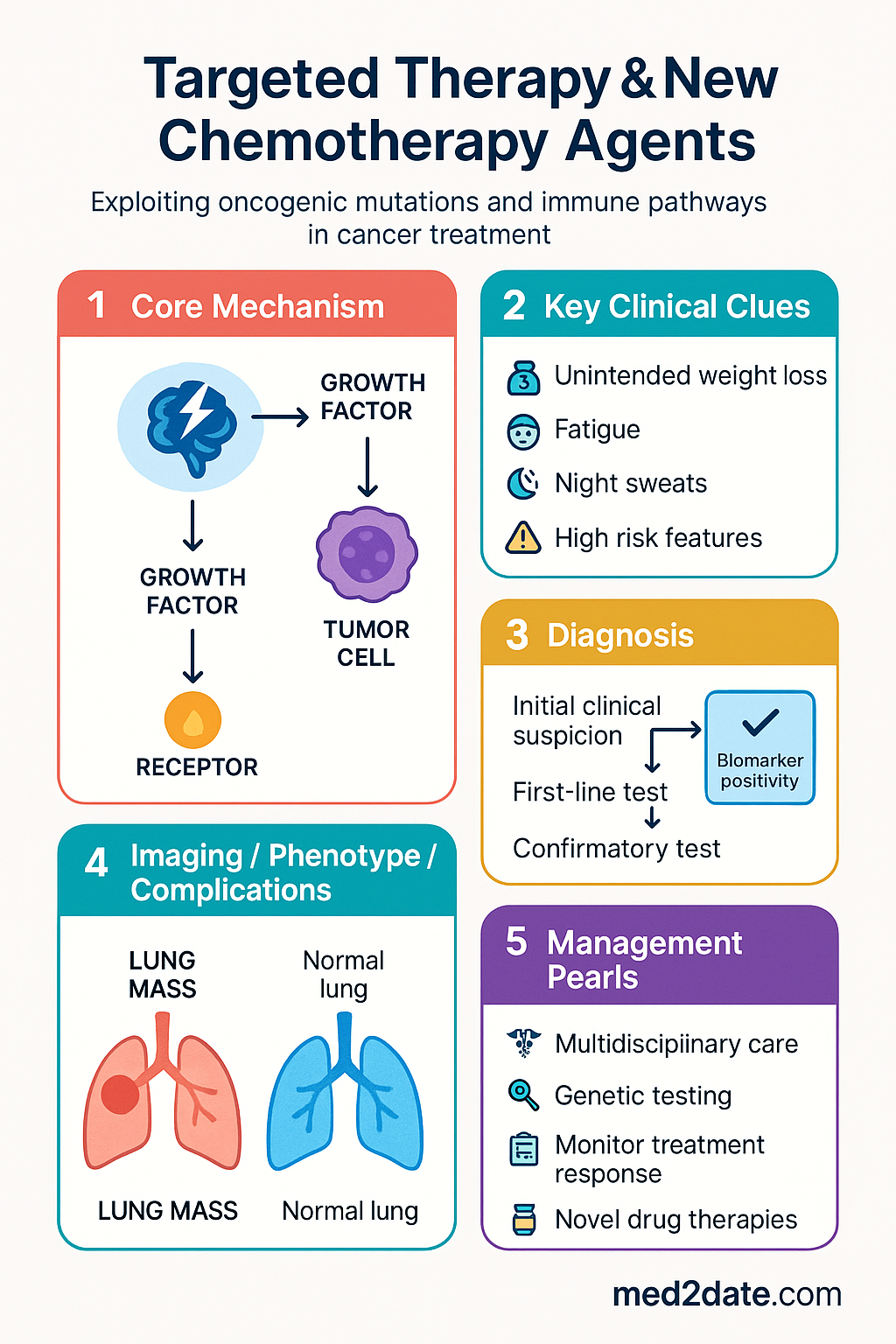
Targeted Therapy & New Chemotherapy Agents clinical infographic — pathophysiology, clinical clues, diagnosis, imaging, and management
Tap or click image to enlarge — Targeted Therapy & New Chemotherapy Agents: pathophysiology, clinical clues, diagnosis, imaging, and management.
Targeted Therapy & New Chemotherapy Agents infographic, full size

Pathophysiology & Molecular Targets

Targeted therapies exploit specific molecular alterations that drive tumour growth and survival. Understanding these pathways is essential for appropriate patient selection and sequencing of therapies.

Target Pathway Key Cancers Prevalence in Australia
BRAF V600E/K MAPK/ERK signalling → constitutive cell proliferation Melanoma, NSCLC, CRC, thyroid, hairy cell leukaemia Melanoma ~45%; NSCLC ~1–2%; CRC ~8–10%
EGFR activating mutations EGFR tyrosine kinase → PI3K/AKT + RAS/MAPK NSCLC (adenocarcinoma) NSCLC ~15% (higher in never-smokers, East Asian descent)
ALK rearrangement ALK fusion protein → constitutive kinase activity NSCLC (adenocarcinoma, younger patients) NSCLC ~5%
CDK4/6 overactivity Cyclin D–CDK4/6 → Rb phosphorylation → G1/S transition HR+/HER2− breast cancer ~70% of metastatic breast cancers
mTOR activation PI3K/AKT/mTOR → protein synthesis, metabolism, angiogenesis RCC, breast cancer, NET, TSC RCC ~4,500 cases/year
PD-1/PD-L1 axis Tumour PD-L1 binds T-cell PD-1 → immune evasion Melanoma, NSCLC, RCC, HNSCC, urothelial, others PD-L1 ≥50% in ~25–30% NSCLC
CTLA-4 Inhibitory checkpoint → suppresses T-cell priming Melanoma, RCC (in combination) Used in combination regimens

BRAF & MEK Inhibitors

Concurrent BRAF and MEK inhibition is standard of care for BRAF V600-mutated tumours. Monotherapy BRAF inhibitors are no longer recommended due to paradoxical MAPK pathway activation and higher rates of cutaneous squamous cell carcinoma (cuSCC). Combination therapy improves overall survival, progression-free survival, and reduces cutaneous toxicity.

Approved Indications in Australia

  • Unresectable or metastatic BRAF V600-mutated melanoma (adjuvant and metastatic)
  • BRAF V600E-mutated NSCLC (dabrafenib + trametinib)
  • BRAF V600E-mutated anaplastic thyroid cancer
  • BRAF V600E-mutated CRC (encorafenib + cetuximab — different mechanism)

First-Line Combination: Dabrafenib + Trametinib

💊
Dabrafenib
Tafinlar® · BRAF inhibitor
Adult dose 150 mg PO BD, 1 hour before or 2 hours after food
Paediatric dose ≥1 year: weight-based dosing — see TGA PI; typically 3 mg/kg/day divided BD (≤6 kg), 4.5 mg/kg/day (7–12 kg), 6 mg/kg/day (13–26 kg), or adult dose (≥27 kg)
Renal adjustment No dose adjustment required for mild–moderate impairment; use with caution in eGFR <30 — limited data
Hepatic adjustment Reduce to 50 mg BD in severe hepatic impairment (Child-Pugh C)
Key interactions Avoid strong CYP2C8/CYP3A4 inhibitors; proton pump inhibitors reduce absorption (take with acidic beverage)
PBS status 🔒 PBS Authority Required — Section 100
💊
Trametinib
Mekinist® · MEK1/2 inhibitor
Adult dose 2 mg PO OD, 1 hour before or 2 hours after food
Paediatric dose ≥1 year: weight-based — 0.032 mg/kg/day (≤8 kg), 0.025 mg/kg/day (9–16 kg), 0.02 mg/kg/day (17–30 kg), or adult dose (≥31 kg), max 2 mg/day
Renal adjustment No adjustment for mild–moderate impairment; caution if eGFR <30
Hepatic adjustment No dose adjustment for mild; reduce to 1.5 mg OD for moderate; reduce to 1 mg OD for severe
PBS status 🔒 PBS Authority Required — Section 100

Alternative BRAF/MEK Combinations

💊
Encorafenib + Binimetinib
Braftovi® + Mektovi® · BRAF + MEK inhibitor
Adult dose Encorafenib 450 mg PO OD + Binimetinib 45 mg PO BD with food
Key advantage Once-daily encorafenib may improve adherence; COLUMBUS trial showed superior PFS to vemurafenib monotherapy
PBS status ⚡ PBS Authority Required — Check current listing

Common Toxicities — BRAF + MEK Combination

Toxicity Incidence Management
Pyrexia / rigors ~50–60% Withhold dabrafenib when fever ≥38.5°C; antipyretics; rule out infection; resume at same or reduced dose when afebrile >24h
Rash / dermatitis ~30–40% Emollients, topical corticosteroids; dose reduction if grade ≥3
Fatigue ~40–50% Supportive care; dose reduction if persistent grade 3
Diarrhoea ~20–30% Loperamide; dose reduction of trametinib for grade ≥3
Peripheral oedema ~20% Compression, elevation; diuretics if symptomatic
LVEF reduction ~7–10% Baseline and 1-monthly echocardiography; withhold trametinib if LVEF drops ≥10% from baseline and below lower limit of normal
Uveitis ~1–5% Ophthalmology referral; topical steroids; may require treatment interruption
🚨
Critical safety: BRAF inhibitor monotherapy (without MEK inhibitor) is associated with paradoxical activation of the MAPK pathway in BRAF-wild-type cells, leading to increased risk of cutaneous squamous cell carcinoma (cuSCC) and keratoacanthomas. Always prescribe BRAF + MEK in combination. Monitor all patients with regular dermatological assessments every 2–3 months.

EGFR & ALK Inhibitors

Epidermal growth factor receptor (EGFR) tyrosine kinase inhibitors (TKIs) and anaplastic lymphoma kinase (ALK) inhibitors have transformed first-line treatment of advanced NSCLC in patients with actionable driver mutations. Molecular testing is mandatory before initiating systemic therapy in all non-squamous NSCLC.

EGFR Tyrosine Kinase Inhibitors

Three generations of EGFR TKIs are available in Australia. Osimertinib, a third-generation TKI, is now the preferred first-line agent based on the FLAURA trial demonstrating superior PFS, overall survival, and CNS efficacy.

💊
Osimertinib
Tagrisso® · 3rd-generation EGFR TKI · Mutant-selective (exon 19 del, L858R, T790M)
Adult dose 80 mg PO OD, with or without food
Paediatric dose Not established — adult indications only
Key advantages Superior CNS penetration; covers T790M resistance mutation; FLAURA OS benefit 38.6 vs 31.8 months
Renal adjustment No adjustment for mild–moderate; caution eGFR <30
Hepatic adjustment No dose adjustment; avoid in severe impairment (limited data)
Key toxicities Diarrhoea (47%), rash (34%), paronychia (25%), QTc prolongation, ILD/pneumonitis (~3%)
PBS status 🔒 PBS Authority Required — Section 100
💊
Gefitinib
Iressa® · 1st-generation EGFR TKI
Adult dose 250 mg PO OD
Notes Largely superseded by osimertinib; still available if intolerant to osimertinib
PBS status 🔒 PBS Authority Required — Section 100
💊
Erlotinib
Tarceva® · 1st-generation EGFR TKI
Adult dose 150 mg PO OD (100 mg if smoking; 50 mg with concurrent strong CYP3A4 inhibitor)
PBS status 🔒 PBS Authority Required — Section 100
💊
Afatinib
Gilotrif® · 2nd-generation irreversible ErbB family inhibitor
Adult dose 40 mg PO OD, 1 hour before or 2 hours after food
Notes Pan-HER inhibition; higher rates of diarrhoea and stomatitis; LUX-Lung 7 data
PBS status 🔒 PBS Authority Required — Section 100

ALK Inhibitors

ALK rearrangements are detected by immunohistochemistry (IHC) with confirmatory fluorescence in situ hybridisation (FISH) or next-generation sequencing (NGS). Alectinib is the preferred first-line agent based on the ALEX trial.

💊
Alectinib
Alecensa® · 2nd-generation ALK inhibitor · Preferred 1L
Adult dose 600 mg PO BD with food
Key advantages Excellent CNS activity; ALEX trial median PFS 34.8 months vs 10.9 months for crizotinib
Key toxicities Oedema (30%), myalgia (17%), hepatotoxicity (monitor LFTs), bradycardia
PBS status 🔒 PBS Authority Required — Section 100
💊
Lorlatinib
Lorbrena® · 3rd-generation ALK inhibitor · CNS-penetrant
Adult dose 100 mg PO OD
Key advantages Active against most ALK resistance mutations including G1202R; superior CNS activity; CROWN trial PFS not reached at 36 months
Key toxicities Hypercholesterolaemia (70–80%), hypertriglyceridaemia (40–60%), cognitive effects (20%), peripheral neuropathy, weight gain
PBS status ⚡ PBS Authority Required — Check current listing status
💊
Crizotinib
Xalkori® · 1st-generation ALK/MET/ROS1 inhibitor
Adult dose 250 mg PO BD with or without food
Notes Now primarily used for ROS1-rearranged NSCLC or as later-line ALK therapy; poor CNS penetration
PBS status 🔒 PBS Authority Required — Section 100

EGFR/ALK Sequencing Algorithm

1
Diagnosis & Molecular Testing
All non-squamous NSCLC → comprehensive molecular panel (EGFR, ALK, ROS1, BRAF, KRAS G12C, PD-L1, NTRK). Squamous NSCLC in never-smokers or young patients should also be tested. Use MBS item 73341 for NGS.
2
First-Line Therapy Selection
EGFR mutation-positive → osimertinib 80 mg OD. ALK-rearranged → alectinib 600 mg BD. ROS1-positive → crizotinib or entrectinib.
3
Progression on 1L TKI
Re-biopsy (tissue or ctDNA liquid biopsy) to identify resistance mechanism. EGFR: if T790M on 1G/2G TKI → osimertinib; if progression on osimertinib → chemotherapy ± immunotherapy. ALK: lorlatinib or chemotherapy.
4
Ongoing Monitoring
CT chest/abdomen every 3 months. Brain MRI every 6 months (especially for CNS-active agents). LFTs, ECG as per agent. Monitor for irAEs if combining with immunotherapy.

mTOR & CDK4/6 Inhibitors

The PI3K/AKT/mTOR pathway and the cyclin D–CDK4/6–Rb axis are critical regulators of cell proliferation and survival. Inhibitors of these pathways are integral to the management of HR+/HER2− metastatic breast cancer and renal cell carcinoma.

CDK4/6 Inhibitors in HR+/HER2− Breast Cancer

CDK4/6 inhibitors combined with endocrine therapy (aromatase inhibitor or fulvestrant) are standard first-line treatment for pre-/post-menopausal women with HR+/HER2− advanced breast cancer. All three available agents have demonstrated significant PFS benefit; ribociclib and abemaciclib have also demonstrated overall survival benefit.

💊
Palbociclib
Ibrance® · CDK4/6 inhibitor
Adult dose 125 mg PO OD × 21 days, then 7 days off (28-day cycle); reduce to 100 mg or 75 mg for haematological toxicity
Combination With letrozole 2.5 mg OD or fulvestrant 500 mg IM (days 1, 15, 29 then q4weekly)
Key toxicities Neutropenia (Grade 3/4 ~65%), fatigue, nausea, alopecia; monitor FBC every 2 weeks for first 2 cycles, then monthly
Renal adjustment No adjustment for mild–moderate; 75 mg OD if eGFR <15 (limited data)
Drug interactions Avoid strong CYP3A4 inhibitors (ketoconazole, ritonavir); avoid strong CYP3A4 inducers (rifampicin, phenytoin, St John's wort)
PBS status 🔒 PBS Authority Required — Section 100
💊
Ribociclib
Kisqali® · CDK4/6 inhibitor
Adult dose 600 mg PO OD × 21 days, then 7 days off; reduce to 400 mg or 200 mg for toxicity
Combination With letrozole 2.5 mg OD (MONALEESA trials) or fulvestrant
Key toxicities Neutropenia, QTc prolongation (mandatory ECG at baseline, day 1 of cycle 2, and as clinically indicated), hepatotoxicity, nausea
QTc monitoring Discontinue if QTc >500 ms or >60 ms increase from baseline; avoid concurrent QTc-prolonging agents
PBS status 🔒 PBS Authority Required — Section 100
💊
Abemaciclib
Verzenio® · CDK4/6 inhibitor
Adult dose With endocrine therapy: 150 mg PO BD. Monotherapy (post-endocrine/post-chemo): 200 mg PO BD. Reduce by one dose level for toxicity
Key advantage Continuous dosing (no 7-day break); lower rate of neutropenia; can be used as monotherapy; monarchE trial showed adjuvant benefit in high-risk early breast cancer
Key toxicities Diarrhoea (~80%, usually early onset — prophylactic loperamide recommended), fatigue, nausea, neutropenia (grade 3/4 ~25%), hepatotoxicity
PBS status 🔒 PBS Authority Required — Section 100

mTOR Inhibitors

💊
Everolimus
Afinitor® · mTOR inhibitor
Adult dose 10 mg PO OD (RCC, breast cancer, NET); reduce to 5 mg for toxicity; TSC: 4.5 mg/m²/day OD
Indications Advanced RCC (after VEGF-TKI); HR+/HER2− breast cancer (with exemestane); progressive neuroendocrine tumours (PNET); TSC-associated SEGA and angiomyolipoma
Key toxicities Stomatitis/oral mucositis (40–50% — prophylactic dexamethasone mouthwash recommended), pneumonitis (~15%), hyperglycaemia, hyperlipidaemia, myelosuppression, impaired wound healing
Renal adjustment No dose adjustment; caution in severe impairment — monitor
Drug interactions Avoid strong CYP3A4 inhibitors and inducers; trough level monitoring recommended
PBS status 🔒 PBS Authority Required — Section 100
💊
Temsirolimus
Torisel® · IV mTOR inhibitor
Adult dose 25 mg IV weekly over 30–60 minutes; premedicate with diphenhydramine 25–50 mg IV 30 min before
Indication Poor-risk metastatic RCC (first-line); ARCC trial showed OS benefit vs IFN-α
PBS status ⚡ PBS — Check current listing; not universally available
⚠️
Mucositis prevention with everolimus: Prophylactic alcohol-free dexamethasone mouthwash (0.5 mg/5 mL, swish and spit QID) significantly reduces stomatitis incidence and severity. If stomatitis develops, switch to a steroid-containing oral paste (e.g., triamcinolone dental paste). Hold everolimus for grade ≥3 mucositis until resolution to grade ≤1.

Immunotherapy Checkpoint Inhibitors (Anti-PD-1 & Anti-CTLA-4)

Immune checkpoint inhibitors (ICIs) have revolutionised cancer treatment by releasing the brakes on anti-tumour immunity. Anti-PD-1 agents (nivolumab, pembrolizumab) and anti-CTLA-4 (ipilimumab) are registered across an expanding range of malignancies in Australia.

Available Agents

🛡️
Pembrolizumab
Keytruda® · Anti-PD-1 monoclonal antibody
Adult dose 200 mg IV over 30 min every 3 weeks OR 400 mg IV over 30 min every 6 weeks
Indications (selected) Melanoma (adjuvant, metastatic — monotherapy or with chemo); NSCLC (1L monotherapy if PD-L1 ≥50%, or with chemo regardless of PD-L1); HNSCC; urothelial; MSI-H/dMMR tumours; Hodgkin lymphoma; gastric; oesophageal; cervical; TNBC (PD-L1+)
Renal adjustment No dose adjustment required
PBS status 🔒 PBS Authority Required — Section 100 (most indications)
🛡️
Nivolumab
Opdivo® · Anti-PD-1 monoclonal antibody
Adult dose 240 mg IV over 30 min every 2 weeks OR 480 mg IV every 4 weeks
Indications (selected) Melanoma (adjuvant — monotherapy or with ipilimumab; metastatic); NSCLC (2L monotherapy); RCC (monotherapy or with ipilimumab 1L; with cabozantinib 1L); HNSCC; urothelial; oesophageal/gastric; Hodgkin lymphoma; HCC
PBS status 🔒 PBS Authority Required — Section 100
🛡️
Ipilimumab
Yervoy® · Anti-CTLA-4 monoclonal antibody
Adult dose Melanoma (adjuvant): 10 mg/kg IV every 3 weeks × 4 doses then q12w maintenance. Melanoma/RCC (combo with nivo): 1 mg/kg IV every 3 weeks × 4 doses (with nivo 3 mg/kg — CheckMate trials). Other: 3 mg/kg every 3 weeks × 4 doses
Key consideration Higher irAE rates than anti-PD-1 monotherapy; combination nivo + ipi has grade 3/4 irAE rate ~55–60%
PBS status 🔒 PBS Authority Required — Section 100
🛡️
Atezolizumab
Tecentriq® · Anti-PD-L1 monoclonal antibody
Adult dose 1200 mg IV over 60 min every 3 weeks (first infusion 60 min, subsequent 30 min if tolerated)
Indications (selected) NSCLC (1L with chemo or monotherapy PD-L1 ≥50%); urothelial; HCC; SCLC (1L with carboplatin/etoposide — IMpower133); triple-negative breast cancer (PD-L1+ with nab-paclitaxel — IMpassion130)
PBS status 🔒 PBS Authority Required — Section 100

Immune-Related Adverse Events (irAEs)

irAEs are the primary toxicity of checkpoint inhibitor therapy and result from T-cell-mediated autoimmune attack on normal tissues. Early recognition and management are critical. Combination regimens (nivo + ipi) have substantially higher irAE rates than monotherapy.

Grade 1
Mild
Asymptomatic or mild symptoms; no intervention required. Examples: ALT 1–3× ULN, diarrhoea <4 stools/day, TSH shift without symptoms, maculopapular rash <10% BSA.
Continue ICI with close monitoring; labs every 1–2 weeks
Grade 2
Moderate
Limiting instrumental ADLs. Examples: ALT 3–5× ULN, diarrhoea 4–6 stools/day, symptomatic thyroiditis, rash 10–30% BSA, pneumonitis on imaging.
Hold ICI; initiate prednisolone 0.5–1 mg/kg/day; resume when ≤grade 1 with specialist review
Grade 3–4
Severe / Life-threatening
Limiting self-care ADLs or hospitalisation. Examples: ALT >5–20× ULN, diarrhoea ≥7 stools/day, myocarditis, severe colitis, pneumonitis with hypoxia, severe neurological irAEs (myasthenia, encephalitis), adrenal crisis.
Permanent discontinuation for most grade 4 irAEs; IV methylprednisolone 1–2 mg/kg/day; if no improvement in 48–72h → add infliximab (colitis), mycophenolate (hepatitis), or plasmapheresis (neurological)

irAE Management by Organ System

Organ System Incidence (mono/combo) Key Management Notes
Thyroiditis 10–20% / 20–30% Thyroxine replacement for hypothyroidism; monitor TSH q4–6 weeks; beta-blockers for transient thyrotoxicosis phase Often permanent; rarely requires ICI cessation
Hypophysitis 1–5% / 5–10% (higher with ipi) Hormone replacement (hydrocortisone, thyroxine, testosterone/oestradiol, desmopressin); MRI pituitary Usually permanent endocrine dysfunction; educate re: sick-day rules for adrenal insufficiency
Colitis 1–4% / 10–15% Prednisolone 1–2 mg/kg; infliximab 5 mg/kg if refractory to 3 days IV steroids; vedolizumab as alternative Colonoscopy for persistent grade ≥2; hold ICI until ≤grade 1
Hepatitis 1–5% / 10–15% Prednisolone 1–2 mg/kg; mycophenolate 500–1000 mg BD if steroid-refractory (avoid infliximab — hepatotoxicity risk) Monitor LFTs each infusion; exclude viral hepatitis, drug causes
Pneumonitis 1–3% / 5–10% Prednisolone 1–2 mg/kg; if refractory → infliximab, mycophenolate, or cyclophosphamide; CT chest if symptomatic High mortality if missed; lower threshold for CT in smokers, pre-existing lung disease
Myocarditis <1% / 1–2% ICU admission; IV methylprednisolone 1 g/day × 3 days; consider abatacept, alemtuzumab, or ATG; troponin + ECG at each infusion Rare but high mortality (~50%); most common with combo ipi + nivo; early troponin monitoring critical
Skin (rash, vitiligo) 30–40% / 40–50% Emollients, topical steroids for mild; systemic steroids for grade ≥2; dermatology referral for blistering Vitiligo associated with better tumour response in melanoma
🚨
Myocarditis — Red flag: Immune checkpoint inhibitor-associated myocarditis has a mortality rate of ~25–50%. Monitor troponin and ECG before each infusion. Educate patients to present immediately with new chest pain, dyspnoea, palpitations, or unexplained fatigue. Hold ICI immediately if myocarditis suspected. Early high-dose corticosteroids are essential — do not wait for biopsy confirmation.

Pre-Treatment Workup Before Checkpoint Inhibitors

Essential TSH, free T4 Baseline thyroid function — may identify pre-existing thyroid disease; repeat q4–6 weeks
Essential LFTs (ALT, AST, bilirubin, ALP) Baseline and before each infusion; to identify subclinical hepatitis
Essential Troponin + ECG Baseline for combination regimens; consider for monotherapy in high-risk patients (pre-existing cardiac disease)
Essential FBC + differential Baseline and before each cycle; monitor for cytopenias
Available PD-L1 immunohistochemistry (MBS 73338) NSCLC, urothelial, HNSCC, gastric — guides monotherapy vs combination decisions
Available MSI/MMR testing IHC for MLH1, MSH2, MSH6, PMS2 or PCR/NGS for MSI; MSI-H/dMMR tumours are pembrolizumab-agnostic (tissue-of-origin independent)
Available CT chest + pulmonary function Baseline for patients with pre-existing ILD or COPD before starting ICI
Available Hepatitis B/C serology HBV reactivation risk with immunosuppression for irAE management; screen before starting ICI

Monitoring

Ongoing monitoring requirements vary by agent class. The following provides a consolidated monitoring schedule.

Test Frequency Agents Action Threshold
FBC + differential Every 2 weeks × 2 cycles, then monthly CDK4/6 inhibitors, everolimus, temsirolimus, BRAF/MEK ANC <1.0: hold CDK4/6; platelets <50: hold and reassess
LFTs (ALT, AST, bilirubin) Before each infusion (ICIs); monthly (TKIs) All agents ALT >3× ULN: hold ICI, consider steroids; ALT >5× ULN: prednisolone 1–2 mg/kg
TSH, free T4 Every 4–6 weeks for first 6 months on ICI, then q3 months Checkpoint inhibitors TSH >10 or symptomatic hypothyroidism → start thyroxine; continue ICI
Troponin + ECG Before each cycle (combination ICI); baseline + day 15 (monotherapy) Checkpoint inhibitors (esp. ipilimumab combinations) Any troponin elevation or new ECG abnormality → hold ICI, cardiology review, echo
Echocardiogram / LVEF Baseline, 1 month, then q3 months Trametinib, other MEK inhibitors LVEF drop ≥10% from baseline and below LLN → hold trametinib; repeat echo in 2 weeks
Lipid profile Baseline, 1 month, then q3 months Lorlatinib, everolimus, temsirolimus Initiate statin therapy; consider lipid-lowering agent for LDL >3.5 mmol/L
ECG (QTc) Baseline, cycle 2 day 1, and as clinically indicated Ribociclib, osimertinib, crizotinib QTc >480 ms → hold; QTc >500 ms or increase >60 ms → discontinue permanently
Fasting glucose, HbA1c Baseline, q4–6 weeks (ICI); q3 months (mTOR) Checkpoint inhibitors (endocrine irAE), everolimus New-onset diabetes → check cortisol, C-peptide; may be autoimmune (ICI); manage per standard protocols
Dermatology review Every 2–3 months BRAF + MEK inhibitors Any new or changing skin lesion → biopsy; SCC risk reduced but not eliminated with MEK combination
CT chest/abdomen/pelvis Every 8–12 weeks (response assessment) All agents Pseudoprogression (ICI): may see initial tumour enlargement before response; continue ICI if patient clinically well and no rapid decline
Brain MRI Every 6 months or if new neurological symptoms EGFR/ALK TKIs (CNS-penetrant agents); melanoma on ICI New CNS lesions → consider local therapy (SRS) if oligoprogression; assess if continuing systemic therapy appropriate

Special Populations

🤰 Pregnancy & Breastfeeding
All targeted therapies and checkpoint inhibitors
Category D/X — teratogenic. Effective contraception required during treatment and for specified washout periods: BRAF/MEK inhibitors ≥16 weeks after last dose; EGFR/ALK TKIs ≥2–3 weeks; CDK4/6 inhibitors ≥3 weeks; checkpoint inhibitors — limited data but recommended ≥5 months after last dose (ipilimumab: ≥3 months due to long half-life). Pregnant patients should not receive ICIs — risk of fetal immune activation. Breastfeeding contraindicated during all therapy.
👶 Paediatric Patients
Dabrafenib + trametinib
TGA-approved for paediatric patients ≥1 year with BRAF V600-mutated low-grade glioma (LGG) — based on TADPOLE trial. Weight-based dosing as per TPI. For melanoma, adult dosing applies to adolescents ≥12 years.
Pembrolizumab
TGA-approved for paediatric patients ≥2 years with MSI-H/dMMR solid tumours and Hodgkin lymphoma. Dose: 2 mg/kg (max 200 mg) IV every 3 weeks.
Nivolumab
Approved for paediatric patients ≥12 years for certain indications. Weight-based dosing.
CDK4/6 inhibitors, everolimus, lorlatinib
Not established for paediatric use for standard indications. Everolimus is approved for paediatric TSC (≥1 year).
👴 Elderly (≥70 years)
All agents
No specific dose adjustments for age alone. However, elderly patients are at higher risk of: irAEs from checkpoint inhibitors (especially myocarditis and colitis); QTc prolongation with ribociclib and osimertinib; hepatotoxicity from TKIs; frailty-related complications from neutropenia (CDK4/6 inhibitors). Comprehensive geriatric assessment recommended before initiating therapy. Monitor renal function (eGFR) more frequently as age-related decline may affect drug clearance.
🔬 Renal Impairment
Checkpoint inhibitors
No dose adjustment required. However, immune-related nephritis can occur; monitor eGFR and urinalysis. Use with caution if pre-existing renal irAE.
EGFR/ALK TKIs
Most require no adjustment for mild–moderate impairment. Osimertinib, alectinib, crizotinib: caution if eGFR <30. Monitor renal function.
CDK4/6 inhibitors
Palbociclib: reduce to 75 mg if eGFR <15. Ribociclib/abemaciclib: limited data; use with caution. Monitor FBC closely.
Everolimus
No dose adjustment; monitor closely. Renal transplant patients on everolimus for TSC require specialist co-management.
🫁 Hepatic Impairment
Dabrafenib
Reduce to 50 mg BD in Child-Pugh C. No adjustment for mild–moderate.
Trametinib
1.5 mg OD for moderate impairment; 1 mg OD for severe (Child-Pugh C).
Checkpoint inhibitors
No dose adjustment. However, pre-existing liver metastases or hepatitis B/C increase risk of hepatic irAE. Screen for HBV/HCV before starting.
CDK4/6 inhibitors, osimertinib
Limited data in severe hepatic impairment; use with caution. Monitor LFTs closely.
🦠 Immunocompromised Patients
Checkpoint inhibitors
Contraindicated in patients on immunosuppressive therapy (e.g., organ transplant recipients on calcineurin inhibitors, high-dose corticosteroids >10 mg/day prednisolone equivalent). Relative contraindication in autoimmune disease — risk of flare. HIV with controlled viral load and CD4 >200: emerging evidence supports cautious use with specialist oversight.
TKIs and CDK4/6 inhibitors
Can be used in immunocompromised patients. Monitor for infections, particularly with neutropenia from CDK4/6 inhibitors.

Aboriginal and Torres Strait Islander Health Considerations

Aboriginal and Torres Strait Islander Health

Aboriginal and Torres Strait Islander peoples experience significantly poorer cancer outcomes compared with non-Indigenous Australians, driven by later stage at diagnosis, barriers to accessing treatment, and higher rates of comorbid disease. The following considerations are essential when prescribing targeted therapies and checkpoint inhibitors.

Epidemiology
Lung cancer incidence is 1.6× higher in Aboriginal and Torres Strait Islander peoples; melanoma incidence is lower but outcomes are worse due to later presentation. Liver cancer (HCC) is 3× more common, partly related to higher rates of hepatitis B/C — relevant for checkpoint inhibitor use. AIHW data (2024) show 5-year cancer survival is 10–15% lower for Indigenous Australians across most tumour types.
Access barriers
Many targeted therapies require infusion at tertiary oncology centres, creating travel barriers for remote and very remote communities. Teleoncology services (e.g., through NT Department of Health, QLD Health) enable remote consultation but cannot replace infusion visits. Aeromedical retrieval (RFDS) may be required for treatment delivery. Pharmacy supply chains for oral targeted agents (e.g., osimertinib, dabrafenib) must be reliable in remote areas — cold-chain requirements for some agents add complexity.
Molecular testing
Ensuring timely molecular testing is critical. In remote settings, tissue samples may face delays in transport to reference laboratories. Liquid biopsy (ctDNA) via peripheral blood may offer an alternative when tissue biopsy is not feasible — available through major pathology providers. Advocate for MBS-funded comprehensive NGS panels (item 73341) to be accessible regardless of location.
Comorbidities
Higher prevalence of chronic kidney disease, diabetes, cardiovascular disease, and chronic liver disease may affect eligibility for or tolerance of targeted therapies. Renal impairment may require dose adjustments (see renal impairment section). Hepatic impairment is more common and requires careful assessment before TKI initiation. Endocrine irAEs from checkpoint inhibitors may be more difficult to manage in settings with limited endocrinology access.
Cultural safety
Engage Aboriginal and Torres Strait Islander health workers and liaison officers in treatment planning. Use culturally appropriate communication strategies, including interpreters where needed (Aboriginal Interpreter Service in NT). Respect family and community decision-making processes. Recognise that travel away from Country for treatment may cause significant distress and spiritual disconnection — support with return-to-Country programs where possible.
Recommended actions
Refer early to regional cancer centres (e.g., NT Integrated Cancer Services, WA Cancer and Palliative Care Network). Use Closing the Gap PBS co-payment provisions — Aboriginal and Torres Strait Islander patients can access PBS medicines at reduced or no cost. Advocate for patient-assisted travel schemes (PATS). Ensure follow-up is maintained through local Aboriginal Community Controlled Health Organisations (ACCHOs) with telehealth oncology links. Screen for and address social determinants of health (housing, food security, transport) that affect treatment adherence.

📚 References

  1. 1. Robert C, Grob JJ, Stroyakovskiy D, et al. Five-year outcomes with dabrafenib plus trametinib in metastatic melanoma. N Engl J Med. 2019;381(7):626–636.
  2. 2. Ramalingam SS, Vansteenkiste J, Planchard D, et al. Overall survival with osimertinib in untreated, EGFR-mutated advanced NSCLC. N Engl J Med. 2020;382(1):41–50.
  3. 3. Peters S, Camidge DR, Shaw AT, et al. Alectinib versus crizotinib in untreated ALK-positive non-small-cell lung cancer. N Engl J Med. 2017;377(9):829–838.
  4. 4. Shaw AT, Bauer TM, de Marinis F, et al. First-line lorlatinib or crizotinib in advanced ALK-positive lung cancer. N Engl J Med. 2020;383(21):2018–2029.
  5. 5. Finn RS, Martin M, Rugo HS, et al. Palbociclib and letrozole in advanced breast cancer. N Engl J Med. 2016;375(20):1925–1936.
  6. 6. Slamon DJ, Neven P, Chia S, et al. Overall survival with ribociclib plus fulvestrant in advanced breast cancer. N Engl J Med. 2020;382(6):514–524.
  7. 7. Johnston SRD, Harbeck N, Hegg R, et al. Abemaciclib combined with endocrine therapy for the treatment of HR+/HER2− node-positive early breast cancer (monarchE). J Clin Oncol. 2020;38(34):3987–3998.
  8. 8. Larkin J, Chiarion-Sileni V, Gonzalez R, et al. Five-year survival with nivolumab and ipilimumab in advanced melanoma. N Engl J Med. 2019;381(16):1535–1546.
  9. 9. Brahmer JR, Lacchetti C, Schneider BJ, et al. Management of immune-related adverse events in patients treated with immune checkpoint inhibitor therapy: ASCO Clinical Practice Guideline. J Clin Oncol. 2018;36(17):1714–1768.
  10. 10. Motzer RJ, Tannir NM, McDermott DF, et al. Nivolumab plus ipilimumab versus sunitinib in advanced renal cell carcinoma. N Engl J Med. 2018;378(14):1277–1290.
  11. 11. Australian Institute of Health and Welfare. Cancer in Aboriginal & Torres Strait Islander people of Australia. AIHW; 2023. Cat. no. CAN 123.
  12. 12. Conroy T, Desseigne F, Ychou M, et al. FOLFIRINOX versus gemcitabine for metastatic pancreatic cancer. N Engl J Med. 2011;364(19):1817–1825.
  13. 13. National Health and Medical Research Council. National Statement on Ethical Conduct in Human Research. NHMRC; 2023 (updated).
  14. 14. Cancer Council Australia. Clinical Practice Guidelines for the Management of Melanoma. Cancer Council Australia; 2024.
  15. 15. Lindeman NI, Cagle PT, Aisner DL, et al. Updated molecular testing guideline for the selection of lung cancer patients for treatment with targeted tyrosine kinase inhibitors: CAP/IASLC/AMP guideline. Arch Pathol Lab Med. 2018;142(3):321–346.
  16. 16. Pharmaceutical Benefits Scheme. Australian Government Department of Health. Available at: https://www.pbs.gov.au. Accessed 2024.
for PBS-listed medicines at participating pharmacies.
Cultural safety
Engagement with Aboriginal Community Controlled Health Organisations (ACCHOs) is essential. Cultural safety training for non-Indigenous clinicians, use of Aboriginal Health Workers and Liaison Officers, and incorporation of traditional healing practices alongside Western medicine improve treatment adherence and outcomes. Avoidance of eye contact, respect for gender-sensitive examination practices, and understanding of sorry business protocols are critical elements of culturally safe care.
Medication adherence
Complex DMARD regimens with frequent monitoring requirements present adherence challenges. Long-acting depot injections (e.g., methotrexate SC) may improve adherence compared to oral regimens. Community pharmacy partnerships through the Indigenous Pharmacy Programmes improve medication management.
Specific conditions
Rheumatic heart disease (RHD) requires secondary prophylaxis with benzathine penicillin G (BPG) 1.2 MU IM every 3–4 weeks for a minimum of 10 years or until age 21 (whichever is longer). RHD registers (e.g., NT RHD Register) facilitate recall and follow-up. The Australian RHD Endgame Strategy targets elimination by 2031.
Referral pathways
Referral through ACCHOs and Aboriginal Hospital Liaison Officers (AHLOs) improves engagement. The Specialist Outreach Assistance Programme provides funded specialist visits to remote communities. NT, WA, and QLD have specific rheumatology outreach programmes targeting Indigenous communities.

📚 References

  1. 1. Australian Institute of Health and Welfare (AIHW). Autoimmune disease in Australia. Cat. no. PHE 312. Canberra: AIHW; 2023.
  2. 2. Fraenkel L, Bathon JM, England BR, et al. 2021 American College of Rheumatology guideline for the treatment of rheumatoid arthritis. Arthritis Care Res. 2021;73(7):924–939.
  3. 3. Fanouriakis A, Kostopoulou M, Alber K, et al. 2019 update of the EULAR recommendations for the management of systemic lupus erythematosus. Ann Rheum Dis. 2019;78(6):736–745.
  4. 4. Chung SA, Langford CA, Maz M, et al. 2021 American College of Rheumatology/Vasculitis Foundation guideline for the management of antineutrophil cytoplasmic antibody-associated vasculitis. Arthritis Care Res. 2021;73(11):1583–1599.
  5. 5. Smolen JS, Landewé RBM, Bijlsma JWJ, et al. EULAR recommendations for the management of rheumatoid arthritis with synthetic and biological disease-modifying antirheumatic drugs: 2022 update. Ann Rheum Dis. 2023;82(1):3–18.
  6. 6. Australian Technical Advisory Group on Immunisation (ATAGI). Australian Immunisation Handbook. Australian Government Department of Health; 2024. Available from: immunisationhandbook.health.gov.au.
  7. 7. Rheumatic Heart Disease Australia (RHDAustralia). The 2020 Australian guideline for prevention, diagnosis, and management of acute rheumatic fever and rheumatic heart disease. 3rd ed. Darwin: Menzies School of Health Research; 2020.
  8. 8. Pharmaceutical Benefits Scheme (PBS). PBS Schedule. Australian Government Department of Health. Available from: pbs.gov.au. Accessed 2024.
  9. 9. Agarwal S, Cunnington J, Nossent J. Autoimmune disease in Indigenous Australians: a systematic review. Int J Rheum Dis. 2021;24(12):1487–1498.
  10. 10. Pisetsky DS. Antinuclear antibody testing — misunderstood or misused? Clin Immunol. 2023;255:109717.
  11. 11. Bertsias GK, Tektonidou M, Amoura Z, et al. Joint European League Against Rheumatism and European Renal Association–European Dialysis and Transplant Association (EULAR/ERA-EDTA) recommendations for the management of adult and paediatric lupus nephritis. Ann Rheum Dis. 2012;71(11):1771–1782.
  12. 12. Ledingham J, Deighton C; British Society for Rheumatology Standards, Audit and Guidelines Working Group. Update on the British Society for Rheumatology guidelines for prescribing TNFα blockers in adults with rheumatoid arthritis. Rheumatology. 2005;44(2):155–158.
  13. 13. National Health and Medical Research Council (NHMRC). National statement on ethical conduct in human research. Canberra: NHMRC; 2023 (updated).
for PBS-listed medicines at participating pharmacies.
Cultural safety
Engagement with Aboriginal Community Controlled Health Organisations (ACCHOs) is essential. Cultural safety training for non-Indigenous clinicians, use of Aboriginal Health Workers and Liaison Officers, and incorporation of traditional healing practices alongside Western medicine improve treatment adherence and outcomes. Avoidance of eye contact, respect for gender-sensitive examination practices, and understanding of sorry business protocols are critical elements of culturally safe care.
Medication adherence
Complex DMARD regimens with frequent monitoring requirements present adherence challenges. Long-acting depot injections (e.g., methotrexate SC) may improve adherence compared to oral regimens. Community pharmacy partnerships through the Indigenous Pharmacy Programmes improve medication management.
Specific conditions
Rheumatic heart disease (RHD) requires secondary prophylaxis with benzathine penicillin G (BPG) 1.2 MU IM every 3–4 weeks for a minimum of 10 years or until age 21 (whichever is longer). RHD registers (e.g., NT RHD Register) facilitate recall and follow-up. The Australian RHD Endgame Strategy targets elimination by 2031.
Referral pathways
Referral through ACCHOs and Aboriginal Hospital Liaison Officers (AHLOs) improves engagement. The Specialist Outreach Assistance Programme provides funded specialist visits to remote communities. NT, WA, and QLD have specific rheumatology outreach programmes targeting Indigenous communities.

📚 References

  1. 1. Australian Institute of Health and Welfare (AIHW). Autoimmune disease in Australia. Cat. no. PHE 312. Canberra: AIHW; 2023.
  2. 2. Fraenkel L, Bathon JM, England BR, et al. 2021 American College of Rheumatology guideline for the treatment of rheumatoid arthritis. Arthritis Care Res. 2021;73(7):924–939.
  3. 3. Fanouriakis A, Kostopoulou M, Alber K, et al. 2019 update of the EULAR recommendations for the management of systemic lupus erythematosus. Ann Rheum Dis. 2019;78(6):736–745.
  4. 4. Chung SA, Langford CA, Maz M, et al. 2021 American College of Rheumatology/Vasculitis Foundation guideline for the management of antineutrophil cytoplasmic antibody-associated vasculitis. Arthritis Care Res. 2021;73(11):1583–1599.
  5. 5. Smolen JS, Landewé RBM, Bijlsma JWJ, et al. EULAR recommendations for the management of rheumatoid arthritis with synthetic and biological disease-modifying antirheumatic drugs: 2022 update. Ann Rheum Dis. 2023;82(1):3–18.
  6. 6. Australian Technical Advisory Group on Immunisation (ATAGI). Australian Immunisation Handbook. Australian Government Department of Health; 2024. Available from: immunisationhandbook.health.gov.au.
  7. 7. Rheumatic Heart Disease Australia (RHDAustralia). The 2020 Australian guideline for prevention, diagnosis, and management of acute rheumatic fever and rheumatic heart disease. 3rd ed. Darwin: Menzies School of Health Research; 2020.
  8. 8. Pharmaceutical Benefits Scheme (PBS). PBS Schedule. Australian Government Department of Health. Available from: pbs.gov.au. Accessed 2024.
  9. 9. Agarwal S, Cunnington J, Nossent J. Autoimmune disease in Indigenous Australians: a systematic review. Int J Rheum Dis. 2021;24(12):1487–1498.
  10. 10. Pisetsky DS. Antinuclear antibody testing — misunderstood or misused? Clin Immunol. 2023;255:109717.
  11. 11. Bertsias GK, Tektonidou M, Amoura Z, et al. Joint European League Against Rheumatism and European Renal Association–European Dialysis and Transplant Association (EULAR/ERA-EDTA) recommendations for the management of adult and paediatric lupus nephritis. Ann Rheum Dis. 2012;71(11):1771–1782.
  12. 12. Ledingham J, Deighton C; British Society for Rheumatology Standards, Audit and Guidelines Working Group. Update on the British Society for Rheumatology guidelines for prescribing TNFα blockers in adults with rheumatoid arthritis. Rheumatology. 2005;44(2):155–158.
  13. 13. National Health and Medical Research Council (NHMRC). National statement on ethical conduct in human research. Canberra: NHMRC; 2023 (updated).