Home Oncology Lung Cancer

Lung Cancer

📋 Key Information Summary

📋
  • Lung cancer is the leading cause of cancer death in Australia — approximately 13,500 new diagnoses and 8,700 deaths annually; 5-year survival remains around 22% overall.
  • Non-small cell lung cancer (NSCLC) accounts for ~80% of cases; small cell lung cancer (SCLC) accounts for ~20% and behaves as a systemic disease from diagnosis.
  • Cigarette smoking is the dominant risk factor (80–90% of cases); risk persists for ≥15 years after cessation. Non-smoking risk factors include radon, asbestos, air pollution, and occupational exposures.
  • Low-dose CT (LDCT) screening is recommended annually for high-risk Australians aged 50–80 with ≥20 pack-year history who currently smoke or quit within 15 years (supported by the International Early Lung Cancer Action Program and NELSON trial data).
  • All advanced NSCLC (stage IV) adenocarcinoma must undergo comprehensive molecular profiling — at minimum EGFR, ALK, ROS1, BRAF V600E, KRAS G12C, MET exon 14, RET, NTRK, and PD-L1 expression — to guide therapy selection.
  • Immunotherapy (pembrolizumab, nivolumab ± ipilimumab, atezolizumab) has transformed first-line treatment of advanced NSCLC without actionable driver mutations; used alone or combined with platinum-doublet chemotherapy.
  • Targeted therapies in NSCLC include osimertinib (EGFR), alectinib/lorlatinib (ALK), sotorasib/adagrasib (KRAS G12C), selpercatinib (RET), entrectinib/larotrectinib (NTRK), and tepotinib/capmatinib (MET exon 14).
  • SCLC treatment remains platinum-etoposide based; the addition of atezolizumab or durvalumab to first-line chemotherapy has improved survival in extensive-stage disease.
  • Surgical resection (lobectomy + mediastinal lymph node dissection) offers the best chance of cure for stage I–II NSCLC; sublobar resection may be appropriate for peripheral tumours ≤2 cm.
  • Adjuvant osimertinib is now standard of care for completely resected stage II–IIIA NSCLC with sensitising EGFR mutations, based on the ADAURA trial.
  • Adjuvant pembrolizumab or atezolizumab is indicated for PD-L1 ≥1% stage II–IIIA NSCLC after complete resection and adjuvant chemotherapy.
  • NSCLC with actionable driver mutations generally receives targeted therapy as first-line rather than immunotherapy alone; immunotherapy combinations are reserved for non-driver or post-targeted-therapy progression.
  • All patients should be discussed at a multidisciplinary team (MDT) meeting; palliative care integration is recommended from diagnosis for advanced disease.
  • Aboriginal and Torres Strait Islander Australians have higher lung cancer incidence, later-stage presentation, and lower survival; culturally safe services and proactive smoking cessation support are essential.

Introduction & Australian Epidemiology

Lung cancer remains the most lethal malignancy worldwide and in Australia, accounting for more cancer deaths than colorectal, breast, and prostate cancers combined. The disease is broadly classified into two major groups: non-small cell lung cancer (NSCLC), comprising approximately 80% of cases, and small cell lung cancer (SCLC), comprising approximately 20%. Within NSCLC, adenocarcinoma is the most common histological subtype (40–50%), followed by squamous cell carcinoma (25–30%) and large cell carcinoma (<5%).

In Australia, the Australian Institute of Health and Welfare (AIHW) estimates approximately 13,500 new lung cancer cases were diagnosed in 2023, with age-standardised incidence rates of around 45 per 100,000 in males and 35 per 100,000 in females. The incidence in females has been gradually rising, reflecting historical smoking patterns. Lung cancer causes approximately 8,700 deaths per year, making it the leading cause of cancer death in both sexes.

Five-year survival has improved modestly over the past two decades, from approximately 13% (diagnoses 2008–2012) to 22% (diagnoses 2016–2020), largely driven by advances in targeted therapies, immunotherapy, and improved surgical techniques. However, prognosis remains poor for patients diagnosed at advanced stages.

The therapeutic landscape has been revolutionised by molecular profiling, which is now mandatory in all advanced non-squamous NSCLC and increasingly in squamous NSCLC. Actionable driver mutations — including EGFR, ALK, ROS1, BRAF V600E, KRAS G12C, MET exon 14, RET, and NTRK — are found in approximately 30–40% of adenocarcinomas, each with corresponding targeted therapies that offer superior outcomes to conventional chemotherapy.

In SCLC, the addition of immune checkpoint inhibitors (atezolizumab or durvalumab) to platinum-etoposide chemotherapy has established a new standard of care for extensive-stage disease, marking the first meaningful survival improvement in over 30 years.
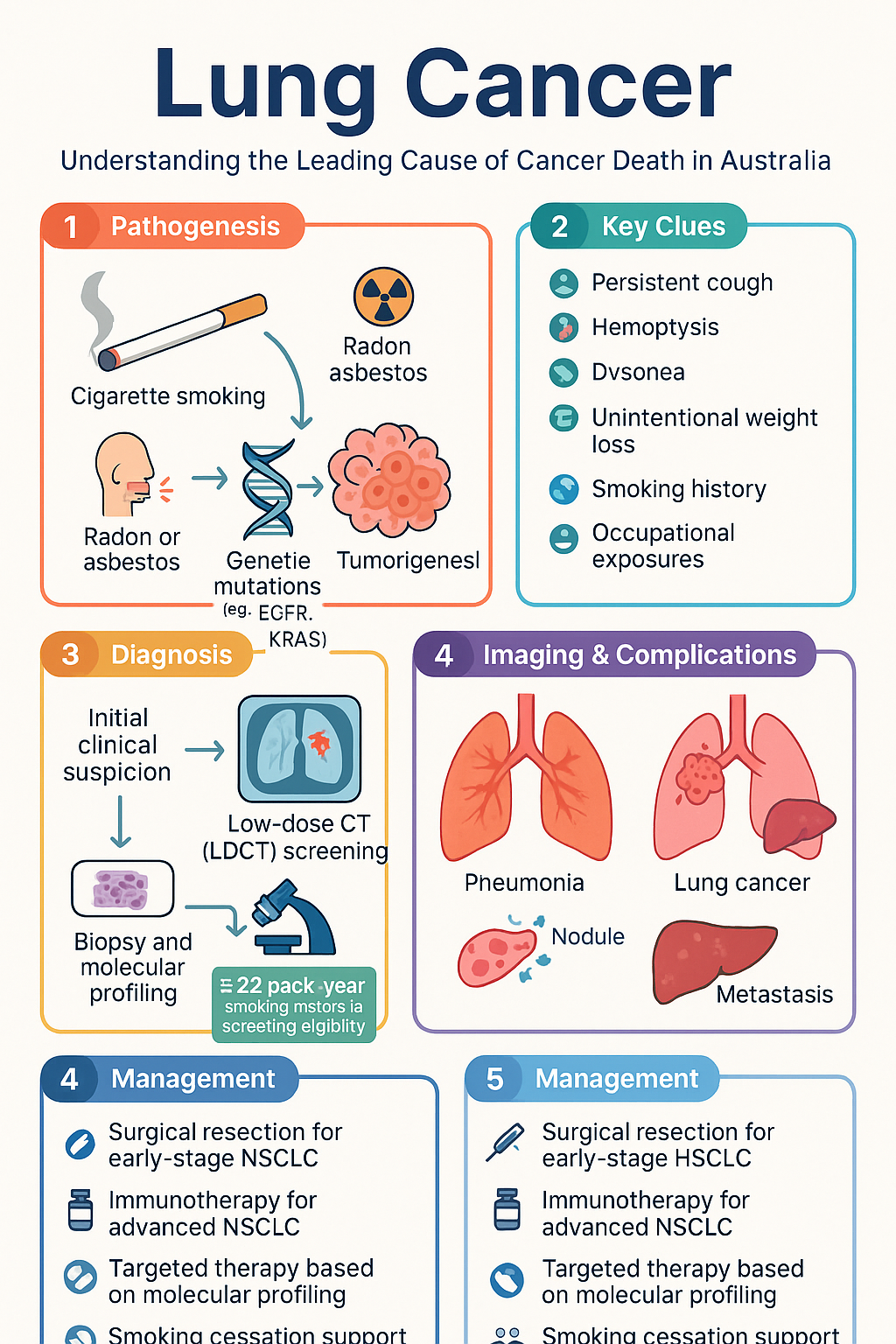
Lung Cancer clinical infographic — pathophysiology, clinical clues, diagnosis, imaging, and management
Tap or click image to enlarge — Lung Cancer: pathophysiology, clinical clues, diagnosis, imaging, and management.
Lung Cancer infographic, full size

Epidemiology & Risk Factors

Incidence in Australia

Metric Value Notes
New cases (2023 est.) ~13,500 5th most common cancer overall
Deaths (2023 est.) ~8,700 Leading cause of cancer death
5-year survival ~22% Improving; stage-dependent
Median age at diagnosis 71 years ~85% diagnosed age ≥55
Male : Female ratio 1.2 : 1 Gap narrowing over time

Modifiable Risk Factors

⚠️
Smoking is the dominant risk factor: 80–90% of lung cancers are attributable to tobacco smoking. Risk increases with duration and pack-years. Cessation reduces risk progressively, but excess risk persists for ≥15 years compared to never-smokers.
  • Tobacco smoking: Relative risk 15–30× for current smokers vs never-smokers; 50 pack-years is the typical threshold used in screening eligibility.
  • Second-hand smoke: 20–30% increased risk among non-smokers with significant exposure.
  • Occupational exposures: Asbestos (synergistic with smoking — multiplicative risk), crystalline silica, chromium, nickel, arsenic, diesel exhaust, polycyclic aromatic hydrocarbons.
  • Radon: Second leading cause of lung cancer; estimated 2–10% of Australian lung cancers linked to residential radon exposure.
  • Air pollution: Particulate matter (PM₂.₅) classified as Group 1 carcinogen; contributes to approximately 1–2% of cases.
  • Cannabis smoking: Emerging evidence of association, though confounded by concurrent tobacco use in many studies.

Non-Modifiable Risk Factors

  • Age: Median 71 years; incidence rises sharply after age 50.
  • Family history: First-degree relative with lung cancer increases risk 1.5–2× independent of smoking.
  • Pre-existing lung disease: COPD (1.5–2× risk independent of smoking), pulmonary fibrosis (particularly idiopathic pulmonary fibrosis).
  • Genetic susceptibility: GWAS-identified susceptibility loci; rare germline mutations (EGFR T790M, BRCA2).
  • Never-smoker lung cancer: Approximately 10–15% of lung cancers occur in never-smokers; more common in women and Asian populations; enriched for EGFR mutations and ALK rearrangements.

Screening — Low-Dose CT (LDCT)

Evidence-based screening is recommended but not yet a funded national programme in Australia. The NELSON trial demonstrated a 24% reduction in lung cancer mortality with LDCT screening in high-risk individuals. Australia's National Lung Cancer Screening Programme (NLCSP) is planned for implementation from 2025, informed by the National Lung Cancer Screening enquiry and Cancer Australia recommendations.

Eligibility criteria (Cancer Australia recommendation):

  • Age 50–80 years
  • Current smoker or former smoker who quit within the past 15 years
  • ≥20 pack-year smoking history
  • No current symptoms suggestive of lung cancer
  • Annual LDCT with structured nodule management per Lung-RADS

Pathology — NSCLC vs SCLC

Histological Classification

Feature NSCLC (~80%) SCLC (~20%)
Subtypes Adenocarcinoma (40–50%), Squamous cell (25–30%), Large cell (<5%), Large cell neuroendocrine (2–3%) Classic small cell, combined small cell (with NSCLC elements)
Location Peripheral (adenocarcinoma) or central (squamous); any lobe Almost exclusively central; hilar/mediastinal
Smoking association Strong (all subtypes); adenocarcinoma most common in never-smokers Very strong (>95% smokers); rare in never-smokers
Growth rate Moderate; variable doubling time Very rapid; short doubling time (30–60 days)
Driver mutations Common (EGFR 15%, ALK 5%, ROS1 1–2%, KRAS G12C 13%, BRAF 2%, MET 3%, RET 1–2%, NTRK <1%) Rare; TP53 and RB1 universal inactivation; NOTCH pathway alteration
PDL1 expression Variable (0 to >50%); adenocarcinoma generally higher Usually low; less predictive of immunotherapy benefit
Paraneoplastic Hypercalcaemia (squamous — PTHrP), hypertrophic pulmonary osteoarthropathy SIADH (15%), ectopic ACTH (Cushing syndrome — 2–5%), Lambert-Eaton myasthenic syndrome, cerebellar degeneration
Prognosis (all stages) 5-year survival ~25% 5-year survival ~7%

Adenocarcinoma Sub-classification (IASLC)

The 2021 WHO Classification and IASLC grading system stratify adenocarcinoma by predominant pattern:

  • Grade 1 (Lepidic): Well-differentiated; best prognosis; lepidic predominant.
  • Grade 2 (Acinar/Papillary): Intermediate prognosis.
  • Grade 3 (Solid/Micropapillary/Complex glandular): Poorly differentiated; worst prognosis; highest recurrence rates.

Squamous Cell Carcinoma

Central location, strong association with smoking, keratinisation and intercellular bridges on histology. Molecular profiling less commonly yields actionable targets (FGFR1 amplification, PIK3CA mutations may be targetable in trials). PD-L1 expression is variable.

Small Cell Lung Cancer

🚨
SCLC is a systemic disease from the outset: Even when presenting as apparently limited-stage disease, occult micrometastases are nearly always present. Treatment is primarily chemotherapy-based; surgical resection is reserved for the rare (<2%) case of truly resectable stage I SCLC confirmed at MDT.

Histologically characterised by small cells with scant cytoplasm, nuclear moulding, crush artefact, and very high mitotic rate. Immunohistochemistry positive for synaptophysin, chromogranin A, and TTF-1. Ki-67 proliferation index typically >70%.

Immunohistochemistry Panel

  • NSCLC — Adenocarcinoma: TTF-1+, Napsin A+, CK7+, CK20−, p40−
  • NSCLC — Squamous: p40+, p63+, CK5/6+, CK7−, TTF-1−
  • SCLC: Synaptophysin+, Chromogranin A+, CD56+, TTF-1+, Ki-67 >70%

Staging & Investigations

Initial Investigations

Essential
CT chest/abdomen/pelvis with contrast
MBS Item 56803. Staging baseline; characterise primary tumour, mediastinal nodes, distant metastases (liver, adrenals, bones).
Essential
PET-CT (18F-FDG)
MBS Item 61499 (Medicare-funded for lung cancer staging). Essential for accurate nodal and metastatic staging; sensitivity 94%, specificity 83% for mediastinal disease. Should be performed before invasive staging.
Essential
Tissue diagnosis + molecular profiling
Biopsy (CT-guided, bronchoscopic, or surgical) with adequate tissue for histology, IHC, and molecular testing. Liquid biopsy (ctDNA) if tissue insufficient or patient unsuitable for biopsy.
Available
MRI brain with gadolinium
MBS Item 63501. Mandatory in SCLC; recommended in all stage III–IV NSCLC. 10–20% have brain metastases at diagnosis.
Available
EBUS-TBNA (endobronchial ultrasound)
Gold standard for mediastinal staging. Preferred over mediastinoscopy. MBS Item 20620.
Available
Pulmonary function tests (spirometry + DLCO)
Essential before any surgical resection. Assess FEV₁, predicted postoperative FEV₁ (ppoFEV₁), and DLCO.
Available
Bone scan (if PET unavailable)
MBS Item 61414. Inferior to PET-CT; only use if PET-CT not accessible.
Specialist
Molecular / genomic testing panel
Comprehensive panel: EGFR, ALK, ROS1, BRAF V600E, KRAS G12C, MET exon 14, RET, NTRK1/2/3, PD-L1 (22C3 pharmDx). Tissue or ctDNA (Guardant360 or equivalent).

TNM Staging — NSCLC (AJCC 8th Edition)

Stage TNM Description 5-Year Survival
IA1 T1a(mi) N0 M0 Minimally invasive adenocarcinoma ≤3 cm, lepidic predominant, invasion ≤5 mm 92%
IA2 T1a N0 M0 Tumour ≤1 cm 83%
IA3 T1b N0 M0 Tumour >1 cm but ≤2 cm 77%
IB T1c N0 M0 Tumour >2 cm but ≤3 cm 68%
IIA T2a N0 M0 Tumour >3 cm but ≤4 cm, or involves main bronchus, visceral pleura, or causes atelectasis 60%
IIB T2b N0 / T1-2 N1 M0 Tumour >4 cm but ≤5 cm; or ipsilateral peribronchial/hilar node (N1) 53%
IIIA T1-2 N2 M0 / T3 N1 M0 Ipsilateral mediastinal/subcarinal node (N2) 36%
IIIB T1-2 N3 M0 / T3-4 N2 M0 Contralateral mediastinal/supraclavicular (N3) 26%
IIIC T3-4 N3 M0 Locally advanced, unresectable 13%
IVA Any T Any N M1a/M1b M1a: contralateral lung/pleural/pericardial; M1b: single extrathoracic site 10%
IVB Any T Any N M1c Multiple extrathoracic metastases <5%

SCLC Staging — Veterans Administration Lung Study Group (VALSG)

  • Limited stage (LS-SCLC): Disease confined to one hemithorax and regional nodes that can be encompassed within a tolerable radiation field (~30–40% at presentation).
  • Extensive stage (ES-SCLC): Disease beyond a single radiation field; includes contralateral lung, distant metastases, malignant pleural/pericardial effusion (~60–70% at presentation).

Surgical Fitness Assessment

For patients being considered for curative-intent resection, the following must be assessed at MDT:

  • ECOG performance status 0–1 (ideally)
  • FEV₁ >80% predicted, or ppoFEV₁ >40% predicted
  • DLCO >40% predicted (ppoDLCO >40%)
  • VO₂ max >15 mL/kg/min (if borderline PFTs)
  • Cardiopulmonary exercise testing for borderline cases
  • No uncontrolled comorbidities (recent MI, uncontrolled heart failure, severe pulmonary hypertension)

Treatment

1. Surgical Resection — NSCLC Stage I–II

Surgery remains the cornerstone of curative-intent treatment for early-stage NSCLC.

Surgical principles: Anatomical resection (lobectomy preferred) with systematic mediastinal lymph node dissection or sampling (minimum 3 N2 stations including subcarinal). Video-assisted thoracoscopic surgery (VATS) or robotic-assisted thoracoscopic surgery (RATS) is preferred over thoracotomy when feasible, with equivalent oncological outcomes and reduced morbidity.

Resection Options

Favourable
Lobectomy
Standard of care for stage I–II NSCLC with adequate pulmonary reserve. Bilobectomy for tumours spanning a fissure.
Setting: Tertiary thoracic centre
Consider
Sublobar resection
Segmentectomy or wedge resection for peripheral tumours ≤2 cm with ≥50% ground-glass component on CT. Must achieve adequate margins (≥tumour diameter or ≥2 cm). JCOG0802/WJOG4607L support segmentectomy for ≤2 cm solid-dominant tumours with non-inferior overall survival.
Setting: MDT discussion
Alternative
SBRT / SABR
Stereotactic body radiotherapy (e.g., 54 Gy in 3 fractions) for medically inoperable stage I–II. Local control ~90% at 3 years. Not yet proven equivalent to surgery in operable patients (ongoing STARS and VALOUR trials).
Setting: Radiation oncology

2. Neoadjuvant & Adjuvant Therapy — NSCLC

Adjuvant Chemotherapy

Cisplatin-based adjuvant chemotherapy is recommended for completely resected stage II–IIIA NSCLC (and select stage IB tumours >4 cm). The standard regimen:

💊
Cisplatin + Vinorelbine
Cisplatin (generic) · Navelbine® / Vinorelbine generic · Adjuvant doublet
Adult dose Cisplatin 50 mg/m² IV D1, D8 every 21 days × 4 cycles + Vinorelbine 25 mg/m² IV D1, D8 every 21 days × 4 cycles
Alternatives Cisplatin 75 mg/m² + Pemetrexed 500 mg/m² (non-squamous); Cisplatin 75 mg/m² + Docetaxel 75 mg/m²; Cisplatin 75 mg/m² + Gemcitabine 1250 mg/m² (squamous)
Renal adjustment Cisplatin: contraindicated if CrCl <30 mL/min; dose reduce 25% if CrCl 30–50 mL/min. Carboplatin AUC 5 substitution if renal impairment.
PBS status ✔ PBS General Benefit

Adjuvant Targeted Therapy

💊
Osimertinib (adjuvant)
Tagrisso® · EGFR TKI (3rd gen) · Adjuvant
Indication Completely resected stage II–IIIA NSCLC with EGFR exon 19 del or L858R mutation
Adult dose 80 mg PO once daily × 3 years
Evidence ADAURA trial: DFS HR 0.17 (stage II–IIIA); OS HR 0.49
PBS status ⚠ PBS Authority Required
💊
Atezolizumab (adjuvant)
Tecentriq® · PD-L1 inhibitor · Adjuvant
Indication PD-L1 ≥1% stage II–IIIA NSCLC after complete resection and adjuvant cisplatin-based chemotherapy
Adult dose 1200 mg IV every 21 days × 16 cycles (up to 1 year)
Evidence IMpower010: DFS HR 0.66 (stage II–IIIA, PD-L1 ≥1%)
PBS status ⚠ PBS Authority Required

Neoadjuvant Chemo-immunotherapy

ℹ️
Emerging standard: Neoadjuvant nivolumab + platinum-doublet chemotherapy × 3 cycles followed by adjuvant nivolumab × 1 year (CheckMate 816; pCR 24% vs 2.2%, EFS HR 0.63) is approved for resectable stage IB (≥4 cm)–IIIA NSCLC. This represents a paradigm shift in resectable NSCLC management.

3. Chemotherapy — Advanced / Metastatic NSCLC

First-Line — Non-Squamous NSCLC (without actionable drivers)

💊
Pembrolizumab + Carboplatin + Pemetrexed
Keytruda® + Carboplatin generic + Alimta® / Pemetrexed generic
Regimen Pembrolizumab 200 mg IV D1 + Carboplatin AUC 5 IV D1 + Pemetrexed 500 mg/m² IV D1, every 21 days × 4 cycles, then pembrolizumab 200 mg IV q3w maintenance ± pemetrexed until progression (max 2 years for pembro)
Evidence KEYNOTE-189: OS HR 0.56; 5-year OS 19.4% vs 11.3%
PBS status ⚠ PBS Authority Required
💊
Atezolizumab + Bevacizumab + Carboplatin + Paclitaxel
Tecentriq® + Avastin® + generic
Regimen Atezolizumab 1200 mg IV + Bevacizumab 15 mg/kg IV + Carboplatin AUC 6 IV + Paclitaxel 200 mg/m² IV D1 q3w × 4 cycles, then atezolizumab + bevacizumab maintenance
Evidence IMpower150: OS HR 0.78 (non-squamous, including liver mets and EGFR/ALK+)
PBS status ⚠ PBS Authority Required

First-Line — Squamous NSCLC (without actionable drivers)

💊
Pembrolizumab + Carboplatin + Paclitaxel/nab-Paclitaxel
Keytruda® + Carboplatin + Paclitaxel/nab-Paclitaxel (Abraxane®)
Regimen Pembrolizumab 200 mg IV D1 + Carboplatin AUC 6 IV D1 + Paclitaxel 200 mg/m² IV D1 (or nab-paclitaxel 100 mg/m² IV D1, 8, 15) q3w × 4 cycles, then pembrolizumab maintenance
Evidence KEYNOTE-407: OS HR 0.67
PBS status ⚠ PBS Authority Required

Immunotherapy Monotherapy — PD-L1 ≥50%

💊
Pembrolizumab monotherapy
Keytruda® · PD-1 inhibitor · Monotherapy
Indication PD-L1 TPS ≥50%, no actionable driver mutations
Adult dose 200 mg IV every 21 days (or 400 mg IV every 42 days) until progression, toxicity, or max 2 years
Evidence KEYNOTE-024: OS HR 0.68; 5-year OS 31.9%
PBS status ⚠ PBS Authority Required
💊
Atezolizumab monotherapy
Tecentriq® · PD-L1 inhibitor · Monotherapy
Indication PD-L1 TC3 or IC3 (≥50% on VENTANA SP142), EGFR/ALK negative
Adult dose 1200 mg IV every 21 days until progression
Evidence IMpower110: OS HR 0.59
PBS status ⚠ PBS Authority Required

4. Targeted Therapy — Actionable Driver Mutations (NSCLC)

⚠️
Critical principle: In NSCLC with an actionable driver mutation, targeted therapy is the preferred first-line treatment over immunotherapy-based regimens, as immunotherapy alone provides inferior outcomes in these molecular subgroups (particularly EGFR and ALK).
💊
Osimertinib
Tagrisso® · EGFR TKI (3rd gen) · AZD9291
Indication EGFR exon 19 del / L858R — first-line (or post-TKI T790M+)
Adult dose 80 mg PO once daily
Key side effects Diarrhoea, rash, QTc prolongation, interstitial lung disease (3–4%)
Evidence FLAURA: OS HR 0.795; FLAURA2 (osimertinib + chemo): PFS HR 0.62
PBS status ⚠ PBS Authority Required
💊
Alectinib
Alecensa® · ALK TKI (2nd gen)
Indication ALK-positive NSCLC — first-line
Adult dose 600 mg PO twice daily with food
Key side effects Oedema, myalgia, hepatotoxicity, photosensitivity, bradycardia
Evidence ALEX: PFS HR 0.43 (vs crizotinib); 5-year OS 62.5%
PBS status ⚠ PBS Authority Required
💊
Lorlatinib
Lorbrena® · ALK TKI (3rd gen) · CNS penetrant
Indication ALK+ NSCLC — first-line or post-alectinib progression
Adult dose 100 mg PO once daily
Key side effects Hypercholesterolaemia (82%), hypertriglyceridaemia (60%), oedema, cognitive effects, peripheral neuropathy
Evidence CROWN: PFS HR 0.19 (vs crizotinib); 5-year PFS 60%
PBS status ⚠ PBS Authority Required
💊
Sotorasib
Lumakras® · KRAS G12C inhibitor
Indication KRAS G12C-mutated NSCLC — post-prior therapy (Phase III CodeBreaK 200)
Adult dose 960 mg PO once daily
PBS status ✖ Not PBS
💊
Selpercatinib
Retevmo® · RET TKI
Indication RET fusion-positive NSCLC — first-line or subsequent
Adult dose 160 mg PO twice daily
Evidence LIBRETTO-001: ORR 84% (1L), 61% (2L)
PBS status ✖ Not PBS
💊
Entrectinib
Rozlytrek® · NTRK/ROS1 TKI
Indication NTRK fusion-positive solid tumours; ROS1-positive NSCLC
Adult dose 600 mg PO once daily
PBS status ⚠ PBS Authority Required

5. Immunotherapy — SCLC

Extensive-Stage SCLC — First-Line

💊
Atezolizumab + Carboplatin + Etoposide
Tecentriq® + Carboplatin + Etoposide
Regimen Atezolizumab 1200 mg IV D1 + Carboplatin AUC 5 IV D1 + Etoposide 100 mg/m² IV D1–3, q3w × 4 cycles, then atezolizumab maintenance
Evidence IMpower133: OS HR 0.70; median OS 12.3 vs 10.3 months
PBS status ⚠ PBS Authority Required
💊
Durvalumab + Carboplatin + Etoposide
Imfinzi® + Carboplatin + Etoposide
Regimen Durvalumab 1500 mg IV D1 + Carboplatin AUC 5 IV D1 + Etoposide 100 mg/m² IV D1–3, q3w × 4 cycles, then durvalumab 1500 mg q4w maintenance ± tremelimumab (CASPIAN)
Evidence CASPIAN: OS HR 0.75; median OS 13.0 vs 10.3 months
PBS status ⚠ PBS Authority Required

Limited-Stage SCLC

Concurrent chemoradiation remains standard: platinum-etoposide × 4 cycles with thoracic radiotherapy (45 Gy BID or 60–66 Gy daily) commencing by cycle 2. Prophylactic cranial irradiation (PCI, 25 Gy in 10 fractions) is recommended for patients with response (CR/PR). MRI surveillance is an alternative to PCI based on ongoing studies (e.g., MAVERICK).

6. Locally Advanced NSCLC — Stage III (Unresectable)

💊
Concurrent chemoradiation → Durvalumab consolidation
Imfinzi® consolidation · PACIFIC regimen
Concurrent CRT Cisplatin 50 mg/m² IV D1, 8 + Etoposide 50 mg/m² IV D1–5 q4w × 2 cycles (or Cisplatin 75 mg/m² + Pemetrexed 500 mg/m² q3w × 3 cycles for non-squamous) with thoracic RT 60–66 Gy in 2 Gy fractions
Consolidation Durvalumab 10 mg/kg IV every 14 days (or 1500 mg IV every 28 days) × 12 months, commencing 1–42 days after completing CRT
Eligibility No disease progression after CRT; ECOG PS 0–1; no autoimmune disease requiring systemic immunosuppression
Evidence PACIFIC: OS HR 0.68; 5-year OS 42.9% vs 33.4%
PBS status ⚠ PBS Authority Required

7. Later-Line Options & Resistance Mechanisms

  • Post-osimertinib progression (EGFR+): Platinum-pemetrexed chemotherapy ± pembrolizumab; consider amivantamab (EGFR/MET bispecific) + lazertinib (EGFR TKI) per MARIPOSA-2. Clinical trial enrolment strongly encouraged.
  • Post-alectinib progression (ALK+): Lorlatinib preferred (if not used 1st-line); brigatinib or ceritinib as alternatives.
  • Post-immunotherapy progression: Docetaxel ± ramucirumab (REVEL trial: OS HR 0.86). Pemetrexed for non-squamous histology if not previously used.
  • Post-SCLC progression: Topotecan (oral or IV) or lurbinectedin (if available). Paclitaxel, docetaxel, or irinotecan as alternatives.

8. Molecular Resistance Pathways

Primary Driver Resistance Mechanism Therapeutic Implication
EGFR sensitising EGFR T790M (~50%) Osimertinib (3rd gen TKI)
EGFR sensitising MET amplification (~15–20%) Osimertinib + savolitinib/tepotinib (trial)
EGFR sensitising Small cell transformation (~5–15%) Treat as SCLC — platinum-etoposide
ALK rearrangement Compound ALK mutations (G1202R) Lorlatinib (3rd gen TKI)
KRAS G12C MET, NRAS, BRAF activation Combination trials; chemotherapy

9. Immune-Related Adverse Events (irAEs)

⚠️
Immune checkpoint inhibitor toxicity management is time-critical. All patients on immunotherapy should receive a personalised irAE education card. Grade 3–4 irAEs require immediate specialist review, treatment hold, and corticosteroids. Common irAEs: pneumonitis (3–5%), hepatitis (5–10%), thyroiditis (5–15%), colitis (1–3%), nephritis (1–2%), myocarditis (<1%, but 25–50% mortality).

Monitoring & Follow-Up

Post-Surgical Surveillance (NSCLC Stage I–II)

Year 1
CT chest (low-dose) every 6 months + clinical review every 3 months
Year 2–3
CT chest every 6 months + clinical review every 6 months
Year 4–5
CT chest annually + clinical review annually
Year 5+
Annual low-dose CT; consider ongoing surveillance (second primary lung cancer risk ~1–2% per year)

On-Treatment Monitoring (Advanced Disease)

  • Response assessment: CT chest/abdomen every 2–3 cycles (6–9 weeks); PET-CT not routinely used for on-treatment response.
  • Immunotherapy: Hyperprogression may occur — CT at 6–8 weeks first assessment. Pseudoprogression occurs in 2–10%; confirm with biopsy or continued imaging if clinically stable.
  • Targeted therapy: Monitor for drug-specific toxicities (e.g., LFTs for alectinib, lipids for lorlatinib, QTc for osimertinib, renal function for sunitinib).
  • Brain MRI: Baseline and every 3–6 months for ALK+ and EGFR+ (high CNS tropism); otherwise at clinical suspicion.
  • Bone protection: Denosumab or zoledronic acid for symptomatic bone metastases (PBS Authority).

Special Populations

🤰 Pregnancy
All treatments
Lung cancer in pregnancy is rare. Chemotherapy is contraindicated in the first trimester; platinum-based regimens may be considered in the 2nd/3rd trimester with MFM input. Immunotherapy and targeted therapies are contraindicated throughout pregnancy. Multidisciplinary obstetric–oncology coordination essential.
👶 Paediatrics
Lung tumours in children
Primary lung cancers are exceedingly rare in children (<18 years). Pleuropulmonary blastoma, carcinoid tumours, and mucoepidermoid carcinoma are more common. Referral to paediatric oncology is mandatory. Adult regimens are not directly applicable.
👴 Elderly (≥75 years)
Carboplatin-based regimens
Platinum doublets remain appropriate for fit elderly patients (ECOG 0–1) with adequate organ function. Carboplatin is preferred over cisplatin. Single-agent chemotherapy (e.g., gemcitabine, vinorelbine, docetaxel) or immunotherapy monotherapy for frail patients. Geriatric assessment tools (G8, CARG, CRASH) should guide treatment intensity.
🫘 Renal Impairment
Cisplatin
Contraindicated if CrCl <30 mL/min. Dose reduce 25% if CrCl 30–50 mL/min. Carboplatin (Calvert formula, AUC 5–6) is the standard platinum substitute in renal impairment. Pemetrexed contraindicated if CrCl <45 mL/min. Immunotherapy and most TKIs do not require dose adjustment for renal impairment.
🫁 Hepatic Impairment
Docetaxel / Vinorelbine / TKIs
Docetaxel: avoid if bilirubin >ULN or transaminases >3.5× ULN. Vinorelbine: dose reduce for bilirubin 1.5–3× ULN; avoid if >3× ULN. Osimertinib, alectinib: no formal dose adjustment but monitor LFTs closely (monthly for first 3 months). Pembrolizumab: no hepatic adjustment required.
🛡️ Immunocompromised
Immunotherapy
Checkpoint inhibitors are relatively contraindicated in patients on systemic immunosuppression (e.g., solid organ transplant, active autoimmune disease on biologics). Limited data in HIV-associated lung cancer; CD4 >200 cells/μL may allow cautious immunotherapy use. Discuss with immunology/oncology.

Aboriginal and Torres Strait Islander Health Considerations

Aboriginal and Torres Strait Islander Health
Epidemiology
Aboriginal and Torres Strait Islander Australians have a lung cancer incidence approximately 1.5 times higher than non-Indigenous Australians, with higher rates of late-stage presentation. Age-standardised mortality rates are approximately 60% higher. Smoking prevalence among Indigenous Australians is approximately 37% (compared to 11% non-Indigenous), driving this disproportionate burden.
Screening access
The planned National Lung Cancer Screening Programme must ensure culturally safe delivery in rural, remote, and very remote communities. Mobile CT units and telehealth-supported nodule management are being explored. Outreach through Aboriginal Community Controlled Health Organisations (ACCHOs) is essential for engagement and participation.
Diagnosis delays
Indigenous Australians experience longer intervals from symptom onset to diagnosis. Contributing factors include geographic isolation, limited specialist and diagnostic services in remote areas, health system racism, and competing health priorities. GP-led symptom recognition and proactive referral pathways can reduce delays.
Treatment disparities
Indigenous Australians with lung cancer are less likely to receive curative-intent treatment (surgery, radical radiotherapy) and more likely to receive palliative care alone, even after adjusting for stage. Ensuring equitable access to surgery, radiation oncology, medical oncology, and clinical trials requires systemic change, patient navigation, and culturally safe cancer care pathways.
Smoking cessation
Tackling smoking is the single most impactful intervention to reduce lung cancer burden. Culturally adapted smoking cessation programmes (e.g., Tackling Indigenous Smoking) using behavioural support + pharmacotherapy (varenicline or NRT — both PBS listed) should be offered in every clinical encounter. ACCHOs are best placed to deliver these services.
Yarning and care
Cancer care must be delivered in a culturally safe, trauma-informed manner. Aboriginal Health Workers and Liaison Officers should be embedded in cancer care teams. Respect for kinship, family involvement in decision-making, connection to Country during treatment, and support for relocation costs (where patients must travel for care) are critical. Advance care planning discussions should incorporate Indigenous concepts of dying and bereavement.

Quick Reference — First-Line Regimens by Molecular Subgroup

EGFR mut+ (exon 19 del / L858R)
Osimertinib 80 mg PO daily ± chemotherapy
Until progression
Do not use immunotherapy alone first-line
ALK rearrangement
Alectinib 600 mg PO BD (or Lorlatinib 100 mg PO daily)
Until progression
CNS-penetrant agents preferred
ROS1 fusion
Entrectinib 600 mg PO daily (or Crizotinib 250 mg PO BD)
Until progression
Entrectinib has CNS activity
BRAF V600E
Dabrafenib 150 mg PO BD + Trametinib 2 mg PO daily
Until progression
FDA approved; TGA approved
KRAS G12C
Sotorasib 960 mg PO daily (2L); Adagrasib 400 mg PO BD (2L)
Until progression
Not PBS; chemo ± immuno 1L preferred
MET exon 14 skip
Tepotinib 500 mg PO daily (or Capmatinib 400 mg PO BD)
Until progression
TGA approved (tepotinib)
RET fusion
Selpercatinib 160 mg PO BD
Until progression
FDA approved; TGA approved
NTRK fusion
Entrectinib 600 mg PO daily (or Larotrectinib 100 mg PO BD)
Until progression
Tumour-agnostic approval
No driver / PD-L1 ≥50%
Pembrolizumab 200 mg IV q3w (mono) or + carboplatin-pemetrexed
Max 2 years (pembro) + chemo ×4
Combination preferred for most patients
No driver / PD-L1 <50%
Pembrolizumab + carboplatin + pemetrexed (non-sq) or paclitaxel (sq)
4 chemo cycles + pembro maintenance
Nivolumab-ipilimumab-chemo also approved
ES-SCLC (1L)
Atezolizumab + carboplatin + etoposide
4 cycles chemo + atezo maintenance
Durvalumab + chemo alternative

Palliative & Supportive Care

ℹ️
Early palliative care integration improves survival and quality of life. The landmark Temel et al. (NEJM 2010) trial demonstrated that early palliative care alongside standard oncology care in metastatic NSCLC improved quality of life, reduced depression, and resulted in longer median survival (11.6 vs 8.9 months; HR 0.69) despite less aggressive end-of-life care.
  • Referral: All patients with advanced lung cancer should be offered palliative care referral at diagnosis, not just at end of life.
  • Symptom management: Dyspnoea (opioids, fan therapy, pulmonary rehab), pain (WHO analgesic ladder), cough (codeine, benzonatate), fatigue, anorexia, depression/anxiety.
  • Endobronchial interventions: Endobronchial stenting, cryotherapy, argon plasma coagulation for obstructing tumours.
  • Pleural effusion: Therapeutic thoracentesis, indwelling pleural catheter (IPC), pleurodesis (talc poudrage preferred).
  • Brain metastases: Stereotactic radiosurgery (SRS) for oligometastatic (1–4 lesions); whole brain radiotherapy (WBRT) for multiple lesions (with hippocampal avoidance and memantine if possible).
  • SVC obstruction: Urgent stenting ± radiotherapy. Chemotherapy if chemosensitive histology (SCLC).
  • Advance care planning: Goals of care documentation; resuscitation preferences; nominated substitute decision-maker.

📚 References

  1. 1. Cancer Australia. Lung cancer in Australia: national statistics. Surry Hills, NSW: Cancer Australia; 2023. Available from: https://www.canceraustralia.gov.au
  2. 2. Australian Institute of Health and Welfare. Cancer data in Australia. Canberra: AIHW; 2023. Cat. no. CAN 144.
  3. 3. Goldstraw P, Chansky K, Crowley J, et al. The IASLC Lung Cancer Staging Project: proposals for revision of the TNM stage groupings in the forthcoming (eighth) edition of the TNM Classification for lung cancer. J Thorac Oncol. 2016;11(1):39–51.
  4. 4. Soria JC, Ohe Y, Vansteenkiste J, et al. Osimertinib in untreated EGFR-mutated advanced non–small-cell lung cancer. N Engl J Med. 2018;378(2):113–125. (FLAURA)
  5. 5. Wu YL, Tsuboi M, He J, et al. Osimertinib in resected EGFR-mutated non–small-cell lung cancer. N Engl J Med. 2020;383(18):1711–1723. (ADAURA)
  6. 6. Peters S, Camidge DR, Shaw AT, et al. Alectinib versus crizotinib in untreated ALK-positive non–small-cell lung cancer. N Engl J Med. 2017;377(9):829–838. (ALEX)
  7. 7. Shaw AT, Bauer TM, de Marinis F, et al. First-line lorlatinib or crizotinib in advanced ALK-positive lung cancer. N Engl J Med. 2020;383(21):2018–2029. (CROWN)
  8. 8. Gandhi L, Rodríguez-Abreu D, Gadgeel S, et al. Pembrolizumab plus chemotherapy in metastatic non–small-cell lung cancer. N Engl J Med. 2018;378(22):2078–2092. (KEYNOTE-189)
  9. 9. Paz-Ares L, Luft A, Vicente D, et al. Pembrolizumab plus chemotherapy for squamous non–small-cell lung cancer. N Engl J Med. 2018;379(21):2040–2051. (KEYNOTE-407)
  10. 10. Antonia SJ, Villegas A, Daniel D, et al. Durvalumab after chemoradiotherapy in stage III non–small-cell lung cancer. N Engl J Med. 2017;377(20):1919–1929. (PACIFIC)
  11. 11. Horn L, Mansfield AS, Szczęsna A, et al. First-line atezolizumab plus chemotherapy in extensive-stage small-cell lung cancer. N Engl J Med. 2018;379(23):2220–2229. (IMpower133)
  12. 12. Paz-Ares L, Dvorkin M, Chen Y, et al. Durvalumab plus platinum-etoposide versus platinum-etoposide in first-line treatment of extensive-stage small-cell lung cancer (CASPIAN). Lancet. 2019;394(10212):1929–1939.
  13. 13. Forde PM, Spicer J, Lu S, et al. Neoadjuvant nivolumab plus chemotherapy in resectable lung cancer. N Engl J Med. 2022;386(21):1973–1985. (CheckMate 816)
  14. 14. Felip E, Altorki N, Zhou C, et al. Adjuvant atezolizumab after adjuvant chemotherapy in resected stage IB–IIIA non-small-cell lung cancer (IMpower010). Lancet. 2021;398(10308):1344–1357.
  15. 15. Temel JS, Greer JA, Muzikansky A, et al. Early palliative care for patients with metastatic non–small-cell lung cancer. N Engl J Med. 2010;363(8):733–742.
  16. 16. National Health and Medical Research Council. Clinical practice guidelines for the prevention, diagnosis and management of lung cancer. Canberra: NHMRC; 2023.
  17. 17. Cancer Australia. Investigation of symptoms of lung cancer: a guide for general practitioners. Surry Hills, NSW: Cancer Australia; 2020.
  18. 18. Department of Health and Aged Care. National Lung Cancer Screening Programme — Consultation Paper. Canberra: Australian Government; 2023.
for PBS-listed medicines at participating pharmacies.
Cultural safety
Engagement with Aboriginal Community Controlled Health Organisations (ACCHOs) is essential. Cultural safety training for non-Indigenous clinicians, use of Aboriginal Health Workers and Liaison Officers, and incorporation of traditional healing practices alongside Western medicine improve treatment adherence and outcomes. Avoidance of eye contact, respect for gender-sensitive examination practices, and understanding of sorry business protocols are critical elements of culturally safe care.
Medication adherence
Complex DMARD regimens with frequent monitoring requirements present adherence challenges. Long-acting depot injections (e.g., methotrexate SC) may improve adherence compared to oral regimens. Community pharmacy partnerships through the Indigenous Pharmacy Programmes improve medication management.
Specific conditions
Rheumatic heart disease (RHD) requires secondary prophylaxis with benzathine penicillin G (BPG) 1.2 MU IM every 3–4 weeks for a minimum of 10 years or until age 21 (whichever is longer). RHD registers (e.g., NT RHD Register) facilitate recall and follow-up. The Australian RHD Endgame Strategy targets elimination by 2031.
Referral pathways
Referral through ACCHOs and Aboriginal Hospital Liaison Officers (AHLOs) improves engagement. The Specialist Outreach Assistance Programme provides funded specialist visits to remote communities. NT, WA, and QLD have specific rheumatology outreach programmes targeting Indigenous communities.

📚 References

  1. 1. Australian Institute of Health and Welfare (AIHW). Autoimmune disease in Australia. Cat. no. PHE 312. Canberra: AIHW; 2023.
  2. 2. Fraenkel L, Bathon JM, England BR, et al. 2021 American College of Rheumatology guideline for the treatment of rheumatoid arthritis. Arthritis Care Res. 2021;73(7):924–939.
  3. 3. Fanouriakis A, Kostopoulou M, Alber K, et al. 2019 update of the EULAR recommendations for the management of systemic lupus erythematosus. Ann Rheum Dis. 2019;78(6):736–745.
  4. 4. Chung SA, Langford CA, Maz M, et al. 2021 American College of Rheumatology/Vasculitis Foundation guideline for the management of antineutrophil cytoplasmic antibody-associated vasculitis. Arthritis Care Res. 2021;73(11):1583–1599.
  5. 5. Smolen JS, Landewé RBM, Bijlsma JWJ, et al. EULAR recommendations for the management of rheumatoid arthritis with synthetic and biological disease-modifying antirheumatic drugs: 2022 update. Ann Rheum Dis. 2023;82(1):3–18.
  6. 6. Australian Technical Advisory Group on Immunisation (ATAGI). Australian Immunisation Handbook. Australian Government Department of Health; 2024. Available from: immunisationhandbook.health.gov.au.
  7. 7. Rheumatic Heart Disease Australia (RHDAustralia). The 2020 Australian guideline for prevention, diagnosis, and management of acute rheumatic fever and rheumatic heart disease. 3rd ed. Darwin: Menzies School of Health Research; 2020.
  8. 8. Pharmaceutical Benefits Scheme (PBS). PBS Schedule. Australian Government Department of Health. Available from: pbs.gov.au. Accessed 2024.
  9. 9. Agarwal S, Cunnington J, Nossent J. Autoimmune disease in Indigenous Australians: a systematic review. Int J Rheum Dis. 2021;24(12):1487–1498.
  10. 10. Pisetsky DS. Antinuclear antibody testing — misunderstood or misused? Clin Immunol. 2023;255:109717.
  11. 11. Bertsias GK, Tektonidou M, Amoura Z, et al. Joint European League Against Rheumatism and European Renal Association–European Dialysis and Transplant Association (EULAR/ERA-EDTA) recommendations for the management of adult and paediatric lupus nephritis. Ann Rheum Dis. 2012;71(11):1771–1782.
  12. 12. Ledingham J, Deighton C; British Society for Rheumatology Standards, Audit and Guidelines Working Group. Update on the British Society for Rheumatology guidelines for prescribing TNFα blockers in adults with rheumatoid arthritis. Rheumatology. 2005;44(2):155–158.
  13. 13. National Health and Medical Research Council (NHMRC). National statement on ethical conduct in human research. Canberra: NHMRC; 2023 (updated).
for PBS-listed medicines at participating pharmacies.
Cultural safety
Engagement with Aboriginal Community Controlled Health Organisations (ACCHOs) is essential. Cultural safety training for non-Indigenous clinicians, use of Aboriginal Health Workers and Liaison Officers, and incorporation of traditional healing practices alongside Western medicine improve treatment adherence and outcomes. Avoidance of eye contact, respect for gender-sensitive examination practices, and understanding of sorry business protocols are critical elements of culturally safe care.
Medication adherence
Complex DMARD regimens with frequent monitoring requirements present adherence challenges. Long-acting depot injections (e.g., methotrexate SC) may improve adherence compared to oral regimens. Community pharmacy partnerships through the Indigenous Pharmacy Programmes improve medication management.
Specific conditions
Rheumatic heart disease (RHD) requires secondary prophylaxis with benzathine penicillin G (BPG) 1.2 MU IM every 3–4 weeks for a minimum of 10 years or until age 21 (whichever is longer). RHD registers (e.g., NT RHD Register) facilitate recall and follow-up. The Australian RHD Endgame Strategy targets elimination by 2031.
Referral pathways
Referral through ACCHOs and Aboriginal Hospital Liaison Officers (AHLOs) improves engagement. The Specialist Outreach Assistance Programme provides funded specialist visits to remote communities. NT, WA, and QLD have specific rheumatology outreach programmes targeting Indigenous communities.

📚 References

  1. 1. Australian Institute of Health and Welfare (AIHW). Autoimmune disease in Australia. Cat. no. PHE 312. Canberra: AIHW; 2023.
  2. 2. Fraenkel L, Bathon JM, England BR, et al. 2021 American College of Rheumatology guideline for the treatment of rheumatoid arthritis. Arthritis Care Res. 2021;73(7):924–939.
  3. 3. Fanouriakis A, Kostopoulou M, Alber K, et al. 2019 update of the EULAR recommendations for the management of systemic lupus erythematosus. Ann Rheum Dis. 2019;78(6):736–745.
  4. 4. Chung SA, Langford CA, Maz M, et al. 2021 American College of Rheumatology/Vasculitis Foundation guideline for the management of antineutrophil cytoplasmic antibody-associated vasculitis. Arthritis Care Res. 2021;73(11):1583–1599.
  5. 5. Smolen JS, Landewé RBM, Bijlsma JWJ, et al. EULAR recommendations for the management of rheumatoid arthritis with synthetic and biological disease-modifying antirheumatic drugs: 2022 update. Ann Rheum Dis. 2023;82(1):3–18.
  6. 6. Australian Technical Advisory Group on Immunisation (ATAGI). Australian Immunisation Handbook. Australian Government Department of Health; 2024. Available from: immunisationhandbook.health.gov.au.
  7. 7. Rheumatic Heart Disease Australia (RHDAustralia). The 2020 Australian guideline for prevention, diagnosis, and management of acute rheumatic fever and rheumatic heart disease. 3rd ed. Darwin: Menzies School of Health Research; 2020.
  8. 8. Pharmaceutical Benefits Scheme (PBS). PBS Schedule. Australian Government Department of Health. Available from: pbs.gov.au. Accessed 2024.
  9. 9. Agarwal S, Cunnington J, Nossent J. Autoimmune disease in Indigenous Australians: a systematic review. Int J Rheum Dis. 2021;24(12):1487–1498.
  10. 10. Pisetsky DS. Antinuclear antibody testing — misunderstood or misused? Clin Immunol. 2023;255:109717.
  11. 11. Bertsias GK, Tektonidou M, Amoura Z, et al. Joint European League Against Rheumatism and European Renal Association–European Dialysis and Transplant Association (EULAR/ERA-EDTA) recommendations for the management of adult and paediatric lupus nephritis. Ann Rheum Dis. 2012;71(11):1771–1782.
  12. 12. Ledingham J, Deighton C; British Society for Rheumatology Standards, Audit and Guidelines Working Group. Update on the British Society for Rheumatology guidelines for prescribing TNFα blockers in adults with rheumatoid arthritis. Rheumatology. 2005;44(2):155–158.
  13. 13. National Health and Medical Research Council (NHMRC). National statement on ethical conduct in human research. Canberra: NHMRC; 2023 (updated).