Home Oncology Mesothelioma

Mesothelioma

📋 Key Information Summary

📋
  • Malignant mesothelioma is a rare, aggressive tumour arising from mesothelial surfaces; pleural mesothelioma accounts for approximately 90% of cases
  • Australia has one of the highest per-capita incidences globally due to extensive historical asbestos mining and industrial use, with peak diagnoses expected to continue into the late 2020s
  • Virtually all cases are linked to asbestos exposure (crocidolite > amosite > chrysotile); latency period is typically 20–50 years, and no level of exposure is considered safe
  • Three histological subtypes — epithelioid (best prognosis), sarcomatoid (worst), and biphasic (mixed) — direct treatment approach and prognosis
  • Common presenting features include unilateral pleural effusion, progressive dyspnoea, and dull chest pain; constitutional symptoms (fatigue, weight loss, night sweats) are late
  • CT thorax with contrast is the primary imaging modality; PET-CT assists staging and detects extrathoracic disease
  • Histological diagnosis requires adequate tissue (pleural biopsy preferred); immunohistochemistry (calretinin, WT-1, CK5/6 positive; TTF-1, CEA negative) differentiates from adenocarcinoma
  • The TNM-based IMIG staging system guides treatment; resectable disease (Stage I–III epithelioid) is managed with intention-to-cure via multimodal therapy
  • First-line systemic therapy: platinum-based doublet (cisplatin + pemetrexed) ± bevacizumab; immunotherapy (nivolumab + ipilimumab) is PBS-listed for unresectable disease
  • Surgical options include extrapleural pneumonectomy (EPP) and pleurectomy/decortication (P/D); P/D is increasingly preferred due to lower perioperative mortality
  • Early palliative care integration is essential; talc pleurodesis or indwelling pleural catheter manage recurrent effusions
  • Aboriginal and Torres Strait Islander communities may face delayed diagnosis due to limited specialist access in remote regions; culturally safe pathways and state compensation schemes require awareness
  • All Australian states operate asbestos-related disease compensation schemes (dust disease authorities); clinicians have a legal duty to notify

Introduction & Australian Epidemiology

Malignant mesothelioma is a rare but devastating malignancy arising from the mesothelial lining of the pleura, peritoneum, pericardium, or tunica vaginalis. Pleural mesothelioma accounts for approximately 90% of all cases and is the focus of this guideline. The disease is characterised by aggressive local invasion, rapid progression, and a historically poor prognosis, with median overall survival ranging from 12 to 21 months depending on histological subtype and stage.

Australia holds the unenviable distinction of having one of the highest per-capita rates of malignant mesothelioma in the world. This is directly attributable to the extensive use and mining of asbestos — particularly crocidolite (blue asbestos) — throughout the 20th century. The Wittenoom mine in Western Australia was the largest crocidolite mine in the Southern Hemisphere and its legacy continues to drive new diagnoses. National incidence peaked around 700–800 cases per year in the late 2010s and has remained elevated; the Australian Mesothelioma Registry (AMR) recorded 699 new cases in 2022. Forecasts suggest a gradual decline through the late 2020s, though cases linked to home renovation and building-demolition exposure continue to emerge.

⚠️
Asbestos exposure — no safe level: Unlike many occupational carcinogens, there is no established threshold for safe asbestos exposure. Even brief or indirect exposures (e.g., bystander exposure, household contact with a worker's clothing) have been documented as causative. Clinicians must maintain a high index of suspicion in any patient with unexplained pleural effusion, regardless of perceived exposure intensity.

Key Australian epidemiological features include:

  • Male predominance (approximately 85%), reflecting historical occupational patterns
  • Median age at diagnosis: 72–75 years
  • Latency period: typically 20–50 years from first exposure
  • Emerging cohort of younger patients (40–60 years) exposed during home renovations of pre-1990 dwellings
  • All states and territories have mandatory notification to their respective dust disease authorities
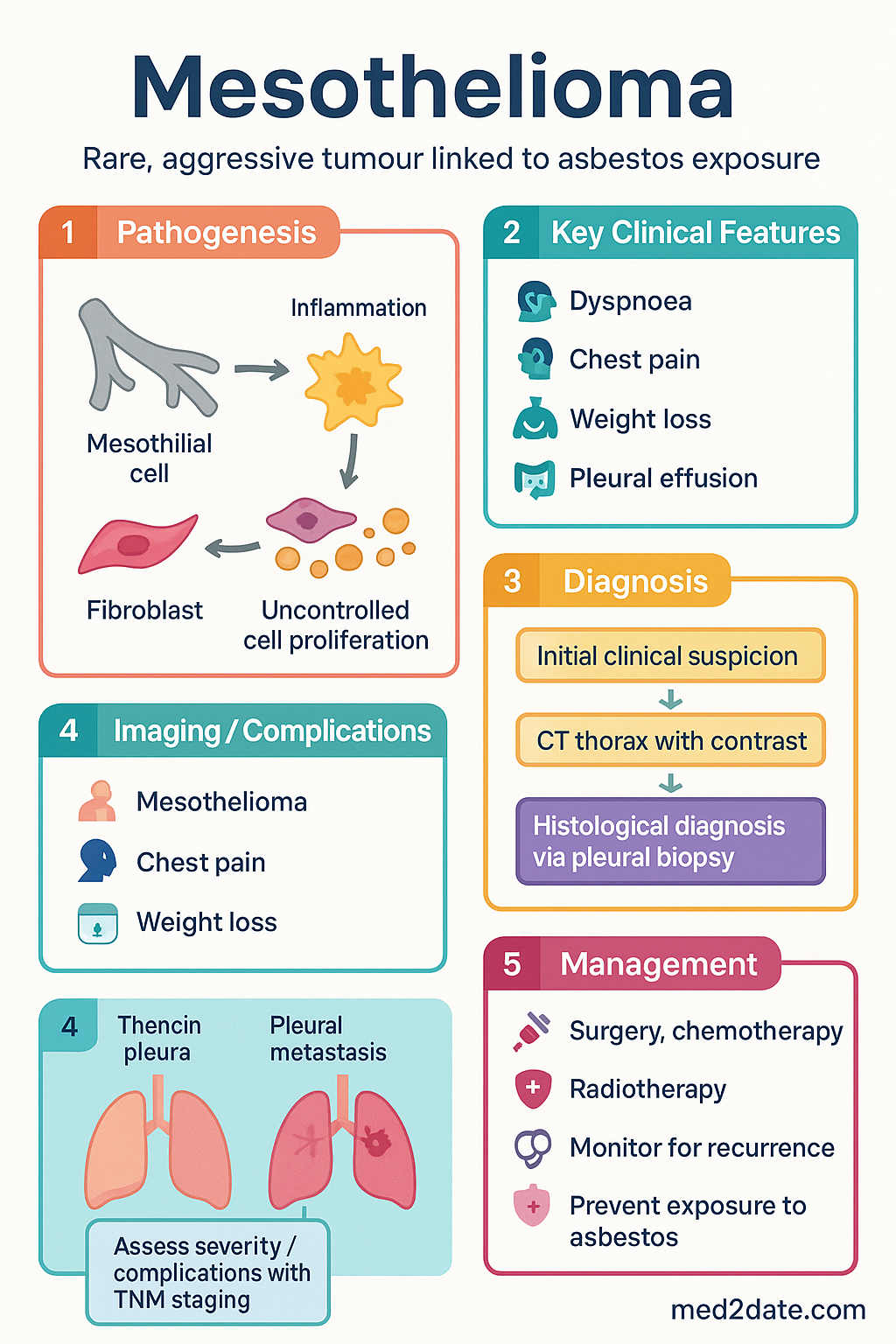
Mesothelioma clinical infographic — pathophysiology, clinical clues, diagnosis, imaging, and management
Tap or click image to enlarge — Mesothelioma: pathophysiology, clinical clues, diagnosis, imaging, and management.
Mesothelioma infographic, full size

Epidemiology & Asbestos Exposure

Asbestos fibre types and risk

Fibre Type Colour Relative Risk Australian Context
Crocidolite Blue Highest — approximately 500× general population Mined at Wittenoom, WA (1937–1966); widely used in cement products and insulation
Amosite Brown Very high Imported for thermal insulation and fireproofing
Chrysotile White Lower but significant Most commonly used type; found in cement sheeting, brake pads, gaskets

Exposure pathways

  • Occupational: Mining, milling, construction, shipbuilding, boiler-making, lagging, railway carriage repair, automotive brake maintenance
  • Para-occupational: Household contacts laundering work clothes; children playing near worksites
  • Environmental: Residents near mine sites (Wittenoom), naturally occurring asbestos deposits, disturbance of asbestos-containing materials during renovation or demolition
  • Recreational: DIY home renovation of pre-1990 properties — a growing exposure cohort in Australia

Other risk factors

  • Erionite: A fibrous zeolite mineral with mesotheliomagenic properties; rare in Australia
  • Germline BAP1 mutations: Carriers have a significantly elevated lifetime risk of mesothelioma, uveal melanoma, and renal cell carcinoma; present in 1–5% of sporadic cases
  • Simian virus 40 (SV40): Detected in some mesothelioma specimens; aetiological role remains debated
  • Therapeutic radiation: Historical mantle-field radiotherapy for Hodgkin lymphoma is an established risk factor

Compensation & notification

In Australia, malignant mesothelioma is a notifiable dust disease. Each state and territory operates a Dust Diseases Board or Authority responsible for assessing and providing compensation. Clinicians diagnosing mesothelioma should:

  1. Refer the patient to the relevant state dust diseases authority (e.g., icare Dust Diseases Authority NSW, WorkSafe Victoria, Queensland DDT)
  2. Complete a Dust Disease Notification Form
  3. Advise the patient to seek legal advice regarding potential common-law claims in addition to statutory benefits

Pathology & Clinical Features

Histological classification

Best prognosis
Epithelioid
Accounts for ~60–70% of cases. Tumour cells arranged in tubular, papillary, or solid patterns. Strongest association with asbestos exposure. Most responsive to multimodal therapy.
Median OS: 14–21 months
Intermediate
Biphasic
Contains both epithelioid and sarcomatoid components (each ≥10%). Prognosis depends on relative proportion of each subtype.
Median OS: 10–15 months
Worst prognosis
Sarcomatoid
Spindle-cell morphology mimicking sarcoma. Most aggressive; least responsive to chemotherapy and surgery.
Median OS: 6–10 months

Immunohistochemistry panel

Accurate differentiation from metastatic adenocarcinoma or primary lung adenocarcinoma requires a standardised IHC panel:

Marker Mesothelioma Adenocarcinoma
Calretinin Positive (nuclear + cytoplasmic) Negative / focal
WT-1 Positive (nuclear) Negative
CK5/6 Positive Negative / focal
D2-40 (podoplanin) Positive (membranous) Negative
TTF-1 Negative Positive (75–85%)
CEA Negative Positive
Ber-EP4 (EpCAM) Negative / weak Positive

Clinical presentation

  • Pleural effusion: Most common initial finding — typically unilateral, exudative, and often haemorrhagic
  • Progressive dyspnoea: Due to effusion, pleural thickening, or restrictive physiology
  • Chest wall pain: Dull, constant, often localised to the site of tumour; may indicate chest wall invasion
  • Fatigue & weight loss: Constitutional symptoms in advanced disease
  • Finger clubbing: Present in ~30% of cases at diagnosis
  • Contralateral or peritoneal spread: Late manifestation; peritoneal mesothelioma presents with ascites and abdominal distension
⚠️
Red flag: Any unexplained unilateral exudative pleural effusion in a patient with potential asbestos exposure should be investigated as mesothelioma until proven otherwise. Avoid repeated therapeutic aspirations without tissue diagnosis.

Investigations & Staging

Baseline investigations

Essential
CT thorax, abdomen & pelvis with IV contrast
MBS Item 56809. Identifies pleural thickening, effusion, chest wall invasion, diaphragmatic involvement, nodal disease, and peritoneal extension.
Essential
PET-CT (FDG)
MBS Item 61340. Essential for staging — identifies occult extrathoracic metastases and guides biopsy site selection. Standardised uptake value (SUV) correlates with tumour volume and prognosis.
Essential
Image-guided pleural biopsy (CT or ultrasound)
Diagnostic gold standard. CT-guided cutting-needle biopsy achieves >90% diagnostic accuracy. Thoracoscopic (VATS) pleural biopsy may be required if needle biopsy is non-diagnostic.
Available
Pleural fluid cytology
Diagnostic yield ~30–50%; insufficient alone for diagnosis or subtyping. Positive cytology supports diagnosis but tissue biopsy remains required for definitive histological classification.
Available
Full blood count, LFTs, renal function, LDH, albumin
Baseline organ function for treatment planning; prognostic value of LDH and albumin.
Available
Soluble mesothelin-related peptides (SMRP)
Serum biomarker elevated in ~75% of epithelioid mesothelioma. Useful for monitoring response; limited sensitivity for sarcomatoid subtype. MBS restricted.
Specialist
MRI thorax
Superior to CT for assessing diaphragmatic invasion, chest wall involvement, and endothoracic fascial infiltration. Indicated when surgical resection is being considered.
Specialist
Pulmonary function tests (PFTs)
FEV₁, FVC, DLCO essential for surgical fitness assessment prior to EPP or P/D.
Referral
Multidisciplinary team (MDT) review
All cases should be discussed at a thoracic oncology MDT including respiratory medicine, thoracic surgery, medical oncology, radiation oncology, radiology, and pathology.

Staging — IMIG/AJCC 8th Edition TNM

Stage TNM Description Treatment Approach
IA T1a N0 M0 Tumour limited to ipsilateral parietal pleura Surgery ± adjuvant therapy
IB T1b N0 M0 Tumour on ipsilateral visceral pleura Surgery ± adjuvant therapy
II T2 N0 M0 Confluent visceral pleural tumour, involvement of diaphragmatic muscle, or lung parenchymal invasion Multimodal — neoadjuvant chemo then surgery
IIIA T3 N0 M0 Solitary focus of chest wall invasion, mediastinal fat, non-transmural pericardial involvement Multimodal if operable; chemo if borderline
IIIB T1–3 N1–2 M0 or T4 Any N M0 Nodal disease or extensive local invasion (chest wall, transdiaphragmatic, contralateral pleura) Systemic therapy (chemo ± immunotherapy)
IV Any T Any N M1 Distant metastases (contralateral lung, peritoneum, bone, liver) Systemic therapy; palliative care

Management (Chemotherapy, Surgery & Palliative)

Systemic therapy — First-line

💊
Cisplatin
Cisplatin (DBL)® · Platinum compound
Adult dose 75 mg/m² IV on Day 1, every 21 days × 6 cycles
Paediatric dose Not applicable (adult disease)
Renal adjustment eGFR <60: consider carboplatin AUC 5 substitution. eGFR <30: contraindicated
PBS status ✔ PBS General Benefit
💊
Pemetrexed
Alimta® · Antifolate antimetabolite
Adult dose 500 mg/m² IV on Day 1, every 21 days × 6 cycles. Pre-medicate with dexamethasone, folic acid (1 mg PO daily from 7 days prior), and vitamin B12 (1000 μg IM every 9 weeks)
Renal adjustment eGFR 30–44: reduce to 250 mg/m². eGFR <30: not recommended
PBS status Restricted Benefit — Authority Required
💊
Bevacizumab
Avastin® · Anti-VEGF monoclonal antibody
Adult dose 15 mg/kg IV every 21 days, continued until disease progression. Added to cisplatin/pemetrexed based on MAPS trial
Key cautions Contraindicated with squamous histology, uncontrolled hypertension, recent haemorrhage, or major surgery within 28 days. Risk of GI perforation, thromboembolism
PBS status Restricted Benefit — Authority Required
Key trial — MAPS (2016): Cisplatin + pemetrexed + bevacizumab showed a median OS of 18.8 months vs 16.1 months with cisplatin/pemetrexed alone (HR 0.77, p=0.0167). Bevacizumab addition is recommended for eligible patients with non-epithelioid or higher-burden disease.

Immunotherapy — Unresectable disease

🧬
Nivolumab
Opdivo® · Anti-PD-1 checkpoint inhibitor
Adult dose 360 mg IV every 21 days (when combined with ipilimumab)
Duration Until disease progression or unacceptable toxicity (maximum 2 years)
PBS status Authority Required (Specialist) — PBS listed for unresectable malignant mesothelioma
🧬
Ipilimumab
Yervoy® · Anti-CTLA-4 checkpoint inhibitor
Adult dose 1 mg/kg IV every 6 weeks × 2 doses (combined with nivolumab)
Key monitoring Thyroid function, LFTs, glucose, lipase at each cycle. Screen for immune-related adverse events: pneumonitis, colitis, hepatitis, nephritis, dermatitis, endocrinopathies
PBS status Authority Required (Specialist)
Key trial — CheckMate 743 (2021): Nivolumab + ipilimumab demonstrated a median OS of 18.1 months vs 14.1 months with cisplatin/pemetrexed chemotherapy (HR 0.73, p=0.002). Benefit was most pronounced in non-epithelioid subtypes. This regimen is now PBS-listed and considered a first-line standard of care for unresectable mesothelioma.

Second-line and subsequent therapy

  • Vinorelbine: 60 mg/m² PO weekly (or 25 mg/m² IV weekly) — modest activity; PBS-listed. Consider when progression after platinum/pemetrexed and immunotherapy
  • Gemcitabine: 1000 mg/m² IV on Days 1, 8, 15 every 28 days — alternative second-line option
  • Re-challenge with pemetrexed: If PFS >6 months after first-line pemetrexed, re-challenge may be considered
  • Clinical trials: Patients should be referred for clinical trial consideration at every treatment decision point. Australian sites for mesothelioma trials include Peter MacCallum Cancer Centre, Chris O'Brien Lifehouse, and Linear Clinical Research

Surgical management

Surgery is a key component of multimodal treatment for patients with resectable disease (Stage I–III epithelioid). Decisions must be made in a specialist MDT and at a centre with high-volume mesothelioma surgical expertise.

Pleurectomy / Decortication (P/D)
  • Removal of visceral and parietal pleura with preservation of the lung
  • Lower perioperative mortality (1–4%) vs EPP
  • Better post-operative quality of life and pulmonary function
  • Increasingly preferred approach at major Australian centres
  • Indicated: epithelioid histology, adequate PFTs (FEV₁ >60%, DLCO >50%), ECOG 0–1
Extrapleural Pneumonectomy (EPP)
  • En bloc removal of lung, pleura, ipsilateral diaphragm, and pericardium
  • Higher perioperative mortality (5–10%)
  • Reserved for highly selected patients at expert centres
  • Requires reconstruction of diaphragm and pericardium with synthetic mesh
  • The MARS trial (2011) did not show a survival benefit for EPP over non-surgical management

Radiotherapy

  • Prophylactic irradiation to intervention tracts (PIT): Historically used to prevent port-site metastases after VATS. The SMART and PIT-PRO trials showed no clear benefit; practice is declining in Australia
  • Hemithoracic adjuvant radiotherapy: IMRT after EPP may reduce local recurrence; limited evidence for adjuvant RT after P/D
  • Palliative radiotherapy: Effective for chest wall pain, superior vena cava obstruction, or painful bone metastases. Typical regimen: 20 Gy in 5 fractions or 30 Gy in 10 fractions

Pleural effusion management

🩺
Talc pleurodesis
Sterile graded talc slurry or poudrage
Indication Recurrent symptomatic pleural effusion; lung fully re-expandable on imaging
Technique 4–5 g sterile talc in 50 mL 0.9% NaCl via intercostal catheter after lung re-expansion, or insufflation during VATS
Success rate Approximately 80–90% at 30 days
🩺
Indwelling pleural catheter (IPC)
PleurX® · Tunneled pleural catheter
Indication Trapped lung (lung does not re-expand), failed pleurodesis, patient preference for home management
PBS status Restricted Benefit — available on PBS
Key advantage Ambulatory management; spontaneous pleurodesis occurs in 40–50% over 3–6 months

Multimodal treatment pathways

1
MDT discussion & staging
Complete staging (CT, PET-CT, biopsy with IHC). Assess fitness for surgery (PFTs, ECOG, comorbidities). Determine histological subtype.
2
Resectable (Stage I–III, epithelioid, fit)
Neoadjuvant cisplatin + pemetrexed × 2–4 cycles → reassess → P/D (preferred) or EPP → adjuvant radiotherapy (if EPP). OR primary P/D followed by adjuvant chemotherapy.
3
Unresectable (Stage IIIB/IV, non-epithelioid, unfit)
Cisplatin + pemetrexed ± bevacizumab OR nivolumab + ipilimumab (PBS-listed). Consider clinical trials. Early palliative care referral.
4
Progression / second-line
Clinical trial enrolment (preferred). Vinorelbine or gemcitabine. Supportive care. Continuation of early palliative care integration.

Special Populations

👶 Paediatric
Paediatric mesothelioma
Extremely rare; median age of diagnosis is approximately 72 years. Paediatric cases are almost always peritoneal rather than pleural. No established paediatric-specific treatment protocols; management should occur at a paediatric oncology centre with MDT support.
🤰 Pregnancy
Management in pregnancy
Mesothelioma in pregnancy is a case-report-level rarity. Cisplatin and pemetrexed are teratogenic (Category D). Immunotherapy safety in pregnancy is not established. Any management plan must involve obstetric medicine, maternal-fetal medicine, and the treating oncology MDT. Early palliative care and compassionate delivery timing decisions are essential.
👴 Elderly
Patients ≥75 years
The majority of mesothelioma patients are elderly. Comprehensive geriatric assessment (CGA) should guide fitness for platinum-based chemotherapy. Carboplatin AUC 5 may substitute for cisplatin in patients with reduced renal function or hearing impairment. Immunotherapy may be better tolerated but immune-related adverse events require careful monitoring.
🫘 Renal impairment
Cisplatin
eGFR 45–59: dose reduction or carboplatin substitution. eGFR <45: carboplatin AUC 5 replaces cisplatin. eGFR <30: pemetrexed contraindicated; consider single-agent carboplatin or immunotherapy. Adequate hydration protocol essential with cisplatin (≥1 L 0.9% NaCl pre- and post-infusion).
🫁 Hepatic impairment
Systemic therapy adjustments
No formal dose adjustments for cisplatin or pemetrexed in mild hepatic impairment. Severe hepatic dysfunction (Child-Pugh C): avoid cisplatin; immunotherapy safety data limited. Monitor for hepatotoxicity with checkpoint inhibitors (ir-hepatitis).
🛡️ Immunocompromised
Checkpoint inhibitor therapy
Autoimmune disease or active immunosuppression: checkpoint inhibitors may exacerbate underlying conditions or cause severe irAEs. HIV-positive patients with adequate CD4 counts may be considered on a case-by-case basis. Solid organ transplant recipients: generally contraindicated due to allograft rejection risk.

Monitoring & Follow-up

During active treatment

Assessment Frequency Details
CT thorax + abdomen Every 2–3 cycles (q6–9 weeks) RECIST or modified RECIST for mesothelioma (measurement at level of diaphragm)
Bloods: FBC, LFTs, renal function Before each cycle Dose adjustments per protocol; watch for nephrotoxicity (cisplatin), hepatotoxicity (immunotherapy)
TFTs Every cycle (immunotherapy) Thyroiditis/hypothyroidism in 10–20% on nivolumab/ipilimumab
Symptom assessment (ECOG) Every visit Dyspnoea, pain, cough, weight, appetite
SMRP (if elevated at baseline) Every 2 cycles Rising levels may indicate progression before radiological change

Post-treatment surveillance

  • Clinical review every 6–8 weeks for 2 years, then every 3 months
  • CT thorax + abdomen every 3–4 months for 2 years, then every 6 months
  • Assess quality of life at each visit using validated tools (EORTC QLQ-C30 + LC13)
  • Ongoing palliative care and psychosocial support

Aboriginal and Torres Strait Islander Health Considerations

Aboriginal and Torres Strait Islander Health

While mesothelioma incidence data specific to Aboriginal and Torres Strait Islander peoples are limited, several barriers to care are well recognised and must be actively addressed:

Exposure recognition
Remote and regional communities in the Northern Territory, Western Australia, and Queensland have been exposed to naturally occurring asbestos and mine-site dust. Asbestos-contaminated housing in remote communities is an ongoing risk. Occupational histories may not capture environmental exposures.
Diagnostic delay
Limited access to respiratory physicians, interventional radiology, and thoracic surgeons in remote and very remote areas. Pleural biopsy services are concentrated in metropolitan centres, requiring patient travel and cultural dislocation.
Treatment access
Complex multimodal therapy requires coordination across surgical, medical oncology, and radiation oncology services — all predominantly metro-based. Patient-assisted travel schemes (PATS) in each state assist but may be underutilised due to bureaucratic complexity.
Compensation awareness
State dust diseases compensation schemes may be poorly understood in Indigenous communities. Clinicians should proactively facilitate referral to relevant authorities and Aboriginal Liaison Officers.
Cultural safety
Engage Aboriginal Health Workers (AHWs) and Aboriginal Liaison Officers (ALOs) in all care planning. Provide culturally appropriate information. Consider Sorry Business, family obligations, and connection to Country in treatment scheduling. Telehealth reduces travel burden and should be utilised where possible.
Health system navigation
Link patients with the Indigenous-specific programs at the treating cancer centre. Involve the patient's primary health care team (AMS or community health service) in shared care. Ensure discharge plans and follow-up are coordinated with local services.

📚 References

  1. 1. Baas P, Fennell D, Kerr KM, et al. Malignant pleural mesothelioma: ESMO Clinical Practice Guidelines for diagnosis, treatment and follow-up. Ann Oncol. 2015;26(suppl 5):v31–v39.
  2. 2. Kindler HL, Ismaila N, Armato SG 3rd, et al. Treatment of Malignant Pleural Mesothelioma: American Society of Clinical Oncology Clinical Practice Guideline. J Clin Oncol. 2018;36(13):1343–1373.
  3. 3. Zalcman G, Mazieres J, Margery J, et al. Bevacizumab for newly diagnosed pleural mesothelioma in the Mesothelioma Avastin Cisplatin Pemetrexed Study (MAPS): a randomised, controlled, open-label, phase 3 trial. Lancet. 2016;387(10026):1405–1414.
  4. 4. Baas P, Scherpereel A, Nowak AK, et al. First-line nivolumab plus ipilimumab in unresectable malignant pleural mesothelioma (CheckMate 743): a multicentre, randomised, open-label, phase 3 trial. Lancet. 2021;397(10272):375–386.
  5. 5. Treasure T, Lang-Lazdunski L, Waller D, et al. Extra-pleural pneumonectomy versus no extra-pleural pneumonectomy for patients with malignant pleural mesothelioma: clinical outcomes of the Mesothelioma and Radical Surgery (MARS) randomised feasibility study. Lancet Oncol. 2011;12(8):763–772.
  6. 6. Australian Institute of Health and Welfare (AIHW). Mesothelioma in Australia 2023. Canberra: AIHW; 2023. Available from: www.aihw.gov.au.
  7. 7. Muscat JE, Wynder EL. Cigarette smoking, asbestos exposure, and malignant mesothelioma. Cancer Res. 1991;51(9):2263–2267.
  8. 8. Rusch VW, Giroux D, Kennedy C, et al. Initial analysis of the International Association for the Study of Lung Cancer Mesothelioma Database. J Thorac Oncol. 2012;7(11):1631–1639.
  9. 9. Yap TA, Aerts JG, Popat S, Fennell DA. Novel insights into mesothelioma biology and implications for therapy. Nat Rev Cancer. 2017;17(8):475–488.
  10. 10. Cancer Council Australia. Clinical Practice Guidelines for the Management of Mesothelioma. Sydney: Cancer Council Australia; 2022. Available from: wiki.cancer.org.au.
  11. 11. Woolhouse I, Bishop L, Darlison L, et al. British Thoracic Society Guideline for the investigation and management of malignant pleural mesothelioma. Thorax. 2018;73(suppl 1):i1–i30.
  12. 12. National Health and Medical Research Council (NHMRC). Asbestos: Information on Australia's ban and management. Canberra: NHMRC; 2021. Available from: www.nhmrc.gov.au.
for PBS-listed medicines at participating pharmacies.
Cultural safety
Engagement with Aboriginal Community Controlled Health Organisations (ACCHOs) is essential. Cultural safety training for non-Indigenous clinicians, use of Aboriginal Health Workers and Liaison Officers, and incorporation of traditional healing practices alongside Western medicine improve treatment adherence and outcomes. Avoidance of eye contact, respect for gender-sensitive examination practices, and understanding of sorry business protocols are critical elements of culturally safe care.
Medication adherence
Complex DMARD regimens with frequent monitoring requirements present adherence challenges. Long-acting depot injections (e.g., methotrexate SC) may improve adherence compared to oral regimens. Community pharmacy partnerships through the Indigenous Pharmacy Programmes improve medication management.
Specific conditions
Rheumatic heart disease (RHD) requires secondary prophylaxis with benzathine penicillin G (BPG) 1.2 MU IM every 3–4 weeks for a minimum of 10 years or until age 21 (whichever is longer). RHD registers (e.g., NT RHD Register) facilitate recall and follow-up. The Australian RHD Endgame Strategy targets elimination by 2031.
Referral pathways
Referral through ACCHOs and Aboriginal Hospital Liaison Officers (AHLOs) improves engagement. The Specialist Outreach Assistance Programme provides funded specialist visits to remote communities. NT, WA, and QLD have specific rheumatology outreach programmes targeting Indigenous communities.

📚 References

  1. 1. Australian Institute of Health and Welfare (AIHW). Autoimmune disease in Australia. Cat. no. PHE 312. Canberra: AIHW; 2023.
  2. 2. Fraenkel L, Bathon JM, England BR, et al. 2021 American College of Rheumatology guideline for the treatment of rheumatoid arthritis. Arthritis Care Res. 2021;73(7):924–939.
  3. 3. Fanouriakis A, Kostopoulou M, Alber K, et al. 2019 update of the EULAR recommendations for the management of systemic lupus erythematosus. Ann Rheum Dis. 2019;78(6):736–745.
  4. 4. Chung SA, Langford CA, Maz M, et al. 2021 American College of Rheumatology/Vasculitis Foundation guideline for the management of antineutrophil cytoplasmic antibody-associated vasculitis. Arthritis Care Res. 2021;73(11):1583–1599.
  5. 5. Smolen JS, Landewé RBM, Bijlsma JWJ, et al. EULAR recommendations for the management of rheumatoid arthritis with synthetic and biological disease-modifying antirheumatic drugs: 2022 update. Ann Rheum Dis. 2023;82(1):3–18.
  6. 6. Australian Technical Advisory Group on Immunisation (ATAGI). Australian Immunisation Handbook. Australian Government Department of Health; 2024. Available from: immunisationhandbook.health.gov.au.
  7. 7. Rheumatic Heart Disease Australia (RHDAustralia). The 2020 Australian guideline for prevention, diagnosis, and management of acute rheumatic fever and rheumatic heart disease. 3rd ed. Darwin: Menzies School of Health Research; 2020.
  8. 8. Pharmaceutical Benefits Scheme (PBS). PBS Schedule. Australian Government Department of Health. Available from: pbs.gov.au. Accessed 2024.
  9. 9. Agarwal S, Cunnington J, Nossent J. Autoimmune disease in Indigenous Australians: a systematic review. Int J Rheum Dis. 2021;24(12):1487–1498.
  10. 10. Pisetsky DS. Antinuclear antibody testing — misunderstood or misused? Clin Immunol. 2023;255:109717.
  11. 11. Bertsias GK, Tektonidou M, Amoura Z, et al. Joint European League Against Rheumatism and European Renal Association–European Dialysis and Transplant Association (EULAR/ERA-EDTA) recommendations for the management of adult and paediatric lupus nephritis. Ann Rheum Dis. 2012;71(11):1771–1782.
  12. 12. Ledingham J, Deighton C; British Society for Rheumatology Standards, Audit and Guidelines Working Group. Update on the British Society for Rheumatology guidelines for prescribing TNFα blockers in adults with rheumatoid arthritis. Rheumatology. 2005;44(2):155–158.
  13. 13. National Health and Medical Research Council (NHMRC). National statement on ethical conduct in human research. Canberra: NHMRC; 2023 (updated).
for PBS-listed medicines at participating pharmacies.
Cultural safety
Engagement with Aboriginal Community Controlled Health Organisations (ACCHOs) is essential. Cultural safety training for non-Indigenous clinicians, use of Aboriginal Health Workers and Liaison Officers, and incorporation of traditional healing practices alongside Western medicine improve treatment adherence and outcomes. Avoidance of eye contact, respect for gender-sensitive examination practices, and understanding of sorry business protocols are critical elements of culturally safe care.
Medication adherence
Complex DMARD regimens with frequent monitoring requirements present adherence challenges. Long-acting depot injections (e.g., methotrexate SC) may improve adherence compared to oral regimens. Community pharmacy partnerships through the Indigenous Pharmacy Programmes improve medication management.
Specific conditions
Rheumatic heart disease (RHD) requires secondary prophylaxis with benzathine penicillin G (BPG) 1.2 MU IM every 3–4 weeks for a minimum of 10 years or until age 21 (whichever is longer). RHD registers (e.g., NT RHD Register) facilitate recall and follow-up. The Australian RHD Endgame Strategy targets elimination by 2031.
Referral pathways
Referral through ACCHOs and Aboriginal Hospital Liaison Officers (AHLOs) improves engagement. The Specialist Outreach Assistance Programme provides funded specialist visits to remote communities. NT, WA, and QLD have specific rheumatology outreach programmes targeting Indigenous communities.

📚 References

  1. 1. Australian Institute of Health and Welfare (AIHW). Autoimmune disease in Australia. Cat. no. PHE 312. Canberra: AIHW; 2023.
  2. 2. Fraenkel L, Bathon JM, England BR, et al. 2021 American College of Rheumatology guideline for the treatment of rheumatoid arthritis. Arthritis Care Res. 2021;73(7):924–939.
  3. 3. Fanouriakis A, Kostopoulou M, Alber K, et al. 2019 update of the EULAR recommendations for the management of systemic lupus erythematosus. Ann Rheum Dis. 2019;78(6):736–745.
  4. 4. Chung SA, Langford CA, Maz M, et al. 2021 American College of Rheumatology/Vasculitis Foundation guideline for the management of antineutrophil cytoplasmic antibody-associated vasculitis. Arthritis Care Res. 2021;73(11):1583–1599.
  5. 5. Smolen JS, Landewé RBM, Bijlsma JWJ, et al. EULAR recommendations for the management of rheumatoid arthritis with synthetic and biological disease-modifying antirheumatic drugs: 2022 update. Ann Rheum Dis. 2023;82(1):3–18.
  6. 6. Australian Technical Advisory Group on Immunisation (ATAGI). Australian Immunisation Handbook. Australian Government Department of Health; 2024. Available from: immunisationhandbook.health.gov.au.
  7. 7. Rheumatic Heart Disease Australia (RHDAustralia). The 2020 Australian guideline for prevention, diagnosis, and management of acute rheumatic fever and rheumatic heart disease. 3rd ed. Darwin: Menzies School of Health Research; 2020.
  8. 8. Pharmaceutical Benefits Scheme (PBS). PBS Schedule. Australian Government Department of Health. Available from: pbs.gov.au. Accessed 2024.
  9. 9. Agarwal S, Cunnington J, Nossent J. Autoimmune disease in Indigenous Australians: a systematic review. Int J Rheum Dis. 2021;24(12):1487–1498.
  10. 10. Pisetsky DS. Antinuclear antibody testing — misunderstood or misused? Clin Immunol. 2023;255:109717.
  11. 11. Bertsias GK, Tektonidou M, Amoura Z, et al. Joint European League Against Rheumatism and European Renal Association–European Dialysis and Transplant Association (EULAR/ERA-EDTA) recommendations for the management of adult and paediatric lupus nephritis. Ann Rheum Dis. 2012;71(11):1771–1782.
  12. 12. Ledingham J, Deighton C; British Society for Rheumatology Standards, Audit and Guidelines Working Group. Update on the British Society for Rheumatology guidelines for prescribing TNFα blockers in adults with rheumatoid arthritis. Rheumatology. 2005;44(2):155–158.
  13. 13. National Health and Medical Research Council (NHMRC). National statement on ethical conduct in human research. Canberra: NHMRC; 2023 (updated).