Home Oncology TKI Therapy in Lung Cancer (Gefitinib & Imatinib)

TKI Therapy in Lung Cancer (Gefitinib & Imatinib)

📋 Key Information Summary

📋
  • EGFR-activating mutations (exon 19 deletion, exon 21 L858R) are present in ~10–15% of non-small cell lung cancers (NSCLC) in Australian patients, with higher prevalence in never-smokers, women, and patients of East Asian descent.
  • First-line EGFR tyrosine kinase inhibitors (TKIs) — osimertinib, gefitinib, erlotinib — significantly improve progression-free survival (PFS) compared with platinum-based chemotherapy in EGFR-mutant advanced NSCLC.
  • Osimertinib (Tagrisso®) is the preferred first-line EGFR TKI in Australia per PBS Authority criteria, offering superior PFS, CNS activity, and a favourable toxicity profile.
  • Gefitinib (Iressa®) and erlotinib (Tarceva®) remain PBS-listed first-generation EGFR TKIs; gefitinib is a viable alternative where osimertinib is unavailable or contraindicated.
  • Tumour genotyping via next-generation sequencing (NGS) or targeted EGFR PCR is mandatory before initiating any EGFR TKI; tissue biopsy or circulating tumour DNA (ctDNA) testing is available through Australian pathology providers (MBS item 73337).
  • The T790M resistance mutation develops in ~50–60% of patients progressing on first- or second-generation EGFR TKIs; osimertinib is the standard second-line therapy for T790M-positive disease.
  • Imatinib (Glivec®) is a BCR-ABL and KIT/PDGFRA inhibitor with no primary role in lung cancer; it is the standard of care for chronic myeloid leukaemia (CML) and gastrointestinal stromal tumours (GIST).
  • Common adverse effects of EGFR TKIs include acneiform rash (Grade 1–2 in ~70%), diarrhoea, paronychia, and interstitial lung disease (ILD, ~1–3%); hepatic function monitoring is essential.
  • Drug interactions: Gefitinib and erlotinib are CYP3A4 substrates — avoid concurrent strong CYP3A4 inducers (e.g., rifampicin) or inhibitors (e.g., itraconazole) without dose adjustment.
  • First Nations Australians face lower rates of molecular testing and access to targeted therapies; equitable referral pathways and culturally safe care are essential to closing this gap.
  • Multidisciplinary team (MDT) discussion at a recognised cancer centre is mandatory before commencing TKI therapy for any lung cancer patient in Australia.
  • All EGFR TKIs listed are PBS Authority Required; prescribers must submit an Authority Prescription with histological and molecular evidence of EGFR-mutant NSCLC.

Introduction & Australian Epidemiology

Tyrosine kinase inhibitors (TKIs) targeting the epidermal growth factor receptor (EGFR) have fundamentally altered the treatment landscape for advanced non-small cell lung cancer (NSCLC). The discovery that somatic activating mutations in the EGFR gene predict dramatic tumour responses to small-molecule EGFR inhibitors ushered in the era of precision oncology in thoracic malignancies.

In Australia, lung cancer remains the fifth most commonly diagnosed cancer and the leading cause of cancer-related mortality, with an estimated 13,810 new cases diagnosed in 2023 and a five-year survival of approximately 22% (Australian Institute of Health and Welfare [AIHW], 2023). NSCLC accounts for ~85% of all lung cancers. Among patients with advanced NSCLC who undergo comprehensive molecular profiling, EGFR-activating mutations are identified in approximately 10–15% of cases — a figure that rises to 40–60% in never-smokers and patients of East Asian ethnicity.

The development and PBS listing of first-generation (gefitinib, erlotinib), second-generation (afatinib), and third-generation (osimertinib) EGFR TKIs in Australia has ensured that patients with EGFR-mutant NSCLC can access targeted oral therapies that offer superior progression-free survival, improved quality of life, and — in the case of osimertinib — a significant overall survival benefit compared with standard platinum-doublet chemotherapy (FLAURA trial; Soria et al., 2018).

Separately, imatinib — a TKI originally developed for BCR-ABL-driven chronic myeloid leukaemia — has no established role in lung cancer. It is discussed here for completeness, given common pharmacological grouping, and to avoid therapeutic confusion. Imatinib's primary indications in Australia remain CML and KIT/PDGFRA-mutant GIST, where it is PBS-listed.
⚠️
Therapeutic distinction: Imatinib (Glivec®) is not indicated for lung cancer. EGFR TKIs (gefitinib, erlotinib, osimertinib) target EGFR-mutant NSCLC. Imatinib targets BCR-ABL, KIT, and PDGFRA. Ensure correct molecular testing before prescribing.
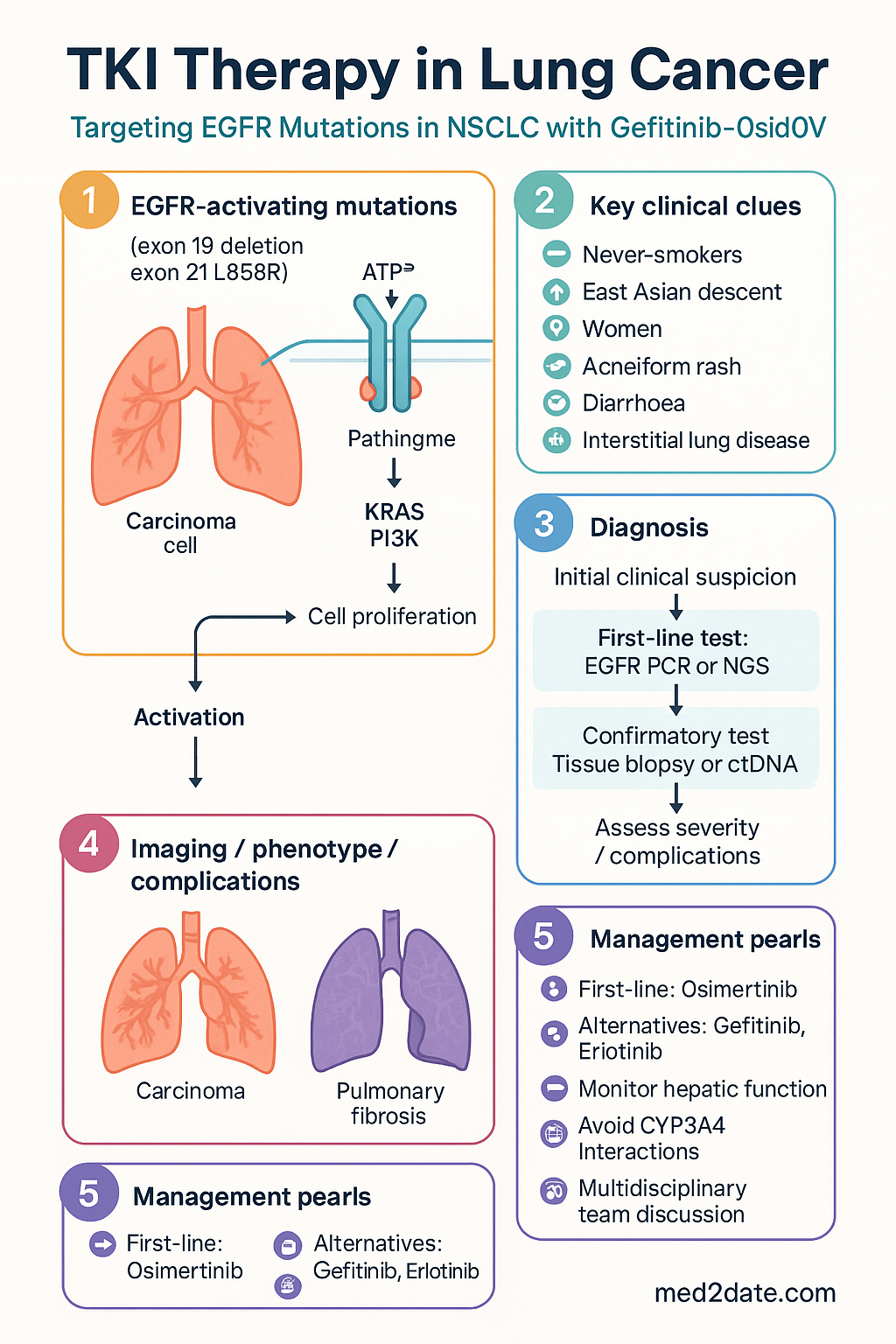
TKI Therapy in Lung Cancer (Gefitinib & Imatinib) clinical infographic — pathophysiology, clinical clues, diagnosis, imaging, and management
Tap or click image to enlarge — TKI Therapy in Lung Cancer (Gefitinib & Imatinib): pathophysiology, clinical clues, diagnosis, imaging, and management.
TKI Therapy in Lung Cancer (Gefitinib & Imatinib) infographic, full size

EGFR Biology & Mutations

EGFR Receptor Structure & Signalling

The epidermal growth factor receptor (EGFR, also known as HER1/ErbB1) is a transmembrane receptor tyrosine kinase belonging to the ErbB family. Upon ligand binding (e.g., EGF, TGF-α), EGFR undergoes homo- or heterodimerisation with other ErbB family members, leading to autophosphorylation of intracellular tyrosine residues and activation of downstream signalling cascades, principally:

  • RAS–RAF–MEK–ERK (MAPK) pathway: Drives cell proliferation and differentiation.
  • PI3K–AKT–mTOR pathway: Promotes cell survival and inhibits apoptosis.
  • JAK–STAT pathway: Contributes to transcriptional regulation of survival genes.
  • PLCγ–PKC pathway: Modulates calcium signalling and cell motility.

Constitutive activation of EGFR through somatic mutations results in ligand-independent receptor signalling, driving uncontrolled proliferation, angiogenesis, and metastatic potential — the hallmark biology of EGFR-mutant NSCLC.

Clinically Relevant EGFR Mutations

EGFR mutations cluster in the tyrosine kinase domain (exons 18–21). The following are the most clinically significant:

Mutation Exon Frequency (%) TKI Sensitivity Clinical Notes
Exon 19 deletion (del19) 19 ~45% Highly sensitive Most common; associated with superior PFS on TKIs vs. L858R
L858R point mutation 21 ~40% Sensitive Second most common; excellent response but shorter PFS than del19
G719X (G719S/C/A) 18 ~3% Sensitive (less common) Uncommon; response rates lower than del19/L858R
S768I 20 ~2% Intermediate sensitivity Often compound with other EGFR mutations
L861Q 21 ~2% Sensitive (less common) May respond to afatinib or osimertinib
Exon 20 insertion 20 ~4–10% Resistant to standard TKIs Amivantamab + chemo or mobocertinib (limited PBS access) considered
T790M (acquired) 20 ~50–60% at progression Resistant to 1st/2nd gen; sensitive to osimertinib Most common resistance mechanism to gefitinib/erlotinib

Indications for EGFR Testing in Australia

Molecular testing for EGFR mutations is recommended for all patients with advanced (Stage IIIB/IV) non-squamous NSCLC, and should also be considered in squamous NSCLC in never-smokers or patients with small biopsy specimens where histological subtyping may be uncertain (eviQ / Cancer Institute NSW, 2024). Testing may be performed on:

  • Formalin-fixed paraffin-embedded (FFPE) tissue biopsy or cytology specimens
  • Circulating tumour DNA (ctDNA) from peripheral blood — useful when tissue is insufficient or unavailable (sensitivity ~70–80%)
  • Pleural fluid or other cytology samples with adequate tumour cellularity

Australian pathology laboratories (e.g., Peter MacCallum Cancer Centre, Royal Prince Alfred Hospital, PathWest) perform EGFR testing using validated PCR-based assays or comprehensive next-generation sequencing (NGS) panels. The MBS item 73337 covers genomic profiling for advanced solid tumours.

Australian practice point: Request EGFR mutation testing at the time of NSCLC diagnosis — do not wait for progression. Turnaround time is typically 7–14 working days. Use ctDNA as a complementary strategy if tissue is insufficient.

EGFR Tyrosine Kinase Inhibitors

Three generations of EGFR TKIs are relevant to Australian clinical practice. They differ in mutation selectivity, resistance profiles, CNS penetration, and tolerability.

First-Generation EGFR TKIs

💊
Gefitinib
Iressa® · AstraZeneca · EGFR TKI (1st generation)
Adult dose 250 mg PO once daily, continuous until progression or unacceptable toxicity
Paediatric dose Not established; not indicated for paediatric NSCLC
Route Oral (tablet)
Renal adjustment Not required (minimal renal excretion); use with caution in severe renal impairment (eGFR <30)
Hepatic adjustment Avoid if Child-Pugh C; monitor LFTs fortnightly × 2 months, then monthly
Key interactions CYP3A4 substrate — avoid strong inducers (rifampicin) and inhibitors (itraconazole, ketoconazole); proton pump inhibitors reduce absorption (take without PPI)
Key trial IPASS (Mok et al., NEJM 2009): PFS superiority vs. carboplatin/paclitaxel in EGFR-mutant NSCLC (HR 0.48)
PBS status ⚠ PBS Authority Required — EGFR-mutant advanced NSCLC, first-line
💊
Erlotinib
Tarceva® · Roche · EGFR TKI (1st generation)
Adult dose 150 mg PO once daily on empty stomach (≥1 h before or ≥2 h after food), continuous until progression
Paediatric dose Not established for NSCLC; used in other paediatric oncology settings (off-label)
Route Oral (tablet)
Renal adjustment No formal dose adjustment; use caution if eGFR <30 mL/min
Hepatic adjustment Avoid if Child-Pugh C; reduce dose or discontinue if bilirubin >3× ULN
Key interactions CYP3A4 substrate — rifampicin reduces AUC by ~70% (contraindicated); concurrent warfarin increases INR risk (monitor closely)
Key trial EURTAC (Rosell, Lancet Oncol 2012): PFS 9.7 vs. 5.2 months vs. chemotherapy in Caucasian EGFR-mutant population
PBS status ⚠ PBS Authority Required — EGFR-mutant advanced NSCLC

Third-Generation EGFR TKI (Preferred Agent)

Osimertinib
Tagrisso® · AstraZeneca · 3rd-generation EGFR TKI
Adult dose 80 mg PO once daily, with or without food, continuous until progression or unacceptable toxicity
Paediatric dose Not established; not indicated for paediatric NSCLC
Route Oral (tablet)
Renal adjustment No dose adjustment for mild–moderate impairment; limited data in severe impairment (eGFR <30)
Hepatic adjustment No dose adjustment for mild–moderate impairment; avoid in severe hepatic impairment (Child-Pugh C)
Key advantages CNS penetration (brain metastases response rate ~70%); T790M activity; superior PFS/OS vs. 1st-gen TKIs (FLAURA); lower rate of Grade 3–4 adverse events
Key trial — 1L FLAURA (Soria et al., NEJM 2018): Median PFS 18.9 vs. 10.2 months (HR 0.46); OS 38.6 vs. 31.8 months (HR 0.796)
Key trial — adjuvant ADAURA (Wu et al., NEJM 2020): 83% reduction in risk of disease recurrence in Stage II–IIIA resected NSCLC
PBS status ⚠ PBS Authority Required — First-line EGFR-mutant advanced NSCLC; T790M-positive NSCLC post-1st/2nd-gen TKI; adjuvant Stage IB–IIIA
Preferred agent: Osimertinib is the preferred first-line EGFR TKI for advanced EGFR-mutant NSCLC in Australia, endorsed by the Medical Benefits Schedule (MBS) and listed on the Pharmaceutical Benefits Scheme (PBS) as Authority Required. It offers superior PFS, CNS efficacy, and a more favourable safety profile compared with gefitinib or erlotinib.

Common Adverse Effects of EGFR TKIs

Adverse Effect Gefitinib (%) Erlotinib (%) Osimertinib (%) Management
Acneiform rash 66–80% 75–85% 45–55% Doxycycline 100 mg BD prophylaxis; topical clindamycin; Grade 3: dose hold
Diarrhoea 45–55% 50–60% 40–50% Loperamide PRN; hydration; Grade 3: dose hold and rehydrate
Paronychia 15–25% 20–30% 25–35% Silver nitrate, chlorhexidine soaks; avoid tight footwear
Dry skin / pruritus 20–30% 20–35% 25–35% Emollients, soap-free wash; antihistamines
Stomatitis 15–20% 15–25% 15–20% Mouthwash, benzydamine; soft diet
Hepatotoxicity (ALT/AST ↑) 10–15% 5–10% 5–8% LFTs at baseline, fortnightly × 2 months, then monthly
Interstitial lung disease (ILD) 1–3% 1–2% ~3–4% Discontinue immediately; high-dose corticosteroids; exclude infection (BAL)
QTc prolongation Rare Rare ~2–5% Baseline ECG; repeat at 3 weeks; avoid QT-prolonging co-medications
🚨
ILD warning: EGFR TKI-associated interstitial lung disease (ILD) is a potentially fatal complication (mortality ~30–50% if not recognised early). Discontinue EGFR TKI immediately if new-onset dyspnoea, cough, or fever develops. Urgent CT chest and pulmonology referral. Do not rechallenge.

Imatinib Mechanisms & Indications

⚠️
No role in lung cancer: Imatinib has no established indication in NSCLC or any lung cancer subtype. It is included here for pharmacological completeness and to clarify its distinct mechanism of action.

Mechanism of Action

Imatinib mesylate (Glivec®) is a small-molecule TKI that competitively binds the ATP-binding site of several tyrosine kinases:

  • BCR-ABL: The constitutively active fusion kinase resulting from the Philadelphia chromosome t(9;22) translocation in chronic myeloid leukaemia (CML). Imatinib stabilises the inactive conformation of ABL, blocking downstream RAS/MAPK and JAK/STAT signalling.
  • KIT (CD117): A receptor tyrosine kinase mutated or overexpressed in ~80% of gastrointestinal stromal tumours (GIST). Imatinib inhibits constitutive KIT signalling, inducing tumour response and disease control.
  • PDGFRA: Platelet-derived growth factor receptor alpha — mutated in a subset of GIST (especially D842V mutation, which confers imatinib resistance).
  • CSF-1R, DDR, and other kinases: Additional targets relevant to other indications (e.g., dermatofibrosarcoma protuberans, systemic mastocytosis).

PBS-Approved Indications in Australia

💊
Imatinib
Glivec® · Novartis · BCR-ABL/KIT/PDGFRA inhibitor
CML — chronic phase 400 mg PO once daily; accelerated/blast crisis: 600–800 mg daily (in divided doses)
GIST — adjuvant 400 mg PO once daily for 3 years (high-risk) or until progression (advanced/metastatic)
GIST — unresectable/metastatic 400 mg PO once daily; KIT exon 9 mutation: 800 mg daily (400 mg BD)
Paediatric dose (CML) 260 mg/m²/day (max 400 mg) PO once daily for BSA ≥1.1 m²; 340 mg/m²/day for BSA <1.1 m²
Route Oral (tablet); take with food and a large glass of water to reduce GI irritation
Renal adjustment eGFR 20–40: reduce dose by 50%; eGFR <20: max 100 mg daily; dialysis: supplemental dose post-HD
Hepatic adjustment Mild (Child-Pugh A): no change; moderate (B): reduce by 25%; severe (C): avoid or reduce by 50%
Key interactions CYP3A4 substrate — avoid concurrent strong CYP3A4 inhibitors/inducers; warfarin interaction (use LMWH instead)
PBS status ⚠ PBS Authority Required — CML (confirmed Ph+ or BCR-ABL+), GIST (KIT/PDGFRA-mutant)

Imatinib was the first TKI to demonstrate that targeted inhibition of a specific oncogenic kinase could produce durable remissions. The IRIS trial (O'Brien et al., NEJM 2003) established imatinib 400 mg as standard first-line therapy for chronic-phase CML, with complete cytogenetic response rates of ~76% and estimated 10-year overall survival of ~83%. In GIST, imatinib achieved disease control in ~80% of patients with advanced disease (Demetri et al., NEJM 2002).

Resistance Mechanisms & Management

Despite the dramatic initial responses to EGFR TKIs, acquired resistance inevitably develops, typically after 9–18 months with first-generation agents and 18–20 months with osimertinib in the first-line setting. Understanding resistance mechanisms guides rational sequencing of subsequent therapies.

Resistance to First-Generation EGFR TKIs (Gefitinib/Erlotinib)

Mechanism Frequency Management Strategy
EGFR T790M (gatekeeper mutation) 50–60% Osimertinib 80 mg daily (PBS-listed for T790M+); rebiopsy or ctDNA at progression
MET amplification 5–20% Consider combination: osimertinib + MET inhibitor (clinical trial or off-label savolitinib)
HER2 amplification ~13% Clinical trial enrolment; trastuzumab deruxtecan (T-DXd) in select cases
Small cell lung cancer (SCLC) transformation ~5–15% Treat as SCLC — platinum/etoposide chemotherapy
BRAF V600E mutation ~1–3% Dabrafenib + trametinib (off-label consideration)
PIK3CA mutation ~5% Clinical trial enrolment; limited targeted options currently
Unknown / multiple mechanisms ~20–30% Chemotherapy ± immunotherapy; clinical trial

Resistance to Osimertinib (Third-Generation TKI)

Resistance mechanisms to first-line osimertinib are more heterogeneous and less well characterised than those to first-generation TKIs:

  • EGFR C797S mutation (~10–15%): The cysteine residue targeted by osimertinib is mutated, abolishing covalent binding. In cis with T790M may respond to combination 1st + 3rd gen TKIs (investigational). In trans configuration may allow gefitinib + osimertinib combination (case reports only).
  • MET amplification (~15–20%): Increasingly recognised as a major bypass track. Amivantamab (EGFR/MET bispecific antibody) or savolitinib combinations are under investigation.
  • HER2 amplification (~2–10%): Overlap with gefitinib resistance; emerging strategies include T-DXd.
  • SCLC transformation (~3–10%): Loss of RB1 and TP53 is characteristic. Treat as SCLC.
  • MAPK pathway activation (BRAF, KRAS, NRAS mutations): Diverse and individually rare; clinical trial enrolment recommended.
  • Unknown (~30–50%): Represents the largest group; chemotherapy remains standard of care.

Australian Approach to Resistance Workup

1
Rebiopsy at progression
Obtain tissue biopsy (or liquid biopsy ctDNA) at the time of clinical or radiological progression on any EGFR TKI. Repeat NGS panel including EGFR (including T790M, C797S), MET, HER2, BRAF, and other resistance-associated genes.
2
Liquid biopsy if tissue unavailable
ctDNA (Guardant360, local NGS panels via Peter Mac/VCCC alliance) is an acceptable alternative. Sensitivity for T790M detection is ~70–80%; false negatives occur — tissue biopsy is preferred if safe and feasible.
3
MDT discussion
All resistance management decisions should be made in conjunction with a thoracic oncology MDT at a recognised cancer centre (e.g., Peter MacCallum, Chris O'Brien Lifehouse, Royal Adelaide Hospital).
4
Clinical trial consideration
Strongly consider enrolment in a clinical trial for patients progressing on osimertinib. Australian trials are available through the ALTG (Australasian Lung Trials Group) network and cooperative group sites.

Investigations

ESSENTIAL
EGFR mutation testing (tissue NGS or PCR)
FFPE tissue or cytology; MBS item 73337; turnaround 7–14 days. Must be performed before any EGFR TKI prescription.
AVAILABLE
Circulating tumour DNA (ctDNA / liquid biopsy)
Peripheral blood; sensitivity ~70–80% for EGFR mutations; useful when tissue insufficient. Available via Peter Mac, VCCC alliance pathology.
ESSENTIAL
Baseline liver function tests (LFTs)
ALT, AST, bilirubin, ALP at baseline; repeat fortnightly × 2 months, then monthly on EGFR TKI therapy.
AVAILABLE
Baseline ECG (QTc measurement)
Particularly important for osimertinib; repeat at 3 weeks. Hold if QTc >500 ms.
AVAILABLE
CT chest/abdomen/pelvis ± brain MRI
Baseline staging; brain MRI recommended for all patients given high CNS metastasis rate in EGFR-mutant NSCLC.
REFERRAL
Comprehensive NGS panel (at progression)
Includes T790M, C797S, MET, HER2, BRAF, KRAS, PIK3CA. Via Peter Mac or tertiary centre molecular tumour board.
AVAILABLE
BCR-ABL quantification (if imatinib for CML)
Real-time quantitative PCR (RQ-PCR); MBS item 63620; 3-monthly during therapy to assess molecular response.

Risk Stratification & Response Assessment

Response assessment for patients on EGFR TKIs follows RECIST 1.1 criteria with imaging at approximately 8–12 weekly intervals. Prognostic factors influencing outcomes include:

Favourable
Good Prognosis
Exon 19 deletion, ECOG PS 0–1, no brain metastases, never-smoker, early radiological response (>50% reduction), EGFR-mutant (non-T790M de novo)
Expected median PFS: 18–21 months (osimertinib 1L)
Intermediate
Moderate Prognosis
L858R mutation (vs. del19), ECOG PS 2, stable brain metastases, prior smoking history, partial response at first scan
Expected median PFS: 12–18 months
Poor
Unfavourable Prognosis
ECOG PS ≥3, co-mutations (TP53, RB1 — risk of SCLC transformation), progressive disease at first scan, symptomatic brain metastases, hepatic metastases with impaired LFTs
Consider best supportive care; clinical trial; early switch to chemotherapy

Empirical & Directed Therapy

First-Line Therapy — EGFR-Mutant Advanced NSCLC

Standard of care (Australia): Osimertinib 80 mg PO daily — PBS Authority Required. Preferred based on FLAURA trial data (superior PFS, OS, CNS activity). Initiate within 2 weeks of confirmed EGFR mutation result.

Alternative First-Line Agents

  • Gefitinib 250 mg PO daily: PBS-listed; suitable if osimertinib unavailable or contraindicated. PFS ~10 months.
  • Erlotinib 150 mg PO daily (fasting): PBS-listed; similar efficacy to gefitinib. Higher rates of rash and diarrhoea.
  • Afatinib 40 mg PO daily: Second-generation irreversible pan-HER inhibitor; PBS-listed; superior PFS vs. gefitinib in LUX-Lung 7; higher toxicity (diarrhoea, rash). Consider for non-classical EGFR mutations (G719X, L861Q, S768I).

Second-Line Therapy — T790M-Positive Progression

Standard of care: Osimertinib 80 mg PO daily for T790M-positive NSCLC progressing on a first- or second-generation EGFR TKI (AURA3 trial; Mok et al., NEJM 2017). PBS Authority Required — requires documented T790M mutation on rebiopsy.

Post-Osimertinib Progression

For patients progressing on first-line osimertinib, the following sequence is generally recommended in Australia:

  1. Rebiopsy (tissue + ctDNA) to identify resistance mechanism.
  2. If targetable resistance identified (e.g., MET amplification) — consider clinical trial combination.
  3. If no targetable resistance — platinum-based doublet chemotherapy (carboplatin AUC 5 + pemetrexed 500 mg/m² Q3W) is standard.
  4. Add pembrolizumab to chemotherapy only if PD-L1 ≥50% and no contraindication — note increased toxicity of chemo-immunotherapy in EGFR-mutant population (IMpower150 showed benefit with atezolizumab/bevacizumab/carboplatin/paclitaxel in select patients).
  5. Clinical trial enrolment strongly encouraged (ALTG network).

Adjuvant Therapy — Resected Early-Stage NSCLC

The ADAURA trial (Wu et al., NEJM 2020) demonstrated a disease-free survival benefit with adjuvant osimertinib 80 mg daily for 3 years following complete resection of Stage IB–IIIA EGFR-mutant NSCLC (with or without adjuvant chemotherapy). Osimertinib is PBS-listed for this indication as Authority Required.

Monitoring

Baseline
Confirm EGFR mutation status; CT chest/abdomen/pelvis; brain MRI; baseline LFTs (ALT, AST, bilirubin); ECG (QTc); ECOG performance status; smoking status; medication review (CYP3A4 interactions).
Week 2
Review tolerance; LFTs; skin toxicity assessment and prophylaxis (doxycycline if rash Grade ≥1); education re: diarrhoea management and ILD symptoms.
Week 4
LFTs; clinical review; reinforce adherence and adverse-effect management.
Week 6–8
First response CT scan (8–12 weeks post-initiation); LFTs; symptom review.
Every 8–12 weeks
CT imaging (RECIST 1.1); LFTs; clinical assessment; toxicity grading (CTCAE v5); medication review.
6-monthly
Brain MRI (particularly if prior CNS metastases); full blood count; renal function.
At progression
Rebiopsy (tissue ± ctDNA) for resistance genotyping; MDT discussion; switch therapy or clinical trial.

Special Populations

🤰 Pregnancy
Gefitinib, Erlotinib, Osimertinib
Category D — teratogenic in animal studies. Contraindicated in pregnancy. Effective contraception required during and for 2 months after cessation. Advise against breastfeeding.
Imatinib
Category D — known teratogenicity (exomphalos, renal anomalies reported). Contraception mandatory; discontinue ≥1 week before planned conception. Breastfeeding contraindicated.
👶 Paediatrics
EGFR TKIs
NSCLC is exceptionally rare in paediatric patients. EGFR TKIs are not indicated. Refer to paediatric oncology tertiary centre.
Imatinib
PBS-listed for paediatric CML. Dose: 260 mg/m²/day (max 400 mg) for BSA ≥1.1 m². Monitor growth, bone age. Refer to paediatric haematology.
👴 Elderly
All EGFR TKIs
No specific dose reduction required for age alone. However, elderly patients may have reduced hepatic reserve and polypharmacy (CYP3A4 interactions). Falls risk with diarrhoea/dehydration. Consider closer monitoring.
🩺 Renal Impairment
Gefitinib
Minimal renal excretion. No dose adjustment for mild–moderate impairment. Use with caution if eGFR <30.
Erlotinib
No formal dose adjustment. Monitor closely in severe impairment.
Osimertinib
No dose adjustment for mild–moderate. Limited data in severe impairment (eGFR <30).
Imatinib
eGFR 20–40: reduce dose by 50%. eGFR <20: maximum 100 mg daily. Supplemental dose after haemodialysis.
🫁 Hepatic Impairment
Gefitinib
Avoid in Child-Pugh C. Monitor LFTs fortnightly for 2 months.
Erlotinib
Avoid in Child-Pugh C. Dose reduce if bilirubin >3× ULN.
Osimertinib
No adjustment for mild–moderate impairment. Avoid in Child-Pugh C.
Imatinib
Mild (A): no change. Moderate (B): reduce by 25%. Severe (C): avoid or reduce by 50%.
🛡️ Immunocompromised
EGFR TKIs
EGFR TKIs are not immunosuppressive per se, but may be used in immunocompromised patients (e.g., concurrent corticosteroids for brain metastases). No dose adjustment required. Monitor for opportunistic infections if on prolonged immunosuppression.

Aboriginal and Torres Strait Islander Health Considerations

Aboriginal and Torres Strait Islander Health

Lung cancer is the most commonly diagnosed cancer and the leading cause of cancer death among Aboriginal and Torres Strait Islander peoples. The age-standardised incidence rate is approximately 1.5 times higher than in the non-Indigenous population, and five-year survival is significantly lower (AIHW, 2023). Disparities in molecular testing rates, access to targeted therapies, and time to treatment initiation are well documented.

Molecular testing access
First Nations Australians with NSCLC are less likely to receive EGFR mutation testing compared with non-Indigenous patients. Contributing factors include later-stage presentation, reduced tissue availability, and systemic barriers to comprehensive pathology. Action: Advocate for reflex EGFR testing on all NSCLC specimens; use ctDNA as an alternative when tissue is limited.
Geographic & remote access
Many Aboriginal and Torres Strait Islander patients reside in rural and remote areas with limited access to tertiary cancer centres, MDT meetings, and oral TKI dispensing (pharmacy access). Action: Utilise telehealth oncology consultations; engage Aboriginal Health Workers/Practitioners for medication support; consider medication delivery via Remote Area Aboriginal Health Services (RAAHS) or Patient-Assisted Travel Scheme (PATS).
Cultural safety
Fear, stigma, and past negative experiences with the healthcare system may delay presentation and reduce treatment adherence. Action: Ensure culturally safe communication; involve Aboriginal Liaison Officers (ALOs); provide information in plain language and, where possible, in community languages; respect kinship and family decision-making structures.
Comorbidity burden
Higher rates of cardiovascular disease, chronic kidney disease, diabetes, and smoking may complicate TKI therapy. Action: Perform comprehensive comorbidity assessment; adjust monitoring (LFTs, renal function) accordingly; coordinate with primary health care and Aboriginal Community Controlled Health Organisations (ACCHOs).
Smoking cessation
Smoking rates remain significantly higher in the Aboriginal and Torres Strait Islander population (~40% vs. ~11% non-Indigenous). While EGFR-mutant NSCLC occurs predominantly in never-smokers, continued smoking worsens outcomes in all lung cancer patients. Action: Offer culturally appropriate smoking cessation support (Quitline 13 7848; Tackling Indigenous Smoking programme).
Closing the Gap targets
The National Agreement on Closing the Gap (2020) commits to equitable health outcomes. Cancer is an area of ongoing disparity. Ensure First Nations patients receive the same standard of molecular testing, targeted therapy, and follow-up as non-Indigenous Australians.

📚 References

  1. 1. Soria JC, Ohe Y, Vansteenkiste J, et al. Osimertinib in untreated EGFR-mutated advanced non–small-cell lung cancer. N Engl J Med. 2018;378(2):113–125. doi:10.1056/NEJMoa1713137
  2. 2. Mok TS, Wu YL, Ahn MJ, et al. Osimertinib or platinum–pemetrexed in EGFR T790M–positive lung cancer. N Engl J Med. 2017;376(7):629–640. doi:10.1056/NEJMoa1612674
  3. 3. Wu YL, Tsuboi M, He J, et al. Osimertinib in resected EGFR-mutated non–small-cell lung cancer. N Engl J Med. 2020;383(18):1711–1723. doi:10.1056/NEJMoa2027071
  4. 4. Mok TS, Wu YL, Thongprasert S, et al. Gefitinib or carboplatin–paclitaxel in pulmonary adenocarcinoma. N Engl J Med. 2009;361(10):947–957. doi:10.1056/NEJMoa0810699
  5. 5. Rosell R, Carcereny E, Gervais R, et al. Erlotinib versus standard chemotherapy as first-line treatment for European patients with advanced EGFR mutation-positive non-small-cell lung cancer (EURTAC). Lancet Oncol. 2012;13(3):239–246. doi:10.1016/S1470-2045(11)70393-X
  6. 6. Park K, Tan EH, O'Byrne K, et al. Afatinib versus gefitinib as first-line treatment of patients with EGFR mutation-positive non-small-cell lung cancer (LUX-Lung 7). Lancet Oncol. 2016;17(5):577–589. doi:10.1016/S1470-2045(16)30033-X
  7. 7. O'Brien SG, Guilhot F, Larson RA, et al. Imatinib compared with interferon and low-dose cytarabine for newly diagnosed chronic-phase chronic myeloid leukemia. N Engl J Med. 2003;348(11):994–1004. doi:10.1056/NEJMoa022457
  8. 8. Demetri GD, von Mehren M, Blanke CD, et al. Efficacy and safety of imatinib mesylate in advanced gastrointestinal stromal tumors. N Engl J Med. 2002;347(7):472–480. doi:10.1056/NEJMoa020461
  9. 9. Australian Institute of Health and Welfare (AIHW). Cancer data in Australia. Canberra: AIHW; 2023. Available from: https://www.aihw.gov.au/reports/cancer/cancer-data-in-australia
  10. 10. Cancer Institute NSW (eviQ). Non-small cell lung cancer – advanced disease: EGFR mutation positive – gefitinib or erlotinib. eviQ Cancer Treatments Online; 2024. Available from: https://www.eviq.org.au
  11. 11. National Health and Medical Research Council (NHMRC). Clinical practice guidelines for the prevention, diagnosis and management of lung cancer. Canberra: NHMRC; 2024.
  12. 12. Australian Government Department of Health. Pharmaceutical Benefits Scheme (PBS). Available from: https://www.pbs.gov.au
  13. 13. Planchard D, Popat S, Kerr K, et al. Metastatic non-small cell lung cancer: ESMO Clinical Practice Guidelines for diagnosis, treatment and follow-up. Ann Oncol. 2018;29(Suppl 4):iv192–iv237. doi:10.1093/annonc/mdy275
  14. 14. Ramalingam SS, Vansteenkiste J, Planchard D, et al. Overall survival with osimertinib in untreated, EGFR-mutated advanced NSCLC. N Engl J Med. 2020;382(1):41–50. doi:10.1056/NEJMoa1913662
  15. 15. Australian Government Department of Health. National Agreement on Closing the Gap. 2020. Available from: https://www.pmc.gov.au/closing-the-gap
for PBS-listed medicines at participating pharmacies.
Cultural safety
Engagement with Aboriginal Community Controlled Health Organisations (ACCHOs) is essential. Cultural safety training for non-Indigenous clinicians, use of Aboriginal Health Workers and Liaison Officers, and incorporation of traditional healing practices alongside Western medicine improve treatment adherence and outcomes. Avoidance of eye contact, respect for gender-sensitive examination practices, and understanding of sorry business protocols are critical elements of culturally safe care.
Medication adherence
Complex DMARD regimens with frequent monitoring requirements present adherence challenges. Long-acting depot injections (e.g., methotrexate SC) may improve adherence compared to oral regimens. Community pharmacy partnerships through the Indigenous Pharmacy Programmes improve medication management.
Specific conditions
Rheumatic heart disease (RHD) requires secondary prophylaxis with benzathine penicillin G (BPG) 1.2 MU IM every 3–4 weeks for a minimum of 10 years or until age 21 (whichever is longer). RHD registers (e.g., NT RHD Register) facilitate recall and follow-up. The Australian RHD Endgame Strategy targets elimination by 2031.
Referral pathways
Referral through ACCHOs and Aboriginal Hospital Liaison Officers (AHLOs) improves engagement. The Specialist Outreach Assistance Programme provides funded specialist visits to remote communities. NT, WA, and QLD have specific rheumatology outreach programmes targeting Indigenous communities.

📚 References

  1. 1. Australian Institute of Health and Welfare (AIHW). Autoimmune disease in Australia. Cat. no. PHE 312. Canberra: AIHW; 2023.
  2. 2. Fraenkel L, Bathon JM, England BR, et al. 2021 American College of Rheumatology guideline for the treatment of rheumatoid arthritis. Arthritis Care Res. 2021;73(7):924–939.
  3. 3. Fanouriakis A, Kostopoulou M, Alber K, et al. 2019 update of the EULAR recommendations for the management of systemic lupus erythematosus. Ann Rheum Dis. 2019;78(6):736–745.
  4. 4. Chung SA, Langford CA, Maz M, et al. 2021 American College of Rheumatology/Vasculitis Foundation guideline for the management of antineutrophil cytoplasmic antibody-associated vasculitis. Arthritis Care Res. 2021;73(11):1583–1599.
  5. 5. Smolen JS, Landewé RBM, Bijlsma JWJ, et al. EULAR recommendations for the management of rheumatoid arthritis with synthetic and biological disease-modifying antirheumatic drugs: 2022 update. Ann Rheum Dis. 2023;82(1):3–18.
  6. 6. Australian Technical Advisory Group on Immunisation (ATAGI). Australian Immunisation Handbook. Australian Government Department of Health; 2024. Available from: immunisationhandbook.health.gov.au.
  7. 7. Rheumatic Heart Disease Australia (RHDAustralia). The 2020 Australian guideline for prevention, diagnosis, and management of acute rheumatic fever and rheumatic heart disease. 3rd ed. Darwin: Menzies School of Health Research; 2020.
  8. 8. Pharmaceutical Benefits Scheme (PBS). PBS Schedule. Australian Government Department of Health. Available from: pbs.gov.au. Accessed 2024.
  9. 9. Agarwal S, Cunnington J, Nossent J. Autoimmune disease in Indigenous Australians: a systematic review. Int J Rheum Dis. 2021;24(12):1487–1498.
  10. 10. Pisetsky DS. Antinuclear antibody testing — misunderstood or misused? Clin Immunol. 2023;255:109717.
  11. 11. Bertsias GK, Tektonidou M, Amoura Z, et al. Joint European League Against Rheumatism and European Renal Association–European Dialysis and Transplant Association (EULAR/ERA-EDTA) recommendations for the management of adult and paediatric lupus nephritis. Ann Rheum Dis. 2012;71(11):1771–1782.
  12. 12. Ledingham J, Deighton C; British Society for Rheumatology Standards, Audit and Guidelines Working Group. Update on the British Society for Rheumatology guidelines for prescribing TNFα blockers in adults with rheumatoid arthritis. Rheumatology. 2005;44(2):155–158.
  13. 13. National Health and Medical Research Council (NHMRC). National statement on ethical conduct in human research. Canberra: NHMRC; 2023 (updated).
for PBS-listed medicines at participating pharmacies.
Cultural safety
Engagement with Aboriginal Community Controlled Health Organisations (ACCHOs) is essential. Cultural safety training for non-Indigenous clinicians, use of Aboriginal Health Workers and Liaison Officers, and incorporation of traditional healing practices alongside Western medicine improve treatment adherence and outcomes. Avoidance of eye contact, respect for gender-sensitive examination practices, and understanding of sorry business protocols are critical elements of culturally safe care.
Medication adherence
Complex DMARD regimens with frequent monitoring requirements present adherence challenges. Long-acting depot injections (e.g., methotrexate SC) may improve adherence compared to oral regimens. Community pharmacy partnerships through the Indigenous Pharmacy Programmes improve medication management.
Specific conditions
Rheumatic heart disease (RHD) requires secondary prophylaxis with benzathine penicillin G (BPG) 1.2 MU IM every 3–4 weeks for a minimum of 10 years or until age 21 (whichever is longer). RHD registers (e.g., NT RHD Register) facilitate recall and follow-up. The Australian RHD Endgame Strategy targets elimination by 2031.
Referral pathways
Referral through ACCHOs and Aboriginal Hospital Liaison Officers (AHLOs) improves engagement. The Specialist Outreach Assistance Programme provides funded specialist visits to remote communities. NT, WA, and QLD have specific rheumatology outreach programmes targeting Indigenous communities.

📚 References

  1. 1. Australian Institute of Health and Welfare (AIHW). Autoimmune disease in Australia. Cat. no. PHE 312. Canberra: AIHW; 2023.
  2. 2. Fraenkel L, Bathon JM, England BR, et al. 2021 American College of Rheumatology guideline for the treatment of rheumatoid arthritis. Arthritis Care Res. 2021;73(7):924–939.
  3. 3. Fanouriakis A, Kostopoulou M, Alber K, et al. 2019 update of the EULAR recommendations for the management of systemic lupus erythematosus. Ann Rheum Dis. 2019;78(6):736–745.
  4. 4. Chung SA, Langford CA, Maz M, et al. 2021 American College of Rheumatology/Vasculitis Foundation guideline for the management of antineutrophil cytoplasmic antibody-associated vasculitis. Arthritis Care Res. 2021;73(11):1583–1599.
  5. 5. Smolen JS, Landewé RBM, Bijlsma JWJ, et al. EULAR recommendations for the management of rheumatoid arthritis with synthetic and biological disease-modifying antirheumatic drugs: 2022 update. Ann Rheum Dis. 2023;82(1):3–18.
  6. 6. Australian Technical Advisory Group on Immunisation (ATAGI). Australian Immunisation Handbook. Australian Government Department of Health; 2024. Available from: immunisationhandbook.health.gov.au.
  7. 7. Rheumatic Heart Disease Australia (RHDAustralia). The 2020 Australian guideline for prevention, diagnosis, and management of acute rheumatic fever and rheumatic heart disease. 3rd ed. Darwin: Menzies School of Health Research; 2020.
  8. 8. Pharmaceutical Benefits Scheme (PBS). PBS Schedule. Australian Government Department of Health. Available from: pbs.gov.au. Accessed 2024.
  9. 9. Agarwal S, Cunnington J, Nossent J. Autoimmune disease in Indigenous Australians: a systematic review. Int J Rheum Dis. 2021;24(12):1487–1498.
  10. 10. Pisetsky DS. Antinuclear antibody testing — misunderstood or misused? Clin Immunol. 2023;255:109717.
  11. 11. Bertsias GK, Tektonidou M, Amoura Z, et al. Joint European League Against Rheumatism and European Renal Association–European Dialysis and Transplant Association (EULAR/ERA-EDTA) recommendations for the management of adult and paediatric lupus nephritis. Ann Rheum Dis. 2012;71(11):1771–1782.
  12. 12. Ledingham J, Deighton C; British Society for Rheumatology Standards, Audit and Guidelines Working Group. Update on the British Society for Rheumatology guidelines for prescribing TNFα blockers in adults with rheumatoid arthritis. Rheumatology. 2005;44(2):155–158.
  13. 13. National Health and Medical Research Council (NHMRC). National statement on ethical conduct in human research. Canberra: NHMRC; 2023 (updated).