Home Immunology B Cells Diversity

B Cells Diversity

📋 Key Information Summary

📋
  • B cell diversity enables the humoral immune system to recognise an estimated 1011 distinct antigenic epitopes from approximately 25 000 human genes.
  • V(D)J recombination — mediated by RAG-1/RAG-2 recombinases — randomly assembles variable (V), diversity (D), and joining (J) gene segments in the heavy-chain locus and V–J segments in each light-chain locus during B cell development in the bone marrow.
  • Combinatorial diversity alone generates >6 000 heavy-chain and >170 light-chain combinations; junctional diversity (P-nucleotides, N-nucleotide addition by TdT, and exonuclease trimming) multiplies this figure by orders of magnitude.
  • Failure of V(D)J recombination (e.g. RAG1/RAG2, Artemis, DNA-PKcs mutations) causes severe combined immunodeficiency (SCID), typically presenting in infancy with recurrent sinopulmonary and opportunistic infections.
  • Somatic hypermutation (SHM) introduces point mutations in immunoglobulin variable regions at a rate ~106× the background genomic mutation rate, driven by activation-induced cytidine deaminase (AID).
  • Affinity maturation is the iterative process of clonal selection within germinal centres whereby B cells with higher-affinity BCRs are preferentially expanded, progressively increasing serum antibody affinity over weeks to months.
  • Class-switch recombination (CSR), also AID-dependent, changes the constant-region isotype (IgM → IgG, IgA, or IgE) without altering antigen specificity.
  • Hyper-IgM syndromes (AID deficiency, UNG deficiency, CD40L deficiency) impair CSR and/or SHM, causing susceptibility to encapsulated bacteria and Pneumocystis jirovecii.
  • Defective SHM and aberrant AID activity are implicated in B cell lymphomagenesis, particularly diffuse large B cell lymphoma (DLBCL) and Burkitt lymphoma.
  • In Australia, genetic testing for SCID and hyper-IgM syndromes is available through National Association of Testing Authorities (NATA)-accredited laboratories and the Australian Genomics Health Alliance; newborn screening for SCID via TREC assay is now operational in all states and territories.
  • Aboriginal and Torres Strait Islander children experience higher rates of invasive pneumococcal disease and suppurative otitis media — conditions exacerbated by impaired antibody maturation — underscoring the importance of early recognition of humoral immunodeficiency.
  • Understanding the molecular mechanisms of B cell diversity is essential for interpreting flow-cytometric B cell subset analysis (naïve, memory, switched memory, plasmablasts) and diagnosing primary immunodeficiency disorders in Australian clinical practice.

Introduction & Australian Context

The adaptive humoral immune system depends on the generation of a vast repertoire of B cell receptors (BCRs) — membrane-bound immunoglobulins — capable of recognising virtually any molecular structure encountered in a lifetime. This extraordinary diversity is achieved through a series of molecular mechanisms operating at distinct stages of B cell development and antigen-driven maturation. Disruption of any step in this cascade results in clinically significant primary immunodeficiency, autoimmunity, or lymphoid malignancy.

B cell development begins in the foetal liver and transitions to the bone marrow by mid-gestation, continuing throughout life. In Australia, the estimated prevalence of primary immunodeficiency disorders (PIDs) is approximately 1 in 1 200 to 1 in 2 500 live births, with humoral defects (including common variable immunodeficiency [CVID], X-linked agammaglobulinaemia [XLA], and hyper-IgM syndromes) accounting for >50 % of diagnosed cases (AIHW, 2023). The Australian Paediatric Surveillance Unit (APSU) and the Australasian Society of Clinical Immunology and Allergy (ASCIA) PID Registry continue to collect national data on these conditions.

This article reviews the four principal mechanisms generating B cell diversity — V(D)J recombination, junctional diversity, somatic hypermutation, and affinity maturation — with emphasis on their molecular biology, clinical consequences of disruption, and relevance to Australian diagnostic and therapeutic practice.
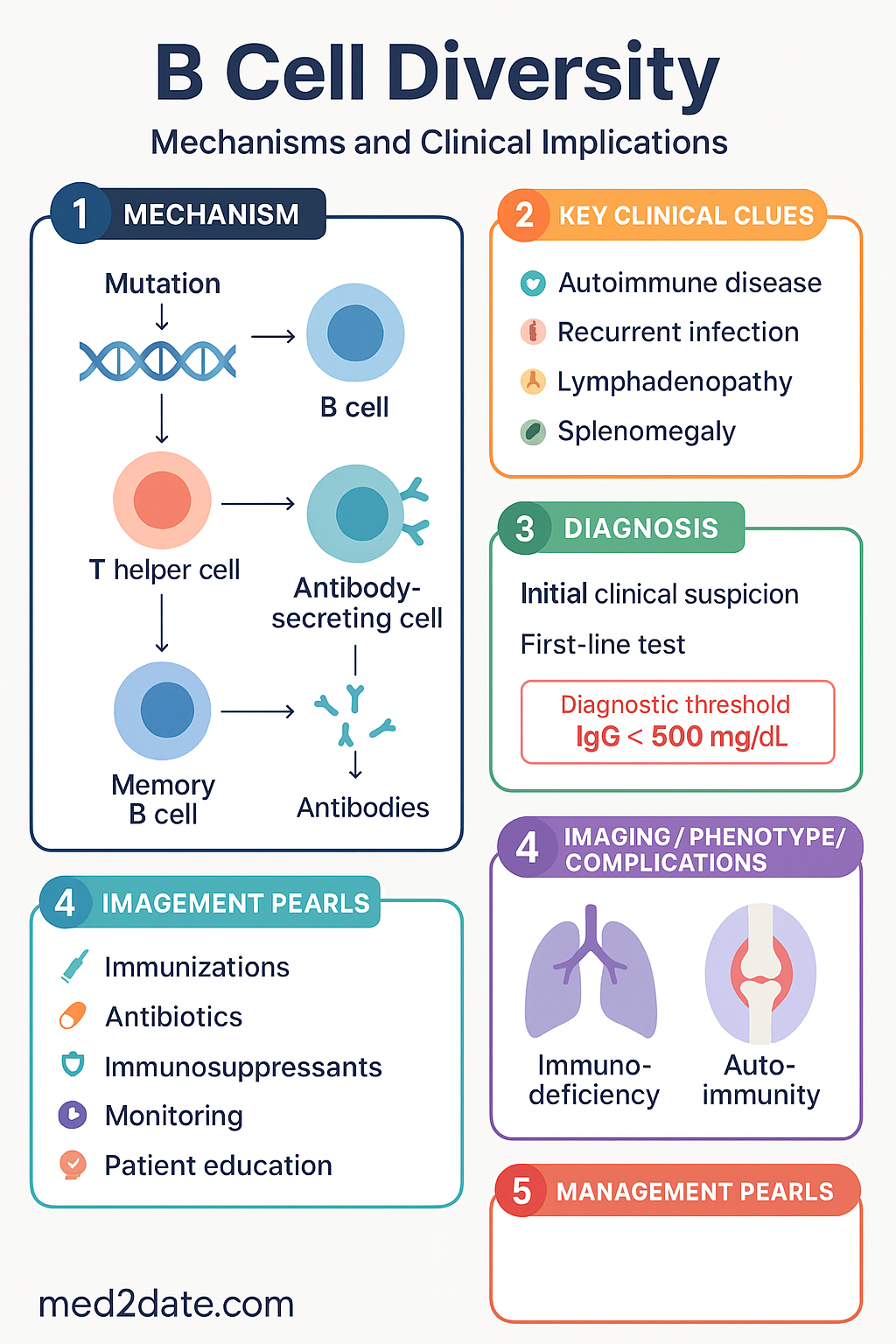
B Cells Diversity clinical infographic — pathophysiology, clinical clues, diagnosis, imaging, and management
Tap or click image to enlarge — B Cells Diversity: pathophysiology, clinical clues, diagnosis, imaging, and management.
B Cells Diversity infographic, full size

V(D)J Recombination

Molecular Mechanism

V(D)J recombination is the primary somatic rearrangement event that assembles a functional immunoglobulin variable-region exon from germline gene segments. It occurs exclusively in developing B cells (and T cells for TCR genes) within the bone marrow, prior to antigen encounter.

The immunoglobulin heavy-chain locus (IGH, chromosome 14q32) contains approximately 45 functional VH segments, 23 DH segments, and 6 JH segments. Each light-chain locus — IGK (2p11) and IGL (22q11) — contains V and J segments only (no D segments). Recombination proceeds in two ordered steps:

  • Heavy-chain rearrangement: DH→JH first, followed by VH→DJH. A productive rearrangement (in-frame, no stop codons) produces a μ heavy chain and signals allelic exclusion at the second IGH allele.
  • RAG-1 / RAG-2 Recombinases

    Recombination-activating genes 1 and 2 (RAG1, RAG2) form a heterotetrameric complex that introduces double-strand DNA breaks at recombination signal sequences (RSSs) flanking each V, D, and J segment. RSSs consist of a conserved heptamer, a nonamer, and a spacer of either 12 bp or 23 bp; efficient recombination requires one 12-RSS and one 23-RSS (the 12/23 rule). RAG deficiency results in a complete block in both B and T cell development — a form of TB NK+ SCID.

    ⚠️
    Clinical significance: RAG1/RAG2 mutations account for approximately 10–15 % of all SCID cases in Australia. Newborn screening using the T-cell receptor excision circle (TREC) assay detects low or absent TRECs, enabling pre-symptomatic diagnosis and referral for haematopoietic stem cell transplantation (HSCT).

    Combinatorial Diversity Calculation

    Locus Functional V Functional D Functional J V×D×J or V×J Combinations
    IGH (heavy chain) ~45 ~23 6 ~6 210
    IGK (κ light chain) ~40 5 ~200
    IGL (λ light chain) ~30 4 ~120

    Combinatorial diversity of heavy + light chains (6 210 × 320) yields approximately 2 × 10⁶ unique BCRs before junctional diversity is considered.

Junctional Diversity

Mechanisms

Junctional diversity dramatically increases receptor diversity beyond combinatorial rearrangement alone. Three enzymatic processes modify the junctions (CDR3 regions) between joined gene segments:

  1. P-nucleotides (palindromic nucleotides): Asymmetric hairpin opening by Artemis (an endonuclease activated by DNA-PKcs) creates short single-stranded overhangs complementary to the coding end. These are filled in by DNA polymerase, adding a few palindromic nucleotides.
  2. N-nucleotide addition: Terminal deoxynucleotidyl transferase (TdT), expressed primarily in developing lymphocytes, adds non-templated (random) nucleotides at the D–J and V–D junctions of heavy chains. N-addition is minimal or absent in light chains and in foetal/neonatal B cells, explaining the more restricted neonatal repertoire.
  3. Exonuclease trimming: Unregulated 5′→3′ and 3′→5′ exonuclease activity removes nucleotides from coding ends before ligation, further diversifying CDR3 length and sequence.

Magnitude of Diversity

Junctional diversity, concentrated in CDR3 — the most hypervariable and antigen-contacting region of the antibody — increases theoretical repertoire size to >1011 unique specificities. CDR3 length variation (heavy-chain CDR3: 3–25 amino acids) is a major contributor to fine specificity differences between antibodies recognising the same antigen.

Clinical Correlates of Defective Junctional Diversity

Mild
Artemis deficiency (Athabascan-speaking populations)
Radiosensitive TBNK+ SCID phenotype. Less severe than RAG deficiency; may present later in infancy with recurrent infections and lymphopenia.
Setting: HSCT curative; gene therapy trials ongoing
Moderate
DNA-PKcs deficiency
Impaired hairpin opening reduces junctional diversity. Associated with TBNK+ SCID. May have residual T and B cell numbers with restricted repertoire.
Setting: HSCT indicated; surveillance for radiation sensitivity
Severe
TdT deficiency
Absent N-nucleotide addition reduces heavy-chain CDR3 diversity. Milder clinical phenotype than RAG deficiency; patients may have low-normal immunoglobulin levels but impaired responses to neoantigens and increased autoantibody production.
Setting: Immunoglobulin replacement if hypogammaglobulinaemia; monitor for autoimmunity

Somatic Hypermutation (SHM)

Mechanism

Somatic hypermutation is an antigen-driven, post-germinal-centre diversification mechanism that introduces point mutations into rearranged immunoglobulin variable-region genes at a rate of approximately 10−3 mutations per base pair per cell division — roughly 106 times the background somatic mutation rate. SHM is confined to a ~2 kb region spanning the rearranged V(D)J exon and its flanking intron, targeting hotspot motifs (WRCY / RGYW, where W = A/T, R = A/G, Y = C/T).

Activation-Induced Cytidine Deaminase (AID)

AID (encoded by AICDA, chromosome 12p13) is the essential enzyme initiating both SHM and class-switch recombination. It deaminates cytosine to uracil in single-stranded DNA exposed during transcription, creating U:G mismatches. These mismatches are processed by three downstream pathways:

  • Replication over uracil → C→T transitions (direct pathway).
  • Uracil-DNA glycosylase (UNG) excision → abasic site → error-prone repair → transitions and transversions.
  • Mismatch repair (MSH2/MSH6) → error-prone polymerase recruitment (Rev1, Polη) → broader mutation spectrum including mutations at A:T base pairs.
🚨
Safety warning — AID and lymphomagenesis: Aberrant or off-target AID activity causes oncogenic translocations (e.g. IGH–MYC in Burkitt lymphoma, BCL2 translocation in follicular lymphoma). Constitutive AID expression in mice drives B cell lymphoma, and AID is required for the c-Myc/IgH translocations observed in human DLBCL. AID is therefore both essential for adaptive immunity and oncogenic when deregulated.

AID Deficiency (Hyper-IgM Syndrome Type 2)

AID deficiency (autosomal recessive, AICDA mutations) abolishes both SHM and CSR while preserving V(D)J recombination. Patients present with normal or elevated IgM but absent IgG, IgA, and IgE, combined with loss of somatic mutations in Ig genes. Clinical features include recurrent sinopulmonary infections (encapsulated organisms), lymphoid hyperplasia, and susceptibility to Giardia lamblia and enteroviral infections.

Diagnosis in Australia

Available Immunoglobulin quantification (IgG, IgA, IgM, IgE) MBS Item 71119; available in all NATA-accredited immunology laboratories
Available Flow cytometry — B cell subsets (CD19, CD27, IgD, IgM, IgA, IgG) MBS Item 71123; major immunology centres (Westmead, RCH Melbourne, QCH Brisbane, PMH Perth)
Available AICDA gene sequencing Available through Australian Genomics / Victorian Clinical Genetics Services (VCGS) / SA Pathology
Specialist SHM analysis (Ig heavy-chain V-region sequencing to assess mutation load) Research / specialist centres only; used to classify CVID patients (EUROclass, Freiburg classification)
Available Newborn SCID screening (TREC assay) Available in all Australian states and territories since 2023; detects T-B+NK+ and T-B-NK+ SCID

Pharmacological Modulation of SHM

💊
Intravenous Immunoglobulin (IVIg)
Intragam® P · Privigen® · Replacement therapy
Adult dose 400–600 mg/kg IV every 3–4 weeks
Paediatric dose 400–600 mg/kg IV every 3–4 weeks
Route Intravenous
Renal adjustment Use sucrose-free preparations in renal impairment; reduce rate
PBS status ⚠ PBS Authority Required
💊
Subcutaneous Immunoglobulin (SCIg)
Hizentra® · Cuvitru® · Home therapy
Adult dose 100–200 mg/kg SC weekly (or equivalent dose adjusted for frequency)
Paediatric dose 100–200 mg/kg SC weekly
Route Subcutaneous infusion
Renal adjustment No specific adjustment; monitor serum IgG trough
PBS status ⚠ PBS Authority Required

Affinity Maturation

Germinal Centre Biology

Affinity maturation is the progressive increase in the binding affinity of serum antibodies following repeated antigen exposure. It occurs within germinal centres (GCs) — specialised microanatomical structures that form in secondary lymphoid organs (lymph nodes, spleen, Peyer's patches) 7–10 days after initial antigen encounter.

The germinal centre is organised into two functionally distinct zones:

  • Dark zone: Contains rapidly dividing centroblasts that undergo SHM of their BCR variable-region genes. Each division introduces 1–3 mutations per V-region exon.
  • Light zone: Contains centrocytes that have ceased dividing and express mutated BCRs on their surface. Centrocytes compete for limiting antigen displayed as immune complexes on follicular dendritic cells (FDCs). Only centrocytes with the highest-affinity BCRs receive T cell help from follicular helper T cells (TFH) via CD40L–CD40 interaction, ICOS–ICOSL, and IL-21 signalling.

Centrocytes that receive adequate TFH help (survival signal) differentiate into either memory B cells or long-lived antibody-secreting plasma cells. Those that fail to capture antigen or receive insufficient help undergo apoptosis — a process termed clonal selection within the germinal centre.

Iterative Cycling

Selected centrocytes may re-enter the dark zone for additional rounds of SHM and selection, creating an iterative cycle (cyclic re-entry model) that progressively refines antibody affinity over weeks to months. Serial serum sampling during primary immunisation demonstrates a measurable increase in antibody affinity (measured by avidity ELISA or surface plasmon resonance) over 4–8 weeks following the first dose, with further increases after booster doses.

Quantifying Affinity Maturation

Parameter Primary Response Secondary Response Clinical Application
Antibody isotype Predominantly IgM Predominantly IgG (class-switched) IgG avidity testing for CMV, rubella, measles timing
Affinity (KD) Low (10−6–10−7 M) High (10−9–10−11 M) Vaccine efficacy assessment; defining protective thresholds
SHM load (mutations/V-gene) Germline (0 mutations) 5–30+ mutations per V-gene CVID classification; lymphoma clonality analysis
Time to peak 7–14 days 3–7 days (memory recall) Vaccination timing in immunocompromised hosts

Clinical Implications in Australia

Impaired affinity maturation is a hallmark of CVID and specific antibody deficiency (SAD). Australian immunologists assess vaccine responses by measuring pre- and post-vaccination (4–8 weeks) titres and serotype-specific IgG for pneumococcal polysaccharide (Pneumovax® 23) or conjugate (Prevenar 13®) vaccines, with additional avidity testing where indicated. Failure to mount a ≥2-fold rise in protective titres for ≥50 % of serotypes tested indicates a need for immunoglobulin replacement therapy.

ℹ️
Australian note: The National Immunisation Program (NIP) schedules pneumococcal conjugate vaccine (13vPCV) at 2, 4, and 12 months, and 23vPPV at 12 months for ATSI children in high-risk areas and at 70 years for all Australians. Assessment of vaccine responsiveness in suspected PID should ideally be performed before commencing immunoglobulin replacement.

Pathophysiology — Integrated View

B cell diversity is generated through sequential, overlapping mechanisms that collectively produce a repertoire of >1011 unique specificities from a limited germline genome:

1
Combinatorial V(D)J rearrangement
Random selection and assembly of gene segments in the bone marrow. Generates ~2 × 10⁶ heavy+light chain combinations. RAG-1/RAG-2 dependent.
2
Junctional diversity
P-nucleotide, N-nucleotide (TdT), and exonuclease trimming at coding joints diversifies CDR3. Multiplies repertoire >100-fold.
3
Somatic hypermutation
AID-mediated point mutations in GC B cells (centroblasts) introduce ~1 mutation per V-gene per division. Targets CDR1, CDR2, and framework regions.
4
Affinity maturation (clonal selection)
Centrocytes with highest-affinity BCRs are selected by FDC-displayed antigen and TFH help. Iterative cycling refines affinity over weeks.

Defects at any stage — RAG (SCID), Artemis/DNA-PKcs (junctional), AID/UNG (SHM/CSR), CD40L/CD40 (GC formation) — produce distinct clinical phenotypes collectively classified as primary B cell or combined immunodeficiency disorders.

Risk Stratification & Severity Scoring

Disorders of B cell diversity can be stratified by severity based on the affected mechanism, residual immune function, and timing of presentation:

Mild
Specific Antibody Deficiency (SAD)
Normal Ig levels and B cell numbers but impaired affinity maturation to polysaccharide antigens. Patients mount poor responses to Pneumovax® 23 despite normal conjugate vaccine responses. May have reduced switched memory B cells (CD27+IgD).
Setting: Immunology outpatient; prophylactic antibiotics ± immunoglobulin if recurrent LRTI
Moderate
CVID / Hyper-IgM Syndrome
Impaired class switching and/or somatic hypermutation. CVID: low IgG + low IgA or IgM, reduced memory B cells. Hyper-IgM: normal/elevated IgM with absent IgG/IgA. Both predispose to recurrent sinopulmonary infections, bronchiectasis, autoimmune cytopenias, granulomatous disease, and increased lymphoma risk.
Setting: Immunology specialist; lifelong immunoglobulin replacement; 6–12 monthly review
Severe
SCID (RAG, Artemis, DNA-PKcs defects)
Complete failure of V(D)J recombination and/or junctional diversity. TBNK+ phenotype. Lethal without curative therapy (HSCT, gene therapy). Median age of presentation: 3–6 months with Pneumocystis, CMV, persistent candidiasis, failure to thrive.
Setting: Paediatric immunology/HSCT centre; isolation; urgent HSCT (ideally <3.5 months of age)

Management & Therapeutic Approaches

Immunoglobulin Replacement Therapy

The cornerstone of management for hypogammaglobulinaemia secondary to impaired B cell diversity (CVID, hyper-IgM, XLA). Replacement provides functional antibodies the patient cannot produce due to defective affinity maturation and class switching.

💊
Intravenous Immunoglobulin (IVIg)
Intragam® P / Octagam® / Privigen®
Adult dose 400–600 mg/kg IV every 3–4 weeks
Paediatric dose 400–600 mg/kg IV every 3–4 weeks
Target trough IgG ≥7 g/L (ideally ≥8 g/L for bronchiectasis prevention)
Renal adjustment Use proline-stabilised (Intragam P) or L-proline (Privigen) formulations; avoid sucrose-containing products if eGFR <30
PBS status ⚠ PBS Authority Required
💊
Subcutaneous Immunoglobulin (SCIg)
Hizentra® 20% / Cuvitru® 20%
Adult dose 100–200 mg/kg SC weekly, or equivalent bi-weekly/monthly regimen
Paediatric dose 100–200 mg/kg SC weekly
Advantages Self-administration at home; stable serum IgG levels; fewer systemic adverse effects
PBS status ⚠ PBS Authority Required

Prophylactic Antimicrobials

💊
Co-trimoxazole
Bactrim® · PCP prophylaxis
Adult dose 960 mg PO daily (or 960 mg 3 days/week)
Paediatric dose 5–10 mg/kg/day (trimethoxazole component) PO daily
Indication Hyper-IgM syndrome (CD40L/CD40 deficiency) — PCP prophylaxis
PBS status ✔ PBS General Benefit
💊
Azithromycin
Zithromax® · Macrolide prophylaxis
Adult dose 500 mg PO three times per week (or 250 mg daily)
Paediatric dose 10 mg/kg PO three times per week (max 500 mg)
Indication CVID with recurrent sinopulmonary infections / bronchiectasis
PBS status ✔ PBS General Benefit

Haematopoietic Stem Cell Transplantation (HSCT)

HSCT is the definitive treatment for SCID and is curative when performed early (ideally before 3.5 months of age and before onset of severe infection). In Australia, HSCT for SCID is performed at:

  • The Children's Hospital at Westmead, Sydney
  • Royal Children's Hospital, Melbourne
  • Queensland Children's Hospital, Brisbane
  • Princess Margaret Hospital / Perth Children's Hospital, Perth
  • Women's and Children's Hospital, Adelaide
Gene therapy: Lentiviral gene therapy for RAG-SCID, Artemis-SCID, and X-linked SCID is in clinical trials internationally (including collaboration with Australian centres). In 2024, elivaldogene autotemcel (Skysona®) received TGA registration for cerebral adrenoleukodystrophy; analogous gene therapies for SCID are in advanced development and anticipated for Australian regulatory submission within 2–3 years.

Monitoring

Every 3–6 months
Immunoglobulin trough levels: Measure serum IgG immediately before next IVIg/SCIg infusion. Target ≥7 g/L (≥8 g/L if bronchiectasis). Adjust dose to maintain trough.
Every 6–12 months
Pulmonary function & HRCT: Spirometry (FEV1, FVC) and bronchiectasis surveillance with high-resolution CT chest. Australian guidelines (TSANZ) recommend HRCT at diagnosis and then as clinically indicated.
Every 6–12 months
Lymphoproliferative surveillance: Clinical examination for lymphadenopathy, hepatosplenomegaly. Lactate dehydrogenase (LDH) and blood film. Lymphoma risk in CVID is 5–10× age-matched population.
Annually
Autoimmune screening: FBC (autoimmune cytopenias), ESR/CRP, autoimmune hepatitis markers (ALT, AST), thyroid function. Autoimmune disease complicates 20–30 % of CVID cases.
As indicated
Vaccine response testing: Pre- and 4–8-week post-vaccination titres for pneumococcal serotypes ± tetanus, Haemophilus influenzae type b. Assess affinity maturation capacity.

Special Populations

🤰 Pregnancy
IVIg / SCIg Safe in pregnancy (Category B2). Continue replacement throughout pregnancy to maintain maternal IgG and passive neonatal protection. Dose may require increase in 2nd/3rd trimester due to expanded plasma volume.
Co-trimoxazole Avoid in first trimester (folate antagonism) and near term (neonatal kernicterus risk). Use alternatives (azithromycin, atovaquone) where possible.
👶 Paediatrics
Newborn SCID screening TREC assay is now part of the Australian National NBS Programme in all states. Low/absent TREC triggers immediate immunology referral. Live vaccines (BCG, rotavirus) contraindicated until SCID excluded.
HSCT timing SCID: HSCT outcomes are significantly better when performed before 3.5 months and before first serious infection. NBS enables pre-symptomatic transplant.
Neonatal IgG Maternal IgG crosses the placenta (half-life ~21 days). Neonatal hypogammaglobulinaemia may not be apparent until 4–6 months of age. Physiological hypogammaglobulinaemia of infancy must be distinguished from XLA (absent B cells) or transient hypogammaglobulinaemia of infancy (THI).
👴 Elderly (≥65 years)
Immunosenescence Ageing reduces naive B cell output from bone marrow, narrows the repertoire, and impairs GC reactions and affinity maturation. This contributes to poor vaccine responses and increased susceptibility to encapsulated organisms. NIP-funded 23vPPV at age 70 partially compensates.
Late-onset CVID CVID can present in the 5th–6th decade. Consider in any adult with recurrent pneumonia, unexplained bronchiectasis, or autoimmune cytopenia. Misdiagnosis as COPD or asthma is common and delays appropriate treatment by a median of 4–7 years.
🩺 Renal Impairment
IVIg formulation selection Avoid sucrose-containing IVIg (Intragam® S/D) in patients with eGFR <30 mL/min/1.73 m2 due to osmotic nephrosis risk. Use proline- or L-proline-stabilised preparations (Intragam® P, Privigen®). SCIg (Hizentra®) is generally preferred in CKD.
🫁 Hepatic Impairment
IVIg / SCIg No specific dose adjustment required. Monitor for volume overload (IVIg) in patients with portal hypertension or ascites. SCIg may be preferred.
🦠 Immunocompromised
Live vaccines Contraindicated in SCID, CVID, XLA, and hyper-IgM syndrome. Household contacts should not receive oral polio vaccine (now discontinued in Australia) and should receive influenza vaccination annually to reduce transmission risk.
Antimicrobial prophylaxis Co-trimoxazole for PCP prophylaxis in CD40L/CD40 deficiency. Azithromycin or amoxicillin-clavulanate for recurrent sinopulmonary infections. Tailor to local AMR data (CARSS).

Aboriginal and Torres Strait Islander Health Considerations

Aboriginal and Torres Strait Islander Health
Burden of humoral immune deficiency
ATSI Australians experience significantly higher rates of invasive pneumococcal disease (IPD), suppurative otitis media, bronchiectasis, and chronic suppurative lung disease compared with non-ATSI Australians. While these are primarily driven by social determinants (overcrowding, poor nutrition, limited access to primary care), unrecognised primary antibody deficiency — including CVID and specific antibody deficiency — may contribute to a subset of cases with recurrent or refractory infections. The AIHW reports that ATSI children have IPD rates 5–8 times those of non-ATSI children in some jurisdictions.
Newborn screening access
TREC-based SCID newborn screening is now available in all Australian states and territories, including through remote collection services. However, delayed or missed heel-prick collection remains a barrier in remote communities. Engagement with Aboriginal Community Controlled Health Organisations (ACCHOs) and Aboriginal Health Workers is essential to ensure timely screening and follow-up.
Immunology specialist access
ATSI people in remote and very remote areas have limited access to clinical immunologists and paediatric specialists. Telehealth (MBS Items 91822, 91823) enables immunology consultation from tertiary centres (e.g. Royal Darwin Hospital, Cairns Hospital) but requires reliable internet and interpreter services. RFDS-supported retrieval for SCID or severe immunodeficiency is available but time-critical.
Vaccination considerations
The NIP includes enhanced pneumococcal vaccination for ATSI children in high-risk areas (NT, QLD, SA, WA) with 13vPCV at 2, 4, 12 months plus 23vPPV at 18 months (rather than 4 years). ATSI children with suspected humoral immunodeficiency should have vaccine responses assessed before immunoglobulin therapy, but this should not delay empiric prophylactic antibiotics or Ig replacement if clinically indicated.
Cultural safety
Genetic testing for SCID and hyper-IgM syndromes should follow culturally appropriate consent processes, including discussion of implications for family members, community, and potential links to kinship systems. Engage local Aboriginal Health Workers and use approved interpreter services (e.g. Aboriginal Interpreting WA) for genetic counselling sessions. Recognise that some ATSI families may have historical distrust of genetic testing due to past unethical research practices.
RHDAustralia guidance
Follow RHDAustralia and CARPA (Central Australian Rural Practitioners Association Standard Treatment Manual) guidelines for management of infections in remote settings. Empiric antibiotic choices should account for higher rates of CA-MRSA and penicillin-resistant pneumococcus in remote ATSI communities. Prioritise SCG-eligible immunoglobulin supply chains to ensure availability in remote clinics.

📚 References

  1. 1. Tonegawa S. Somatic generation of antibody diversity. Nature. 1983;302(5909):575–581. doi:10.1038/302575a0
  2. 2. Schatz DG, Ji Y. Recombination centres and the orchestration of V(D)J recombination. Nature Reviews Immunology. 2011;11(4):251–263. doi:10.1038/nri2941
  3. 3. Muramatsu M, Kinoshita K, Fagarasan S, Yamada S, Shinkai Y, Honjo T. Class switch recombination and hypermutation require activation-induced cytidine deaminase (AID), a potential RNA editing enzyme. Cell. 2000;102(5):553–563. doi:10.1016/S0092-8674(00)00078-7
  4. 4. Di Noia JM, Neuberger MS. Molecular mechanisms of antibody somatic hypermutation. Annual Review of Biochemistry. 2007;76:1–22. doi:10.1146/annurev.biochem.76.061705.090740
  5. 5. Victora GD, Nussenzweig MC. Germinal centers. Annual Review of Immunology. 2022;40:413–442. doi:10.1146/annurev-immunol-120419-022408
  6. 6. Tangye SG, Al-Herz W, Bousfiha A, et al. Human inborn errors of immunity: 2022 update on the classification from the International Union of Immunological Societies Expert Committee. Journal of Clinical Immunology. 2022;42(7):1473–1507. doi:10.1007/s10875-022-01289-3
  7. 7. Australasian Society of Clinical Immunology and Allergy (ASCIA). Primary immunodeficiency diseases (PIDs) — position statements and clinical resources. ASCIA; 2024. https://www.allergy.org.au/patients/primary-immunodeficiency-diseases
  8. 8. Australian Institute of Health and Welfare (AIHW). Aboriginal and Torres Strait Islander health performance framework: immunisation and infectious diseases. AIHW; 2023. https://www.aihw.gov.au/reports/indigenous-australians/indigenous-health-performance-framework
  9. 9. Kwan A, Abraham RS, Currier R, et al. Newborn screening for severe combined immunodeficiency in 11 screening programs in the United States. JAMA. 2014;312(7):729–738. doi:10.1001/jama.2014.9132
  10. 10. Chapel H, Lucas M, Lee M, et al. Common variable immunodeficiency disorders: division into distinct clinical phenotypes. Blood. 2008;112(2):277–286. doi:10.1182/blood-2007-11-124545
  11. 11. Revy P, Muto T, Levy Y, et al. Activation-induced cytidine deaminase (AID) deficiency causes the autosomal recessive form of the Hyper-IgM syndrome (HIGM2). Cell. 2000;102(5):565–575. doi:10.1016/S0092-8674(00)00079-9
  12. 12. Bobby Gaspar H, Thrasher AJ. Gene therapy for severe combined immunodeficiency due to adenosine deaminase deficiency. Immunology and Allergy Clinics of North America. 2010;30(2):203–219. doi:10.1016/j.iac.2010.01.003
  13. 13. Central Australian Rural Practitioners Association (CARPA). CARPA Standard Treatment Manual. 8th ed. Alice Springs: CARPA; 2022.
  14. 14. National Health and Medical Research Council (NHMRC). The Australian Immunisation Handbook. Australian Government Department of Health; 2024 (updated). https://immunisationhandbook.health.gov.au
for PBS-listed medicines at participating pharmacies.
Cultural safety
Engagement with Aboriginal Community Controlled Health Organisations (ACCHOs) is essential. Cultural safety training for non-Indigenous clinicians, use of Aboriginal Health Workers and Liaison Officers, and incorporation of traditional healing practices alongside Western medicine improve treatment adherence and outcomes. Avoidance of eye contact, respect for gender-sensitive examination practices, and understanding of sorry business protocols are critical elements of culturally safe care.
Medication adherence
Complex DMARD regimens with frequent monitoring requirements present adherence challenges. Long-acting depot injections (e.g., methotrexate SC) may improve adherence compared to oral regimens. Community pharmacy partnerships through the Indigenous Pharmacy Programmes improve medication management.
Specific conditions
Rheumatic heart disease (RHD) requires secondary prophylaxis with benzathine penicillin G (BPG) 1.2 MU IM every 3–4 weeks for a minimum of 10 years or until age 21 (whichever is longer). RHD registers (e.g., NT RHD Register) facilitate recall and follow-up. The Australian RHD Endgame Strategy targets elimination by 2031.
Referral pathways
Referral through ACCHOs and Aboriginal Hospital Liaison Officers (AHLOs) improves engagement. The Specialist Outreach Assistance Programme provides funded specialist visits to remote communities. NT, WA, and QLD have specific rheumatology outreach programmes targeting Indigenous communities.

📚 References

  1. 1. Australian Institute of Health and Welfare (AIHW). Autoimmune disease in Australia. Cat. no. PHE 312. Canberra: AIHW; 2023.
  2. 2. Fraenkel L, Bathon JM, England BR, et al. 2021 American College of Rheumatology guideline for the treatment of rheumatoid arthritis. Arthritis Care Res. 2021;73(7):924–939.
  3. 3. Fanouriakis A, Kostopoulou M, Alber K, et al. 2019 update of the EULAR recommendations for the management of systemic lupus erythematosus. Ann Rheum Dis. 2019;78(6):736–745.
  4. 4. Chung SA, Langford CA, Maz M, et al. 2021 American College of Rheumatology/Vasculitis Foundation guideline for the management of antineutrophil cytoplasmic antibody-associated vasculitis. Arthritis Care Res. 2021;73(11):1583–1599.
  5. 5. Smolen JS, Landewé RBM, Bijlsma JWJ, et al. EULAR recommendations for the management of rheumatoid arthritis with synthetic and biological disease-modifying antirheumatic drugs: 2022 update. Ann Rheum Dis. 2023;82(1):3–18.
  6. 6. Australian Technical Advisory Group on Immunisation (ATAGI). Australian Immunisation Handbook. Australian Government Department of Health; 2024. Available from: immunisationhandbook.health.gov.au.
  7. 7. Rheumatic Heart Disease Australia (RHDAustralia). The 2020 Australian guideline for prevention, diagnosis, and management of acute rheumatic fever and rheumatic heart disease. 3rd ed. Darwin: Menzies School of Health Research; 2020.
  8. 8. Pharmaceutical Benefits Scheme (PBS). PBS Schedule. Australian Government Department of Health. Available from: pbs.gov.au. Accessed 2024.
  9. 9. Agarwal S, Cunnington J, Nossent J. Autoimmune disease in Indigenous Australians: a systematic review. Int J Rheum Dis. 2021;24(12):1487–1498.
  10. 10. Pisetsky DS. Antinuclear antibody testing — misunderstood or misused? Clin Immunol. 2023;255:109717.
  11. 11. Bertsias GK, Tektonidou M, Amoura Z, et al. Joint European League Against Rheumatism and European Renal Association–European Dialysis and Transplant Association (EULAR/ERA-EDTA) recommendations for the management of adult and paediatric lupus nephritis. Ann Rheum Dis. 2012;71(11):1771–1782.
  12. 12. Ledingham J, Deighton C; British Society for Rheumatology Standards, Audit and Guidelines Working Group. Update on the British Society for Rheumatology guidelines for prescribing TNFα blockers in adults with rheumatoid arthritis. Rheumatology. 2005;44(2):155–158.
  13. 13. National Health and Medical Research Council (NHMRC). National statement on ethical conduct in human research. Canberra: NHMRC; 2023 (updated).
for PBS-listed medicines at participating pharmacies.
Cultural safety
Engagement with Aboriginal Community Controlled Health Organisations (ACCHOs) is essential. Cultural safety training for non-Indigenous clinicians, use of Aboriginal Health Workers and Liaison Officers, and incorporation of traditional healing practices alongside Western medicine improve treatment adherence and outcomes. Avoidance of eye contact, respect for gender-sensitive examination practices, and understanding of sorry business protocols are critical elements of culturally safe care.
Medication adherence
Complex DMARD regimens with frequent monitoring requirements present adherence challenges. Long-acting depot injections (e.g., methotrexate SC) may improve adherence compared to oral regimens. Community pharmacy partnerships through the Indigenous Pharmacy Programmes improve medication management.
Specific conditions
Rheumatic heart disease (RHD) requires secondary prophylaxis with benzathine penicillin G (BPG) 1.2 MU IM every 3–4 weeks for a minimum of 10 years or until age 21 (whichever is longer). RHD registers (e.g., NT RHD Register) facilitate recall and follow-up. The Australian RHD Endgame Strategy targets elimination by 2031.
Referral pathways
Referral through ACCHOs and Aboriginal Hospital Liaison Officers (AHLOs) improves engagement. The Specialist Outreach Assistance Programme provides funded specialist visits to remote communities. NT, WA, and QLD have specific rheumatology outreach programmes targeting Indigenous communities.

📚 References

  1. 1. Australian Institute of Health and Welfare (AIHW). Autoimmune disease in Australia. Cat. no. PHE 312. Canberra: AIHW; 2023.
  2. 2. Fraenkel L, Bathon JM, England BR, et al. 2021 American College of Rheumatology guideline for the treatment of rheumatoid arthritis. Arthritis Care Res. 2021;73(7):924–939.
  3. 3. Fanouriakis A, Kostopoulou M, Alber K, et al. 2019 update of the EULAR recommendations for the management of systemic lupus erythematosus. Ann Rheum Dis. 2019;78(6):736–745.
  4. 4. Chung SA, Langford CA, Maz M, et al. 2021 American College of Rheumatology/Vasculitis Foundation guideline for the management of antineutrophil cytoplasmic antibody-associated vasculitis. Arthritis Care Res. 2021;73(11):1583–1599.
  5. 5. Smolen JS, Landewé RBM, Bijlsma JWJ, et al. EULAR recommendations for the management of rheumatoid arthritis with synthetic and biological disease-modifying antirheumatic drugs: 2022 update. Ann Rheum Dis. 2023;82(1):3–18.
  6. 6. Australian Technical Advisory Group on Immunisation (ATAGI). Australian Immunisation Handbook. Australian Government Department of Health; 2024. Available from: immunisationhandbook.health.gov.au.
  7. 7. Rheumatic Heart Disease Australia (RHDAustralia). The 2020 Australian guideline for prevention, diagnosis, and management of acute rheumatic fever and rheumatic heart disease. 3rd ed. Darwin: Menzies School of Health Research; 2020.
  8. 8. Pharmaceutical Benefits Scheme (PBS). PBS Schedule. Australian Government Department of Health. Available from: pbs.gov.au. Accessed 2024.
  9. 9. Agarwal S, Cunnington J, Nossent J. Autoimmune disease in Indigenous Australians: a systematic review. Int J Rheum Dis. 2021;24(12):1487–1498.
  10. 10. Pisetsky DS. Antinuclear antibody testing — misunderstood or misused? Clin Immunol. 2023;255:109717.
  11. 11. Bertsias GK, Tektonidou M, Amoura Z, et al. Joint European League Against Rheumatism and European Renal Association–European Dialysis and Transplant Association (EULAR/ERA-EDTA) recommendations for the management of adult and paediatric lupus nephritis. Ann Rheum Dis. 2012;71(11):1771–1782.
  12. 12. Ledingham J, Deighton C; British Society for Rheumatology Standards, Audit and Guidelines Working Group. Update on the British Society for Rheumatology guidelines for prescribing TNFα blockers in adults with rheumatoid arthritis. Rheumatology. 2005;44(2):155–158.
  13. 13. National Health and Medical Research Council (NHMRC). National statement on ethical conduct in human research. Canberra: NHMRC; 2023 (updated).