Home Renal & Nephrology Hyponatraemia

Hyponatraemia

📋 Key Information Summary

📋
  • Hyponatraemia is defined as serum sodium <135 mmol/L and is the most common electrolyte disorder encountered in hospital and community settings.
  • Classify by effective osmolality first (hypo-, iso-, hyper-tonic), then by volume status (hypovolaemic, euvolaemic, hypervolaemic).
  • SIADH (Syndrome of Inappropriate Antidiuresis) is the most common cause of euvolaemic hyponatraemia in hospitalised patients.
  • Always check serum osmolality, urine osmolality, and urine sodium early to guide classification.
  • Severity depends on both degree (mild 130–134, moderate 125–129, severe <125 mmol/L) and acuity (acute <48 hours vs chronic ≥48 hours).
  • Acute symptomatic hyponatraemia (seizures, obtundation) is a medical emergency — treat with bolus hypertonic saline (3% NaCl, 100–150 mL IV over 20 min).
  • Target sodium correction: ≤8 mmol/L in any 24-hour period to prevent osmotic demyelination syndrome (ODS). Use ≤10–12 mmol/L/24 h only in acute symptomatic cases.
  • Hypovolaemic hyponatraemia — treat with isotonic saline (0.9% NaCl) to restore intravascular volume; avoid free water.
  • SIADH management — first-line: fluid restriction (500–1000 mL/day); second-line: salt tablets + loop diuretic; refractory: tolvaptan (Vasceptin®).
  • High-risk groups for ODS include: Na <105 mmol/L, alcoholism, malnutrition, hypokalaemia, chronic hyponatraemia corrected too rapidly.
  • Consider desmopressin (DDAVP) rescue if correction rate exceeds targets — 2 µg IV or SC 8-hourly.
  • Monitor sodium every 2–4 hours during active correction; aim for a rise of 1–2 mmol/L per hour in acute symptomatic cases.
  • Tolvaptan (Vasceptin®) is PBS Authority Required for euvolaemic or hypervolaemic hyponatraemia with SIADH and serum Na <125 mmol/L.
  • ATSI populations have higher rates of hyponatraemia due to chronic disease burden, renal impairment, and remote access limitations — ensure culturally safe monitoring.

Introduction & Australian Epidemiology

Hyponatraemia, defined as a serum sodium concentration below 135 mmol/L, is the most prevalent electrolyte abnormality in clinical practice. It affects up to 30% of hospitalised patients and 7–8% of community-dwelling adults. Despite its frequency, hyponatraemia carries significant morbidity and mortality — even mild chronic hyponatraemia (Na 130–134 mmol/L) is associated with increased falls, fractures, cognitive impairment, and prolonged hospital stay.

In Australia, hyponatraemia is a leading contributor to morbidity in aged care, post-surgical patients, and those on thiazide diuretics. The Australian Institute of Health and Welfare (AIHW) data indicate that electrolyte disorders, predominantly hyponatraemia, account for over 45,000 hospital separations annually, with a case-fatality rate of approximately 3–8% depending on severity and acuity.

Accurate classification is essential, as treatment strategies differ fundamentally by aetiology. A structured approach — beginning with osmolality, then volume status, then urine studies — enables targeted therapy and minimises the risk of iatrogenic harm from overly rapid correction.
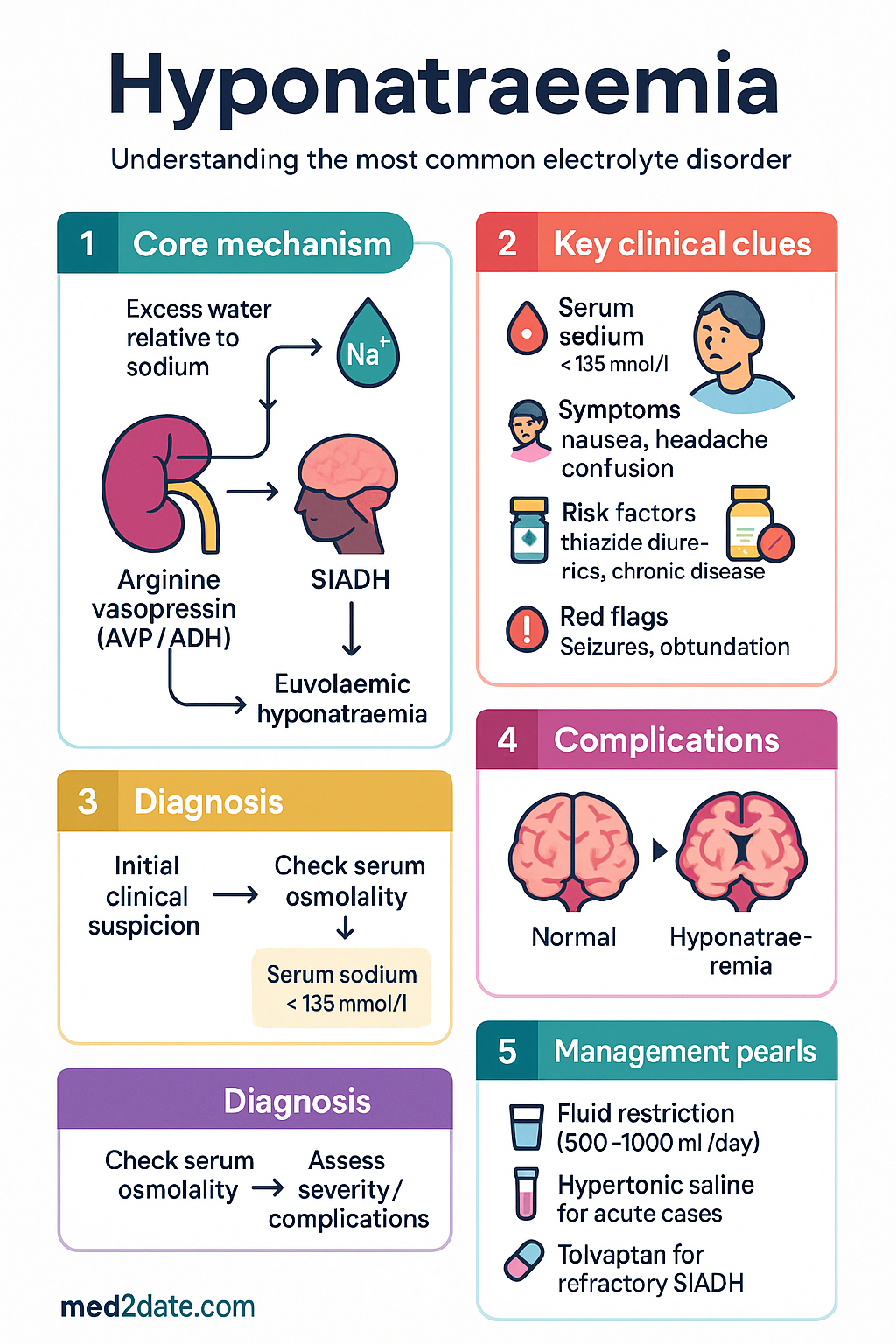
Hyponatraemia clinical infographic — pathophysiology, clinical clues, diagnosis, imaging, and management
Tap or click image to enlarge — Hyponatraemia: pathophysiology, clinical clues, diagnosis, imaging, and management.
Hyponatraemia infographic, full size

Classification of Hyponatraemia

Hyponatraemia should be classified systematically using a three-step approach: (1) effective osmolality, (2) extracellular fluid volume status, and (3) urinary sodium concentration. This framework guides diagnosis and management.

Step 1: Classification by Effective Osmolality

Type Serum Osmolality Mechanism Examples
Hypotonic (true hyponatraemia) <275 mOsm/kg Excess free water relative to sodium SIADH, heart failure, cirrhosis, diuretics, adrenal insufficiency
Isotonic (pseudohyponatraemia) 275–295 mOsm/kg Laboratory artefact from hyperlipidaemia or hyperproteinaemia Multiple myeloma, TPN with lipids, severe hypertriglyceridaemia
Hypertonic (translocational) >295 mOsm/kg Osmotically active solute draws water from ICF → dilution Hyperglycaemia (glucose >15 mmol/L), mannitol, glycerol
ℹ️
Corrected sodium formula: For every 3 mmol/L rise in glucose above 5.5, add 1.6 mmol/L to the measured sodium. Example: Na 128, glucose 30 → corrected Na ≈ 128 + (1.6 × [(30−5.5)/3]) ≈ 128 + 13 = 141 mmol/L (pseudohyponatraemia).

Step 2: Classification by Volume Status

Hypovolaemic
Na & Water Both Lost
Total body water decreased more than total body sodium. Signs: dry mucous membranes, reduced skin turgor, tachycardia, orthostatic hypotension, concentrated urine (Uosm >500).
Causes: vomiting, diarrhoea, burns, third-spacing, diuretics, Addison's disease, cerebral salt wasting
Euvolaemic
Total Body Water ↑
Expanded TBW with near-normal total body sodium. No oedema. Euvolaemic on examination.
Causes: SIADH, hypothyroidism, glucocorticoid deficiency, psychogenic polydipsia, beer potomania
Hypervolaemic
Total Body Na ↑↑
Total body sodium increased but total body water increased more. Oedema present. Dilutional hyponatraemia.
Causes: CHF, cirrhosis, nephrotic syndrome, chronic kidney disease, iatrogenic fluid overload

Step 3: Urinary Sodium (Spot Urine)

Urine Na (mmol/L) Interpretation Common Aetiologies
<20 Renal sodium avidity (appropriate response) CHF, cirrhosis, nephrotic syndrome, dehydration, extrarenal losses
>20 (often >40) Renal sodium wasting or impaired reabsorption SIADH, diuretics, Addison's, cerebral salt wasting, renal tubular acidosis
⚠️
Caution: Urine sodium may be misleading if the patient has received IV saline. Always interpret in the context of volume status and recent fluid therapy.

SIADH: Causes, Diagnosis & Management

Definition & Pathophysiology

The Syndrome of Inappropriate Antidiuresis (SIAD), previously SIADH, is the most common cause of euvolaemic hyponatraemia in hospitalised patients. It is characterised by non-osmotic, non-haemodynamic release of arginine vasopressin (AVP/ADH), leading to excessive free water retention, concentrated urine, and dilutional hyponatraemia.

Diagnostic Criteria (Bartter–Schwartz)

  • Serum osmolality <275 mOsm/kg (low effective osmolality)
  • Inappropriate urine concentration (Uosm >100 mOsm/kg)
  • Euvolaemic clinical status (no oedema, no dehydration)
  • Urine sodium >40 mmol/L (with normal salt and water intake)
  • Normal thyroid and adrenal function (must exclude hypothyroidism and adrenal insufficiency)
  • No diuretic use (particularly thiazides)
  • No renal insufficiency (eGFR >60 mL/min/1.73 m²)
⚠️
Before diagnosing SIADH: Always exclude adrenal insufficiency (morning cortisol <100 nmol/L is diagnostic; 100–500 nmol/L requires Synacthen test), hypothyroidism (TSH), and renal impairment. Measure serum uric acid — levels <0.24 mmol/L (<4 mg/dL) favour SIADH.

Causes of SIADH

Category Specific Causes
Malignancy Small cell lung cancer (most common), CNS tumours, head & neck cancer, lymphoma, pancreatic cancer
CNS disorders Meningitis, encephalitis, SAH, TBI, stroke, brain abscess, multiple sclerosis
Pulmonary disease Pneumonia, lung abscess, TB, acute asthma, positive pressure ventilation
Drugs SSRIs, carbamazepine, oxcarbazepine, cyclophosphamide, vincristine, NSAIDs, MDMA
Post-operative General anaesthesia, pain, nausea (strong non-osmotic stimuli for AVP)
Other HIV/AIDS, porphyria, hereditary SIADH (gain-of-function AVP receptor mutation)

SIADH Management — Graded Approach

1
Treat the Underlying Cause
Discontinue causative medications (SSRIs, carbamazepine). Treat pneumonia, meningitis, or malignancy where possible.
2
Fluid Restriction
First-line for chronic SIADH. Restrict to 500–1000 mL/day (all oral + IV intake). Most effective when urine osmolality >500. Monitor sodium every 48–72 h.
3
Salt Tablets + Loop Diuretic
NaCl 1–2 g PO TDS + frusemide 20–40 mg PO daily. Promotes isotonic diuresis. Monitor potassium.
4
Tolvaptan (Vasceptin®)
V2 receptor antagonist for refractory SIADH. Start 15 mg PO daily, titrate to 30–60 mg. Must initiate in hospital. PBS Authority Required.

Cerebral Oedema & Osmotic Demyelination Risk

Pathophysiology of Brain Adaptation

When hyponatraemia develops, the brain adapts by extruding intracellular solutes (potassium, amino acids, organic osmolytes) over 24–48 hours to reduce osmotic swelling. This adaptive response protects against cerebral oedema in chronic hyponatraemia but creates vulnerability: if serum sodium is corrected too rapidly, the brain cannot re-accumulate osmolytes at the same speed, leading to water efflux from brain cells, cellular dehydration, and demyelination.

Osmotic Demyelination Syndrome (ODS)

ODS (formerly central pontine myelinolysis) is a devastating neurological complication of overly rapid sodium correction. It predominantly affects the pons (central pontine myelinolysis) but can also involve extrapontine structures (basal ganglia, thalamus, cerebellum, lateral geniculate body).

🚨
ODS Risk Factors — Heightened Vigilance Required:
  • Serum Na <105 mmol/L
  • Chronic hyponatraemia (duration >48 hours)
  • Alcohol use disorder / malnutrition
  • Hypokalaemia (concurrent potassium depletion)
  • Liver disease / liver transplant recipients
  • Burns patients
  • Correction rate >8–10 mmol/L in 24 h (chronic) or >18 mmol/L in 48 h

Clinical Course of ODS

0–3 days post-correction
Apparent clinical improvement — patient may feel better. This is the "lucid interval" and can be deceptive.
2–6 days post-correction
New neurological signs develop: dysarthria, dysphagia, quadriparesis, pseudobulbar palsy, locked-in syndrome, seizures, altered consciousness.
7–14 days
MRI may show characteristic findings: T1 hypointensity and T2/FLAIR hyperintensity in the central pons, sparing the ventral pontine tegmentum.

Correction Rate Targets

Clinical Scenario Max Correction Rate Monitoring Frequency
Acute symptomatic (<48 h, seizures, obtundation) Rise 4–6 mmol/L in first 6 h; total ≤10 mmol/L in 24 h Serum Na every 1–2 hours
Chronic or unknown duration ≤8 mmol/L in 24 hours Serum Na every 4–6 hours
High-risk patients (alcoholism, malnutrition, liver disease, K⁺ <3.5) ≤6 mmol/L in 24 hours Serum Na every 4 hours

Desmopressin (DDAVP) Rescue

If correction exceeds the target rate, desmopressin can be administered to halt free water excretion and prevent further sodium rise. This is the pharmacological "brake" on correction.

💊
Desmopressin (DDAVP)
Desmopressin® · Generic · V2 receptor agonist (antidiuretic)
Adult dose (rescue) 2 µg IV or SC 8-hourly (can give stat if correction too fast)
Paediatric dose 0.3 µg/kg IV/SC (max 2 µg) 8–12 hourly
Route IV or SC (preferred for rescue); intranasal alternative 10–20 µg
Renal adjustment Use with caution in eGFR <15; effect may be reduced
PBS status ✔ PBS General Benefit
⚠️
When to use DDAVP rescue: If sodium rises by >8 mmol/L in 24 hours (chronic) or >10 mmol/L in 24 hours (acute), administer DDAVP 2 µg IV immediately and recheck sodium in 2 hours. Consider 100–150 mL of 3% NaCl if sodium has already dropped excessively during DDAVP administration.

Treatment: Fluid Restriction, Hypertonic Saline & Vaptans

Treatment Algorithm by Acuity

Acute Symptomatic Hyponatraemia (<48 hours, seizures, obtundation)

🚨
Medical emergency — hypertonic saline required. Goal: rapid initial rise of 4–6 mmol/L in the first 6 hours to relieve cerebral oedema, then slow correction to stay within ≤10 mmol/L/24 h total.
💊
Hypertonic Saline 3% (513 mmol/L Na⁺)
3% NaCl · Hypertonic saline · Osmotic agent
Emergency bolus 100–150 mL IV over 20 minutes (can repeat ×2 if needed)
Ongoing infusion 0.5–2 mL/kg/h (e.g., 50–100 mL/h for 70 kg adult)
Expected rise per 100 mL ~1–2 mmol/L in a 70 kg adult
Monitoring Serum Na every 1–2 hours during bolus; every 4 h during infusion
Central line preferred Peripheral IV acceptable for short-term bolus (<6 h) — risk of phlebitis
PBS status ✔ PBS General Benefit

Chronic Hyponatraemia (≥48 hours or unknown duration)

Management depends on the volume status and underlying cause. Correction must be gradual — ≤8 mmol/L/24 h in most patients, ≤6 mmol/L/24 h in high-risk patients.

Mild
Na 130–134 mmol/L
Usually asymptomatic. Treat underlying cause. Avoid excess free water. Re-check in 48–72 hours.
Setting: Outpatient / ward observation
Moderate
Na 125–129 mmol/L
May have nausea, headache, confusion. Fluid restriction first-line for SIADH. Isotonic saline for hypovolaemic causes. Monitor Na every 6–12 h.
Setting: Ward with electrolyte monitoring
Severe
Na <125 mmol/L
Risk of seizures, coma. Requires ICU-level monitoring. Hypertonic saline if symptomatic. Vaptan if SIADH refractory to fluid restriction.
Setting: HDU / ICU

Fluid Restriction

First-line for chronic SIADH and hypervolaemic hyponatraemia. Restrict all oral and IV intake. Effectiveness depends on the ratio of urine osmolality to serum osmolality — if Uosm <Sosm, fluid restriction will be effective. If Uosm >500, fluid restriction alone is often insufficient.

  • Typical restriction: 500–1000 mL/day total fluid intake
  • Goal: Negative free water balance; sodium rise of 0.5–1 mmol/L per day
  • Assess adherence: Weigh patient daily; check 24-hour fluid balance
  • Monitor: Sodium every 48–72 hours in stable chronic hyponatraemia

Pharmacological Therapies

💊
Tolvaptan
Vasceptin® · V2 vasopressin receptor antagonist
Indication Euvolaemic or hypervolaemic hyponatraemia with SIADH, Na <125 mmol/L, or symptomatic hyponatraemia resistant to fluid restriction
Adult dose 15 mg PO once daily, titrate to 30 mg then 60 mg after ≥24 h intervals
Administration Must be initiated in hospital. Patient must have access to water (unrestricted oral fluid). Do NOT co-administer with fluid restriction.
Key monitoring Na at 6, 12, 24 h after initiation, then at each dose change. Avoid correction >10–12 mmol/L/24 h.
Hepatic adjustment Avoid in severe hepatic impairment (Child-Pugh C); hepatotoxicity risk
PBS status ⚠ PBS Authority Required
💊
Urea (Oral)
Ureaphil® · Osmotic diuretic (non-PBS)
Adult dose 30–60 g PO daily, dissolved in water or juice. Titrated to effect.
Mechanism Creates osmotic diuresis and negative free water balance
Notes Unpalatable; limited availability in Australia. Useful adjunct in SIADH. Off-label but evidence-based.
PBS status ✘ Not PBS
💊
Frusemide
Lasix® · Generic · Loop diuretic
Adult dose (adjunct) 20–40 mg PO/IV daily. Combined with NaCl 1–2 g PO TDS for SIADH.
Mechanism Produces electrolyte-free water excretion (dilute urine). Counterbalances sodium retention from salt tablets.
Monitoring K⁺ and Mg²⁺ — loop diuretics deplete both. Replace as needed.
PBS status ✔ PBS General Benefit

Management of Hypovolaemic Hyponatraemia

Key principle: Restore intravascular volume with isotonic fluid (0.9% NaCl) first. Volume repletion suppresses ADH, allowing excretion of dilute urine and spontaneous sodium correction. Do NOT give hypertonic saline in hypovolaemic hyponatraemia unless severely symptomatic (seizures/coma).
💊
Isotonic Saline 0.9%
Normal Saline · 0.9% NaCl (154 mmol/L Na⁺)
Adult dose 500–1000 mL IV over 1–2 hours initially, then 125–250 mL/h until euvolaemic
Caution In some SIADH patients, 0.9% NaCl may worsen hyponatraemia (desalination syndrome) if Uosm >500. Monitor closely.
PBS status ✔ PBS General Benefit

Therapy Quick Reference

Acute symptomatic (seizures)
3% NaCl 100–150 mL bolus over 20 min
Target 4–6 mmol/L rise in 6 h
Na every 1–2 h
Hypovolaemic
0.9% NaCl IV until euvolaemic
Monitor Na every 4–6 h
ADH suppression → spontaneous correction
SIADH (chronic)
Fluid restriction 500–1000 mL/d
Na every 48–72 h
Add NaCl + frusemide if refractory
SIADH refractory
Tolvaptan 15 mg PO daily
Titrate q24h; Na at 6, 12, 24 h
PBS Authority; stop fluid restriction
Overcorrection
DDAVP 2 µg IV stat
Recheck Na in 2 h
Consider 3% NaCl if Na fell too far

Investigations

A systematic laboratory approach is essential for correct classification and targeted treatment.

Essential Serum sodium (ISE method) Measured by ion-selective electrode. Confirm with repeat sample if unexpected result. MBS item 66500.
Essential Serum osmolality Measured osmolality (not calculated). Differentiates hypo-, iso-, and hypertonic hyponatraemia. MBS item 66540.
Essential Urine osmolality First voided specimen. Uosm <100 suggests psychogenic polydipsia or beer potomania. Uosm >100 = impaired water excretion.
Essential Urine sodium (spot) <20 mmol/L: extrarenal cause or renal avidity. >20–40 mmol/L: renal cause (SIADH, diuretics, Addison's).
Essential Serum potassium, urea, creatinine, eGFR Concurrent hypokalaemia increases ODS risk. eGFR required to exclude renal cause and guide drug dosing.
Available Serum uric acid Low uric acid (<0.24 mmol/L / <4 mg/dL) supports SIADH due to increased renal urate clearance.
Available Serum cortisol (morning, 8–9 AM) <100 nmol/L diagnostic of adrenal insufficiency. 100–500 nmol/L → Synacthen test (250 µg IV/IM, 30- and 60-min cortisol).
Available TSH and free T4 Excludes hypothyroidism as a cause of euvolaemic hyponatraemia.
Referral CT chest / CT-PET (malignancy screen) If SIADH diagnosed without obvious cause — exclude small cell lung cancer. MBS item for CT thorax: 56800.
Referral MRI brain (ODS evaluation) If neurological deterioration 2–7 days post-correction. T2/FLAIR hyperintensity in pons is characteristic.

Special Populations

🤰 Pregnancy
Physiological hyponatraemia is common in late pregnancy due to AVP placental production and increased TBW. Na 130–135 mmol/L is often benign.
Hyperemesis gravidarum can cause severe hyponatraemia — volume repletion with 0.9% NaCl is first-line.
Hypertonic saline — use cautiously; consult obstetric medicine. Monitor fetal wellbeing.
Tolvaptan — contraindicated in pregnancy (Category D). Avoid.
Correct slowly: ≤6 mmol/L/24 h to protect mother and fetus.
👶 Paediatrics
Paediatric brains have higher water content and are at greater risk of cerebral oedema. Correction rate targets are more conservative.
3% NaCl — 3–5 mL/kg IV over 10–20 minutes for emergency bolus. Target rise: 4–5 mmol/L in first 6 h.
Max correction: ≤8 mmol/L/24 h in children; ≤6 mmol/L/24 h in infants.
Common causes in children: gastroenteritis + hypotonic fluids, meningitis, pneumonia (SIADH).
Tolvaptan — not established in paediatric use. Avoid unless specialist directed.
Use weight-based dosing for all infusions. Paediatric nephrology input recommended for Na <120 mmol/L.
👴 Elderly
Hyponatraemia is highly prevalent in elderly (up to 50% in residential care). Thiazide diuretics are the most common drug cause.
Even mild hyponatraemia (Na 130–134) increases falls risk by 2-fold and hip fracture risk by 4-fold.
Lower threshold for SIADH — elderly have impaired free water excretion.
Monitor fluid intake carefully — avoid excess free water with medication administration.
Correct slowly: ≤6 mmol/L/24 h. Frequent falls assessment in aged care facilities.
🫘 Renal Impairment
CKD stages 4–5 commonly develop hypervolaemic hyponatraemia due to impaired free water excretion.
Fluid restriction is the mainstay; loop diuretics may be added if responsive.
Tolvaptan — use cautiously if eGFR <10; limited data. Monitor for hepatotoxicity.
Dialysis patients — sodium profiling during haemodialysis can correct hyponatraemia gradually.
Avoid hypertonic saline boluses in hypervolaemic CKD — risk of pulmonary oedema.
🫁 Hepatic Impairment
Cirrhosis causes hypervolaemic hyponatraemia (Na <130 in ~50% of decompensated cirrhosis).
Fluid restriction (≤1 L/day) is first-line. Albumin infusions may help in hepatorenal syndrome.
Tolvaptan — avoid in Child-Pugh B/C (hepatotoxicity risk; FDA black box warning).
Na <125 mmol/L in cirrhosis is an independent predictor of mortality and a criterion for liver transplant prioritisation.
High ODS risk in liver transplant recipients — correct ≤6 mmol/L/24 h perioperatively.
🛡️ Immunocompromised
SIADH is common due to CNS infections (meningitis, cryptococcal), pulmonary infections (PCP, TB), and medications (cyclophosphamide, vincristine).
HIV-associated hyponatraemia — occurs in 30–50% of hospitalised AIDS patients. Multiple aetiologies often coexist.
Transplant recipients on calcineurin inhibitors — both nephrotoxicity and SIADH can cause hyponatraemia.
Always investigate for opportunistic infections as a cause of SIADH in immunocompromised hosts.

Aboriginal and Torres Strait Islander Health Considerations

Aboriginal and Torres Strait Islander Health

Aboriginal and Torres Strait Islander peoples experience disproportionately higher rates of chronic diseases that predispose to hyponatraemia, including chronic kidney disease, heart failure, diabetes mellitus, and liver disease. The AIHW reports that CKD is 3–4 times more prevalent in Indigenous Australians, and heart failure hospitalisation rates are 1.5 times higher than non-Indigenous Australians.

Chronic disease burden
Higher prevalence of CKD stages 3–5, heart failure, liver disease (including hepatitis B–related cirrhosis), and type 2 diabetes — all major causes of hypervolaemic hyponatraemia.
Remote & rural access
Limited access to pathology services for serial sodium monitoring. Point-of-care blood gas analysers (i-STAT®) available in many remote clinics can provide sodium results within minutes — essential for acute management.
Medication complexity
Polypharmacy is common. Thiazide and loop diuretics, ACE inhibitors, and metformin can all contribute to hyponatraemia. Regular medication review through Closing the Gap PBS co-payment programme reduces cost barriers.
Cultural safety
Ensure culturally appropriate communication. Involve Aboriginal and Torres Strait Islander Health Workers in fluid management education. Use pictorial resources where literacy is a barrier. Respect family and community involvement in health decisions.
Referral pathways
Royal Flying Doctor Service (RFDS) provides emergency retrieval for severe hyponatraemia from remote communities. Telehealth nephrology consultation is available via the NT and WA renal services for ongoing SIADH or complex hyponatraemia management.
Data & surveillance
Hyponatraemia is an indicator of inadequate chronic disease management. Regular electrolyte monitoring as part of Aboriginal Health Checks (MBS item 715) can detect early hyponatraemia and prompt medication review.

📚 References

  1. 1. Verbalis JG, Goldsmith SR, Greenberg A, et al. Diagnosis, evaluation, and treatment of hyponatremia: expert panel recommendations. Am J Med. 2013;126(10 Suppl 1):S1–S42.
  2. 2. Spasovski G, Vanholder R, Allolio B, et al. Clinical practice guideline on diagnosis and treatment of hyponatraemia. Eur J Endocrinol. 2014;170(3):G1–G47.
  3. 3. Sterns RH, Rives JK, Hix JK. The treatment of hyponatremia. Semin Nephrol. 2009;29(3):282–299.
  4. 4. Ellison DH, Berl T. The syndrome of inappropriate antidiuresis. N Engl J Med. 2007;356(20):2064–2072.
  5. 5. Australian Commission on Safety and Quality in Health Care (ACSQHC). National Safety and Quality Health Service Standards. 2nd ed. Sydney: ACSQHC; 2021.
  6. 6. National Kidney Foundation (NKF). KDOQI clinical practice guidelines and clinical practice recommendations for diabetes and CKD. Am J Kidney Dis. 2007;49(2 Suppl 2):S12–S154.
  7. 7. Australian Institute of Health and Welfare (AIHW). Chronic kidney disease: Australian facts. Cat. no. PHE 229. Canberra: AIHW; 2023.
  8. 8. Liamis G, Rodenburg EM, Hofman A, et al. Electrolyte disorders in community subjects: prevalence and risk factors. Am J Med. 2013;126(3):256–263.
  9. 9. Sterns RH, Hix JK, Silver S. Treatment of hyponatremia. Curr Opin Nephrol Hypertens. 2010;19(5):493–498.
  10. 10. Gankam Kengne F, Andres C, Sattar L, et al. Mild hyponatremia and risk of fracture in the ambulatory elderly. QJM. 2008;101(7):583–588.
  11. 11. Rondon-Berrios H, Berl T. Mild chronic hyponatremia in the ambulatory setting: significance and management. Clin J Am Soc Nephrol. 2015;10(12):2268–2278.
  12. 12. RHDAustralia (Darwin). Recommendations for assessing and managing chronic kidney disease in Aboriginal and Torres Strait Islander peoples. Darwin: Menzies School of Health Research; 2020.
  13. 13. Pharmaceuticals Benefits Advisory Committee (PBAC). Tolvaptan public summary document. Canberra: Australian Government Department of Health; 2019.
  14. 14. Anderson RJ, Chung HM, Kluge R, Schrier RW. Hyponatremia: a prospective analysis of its epidemiology and the pathogenetic role of vasopressin. Ann Intern Med. 1985;102(2):164–168.